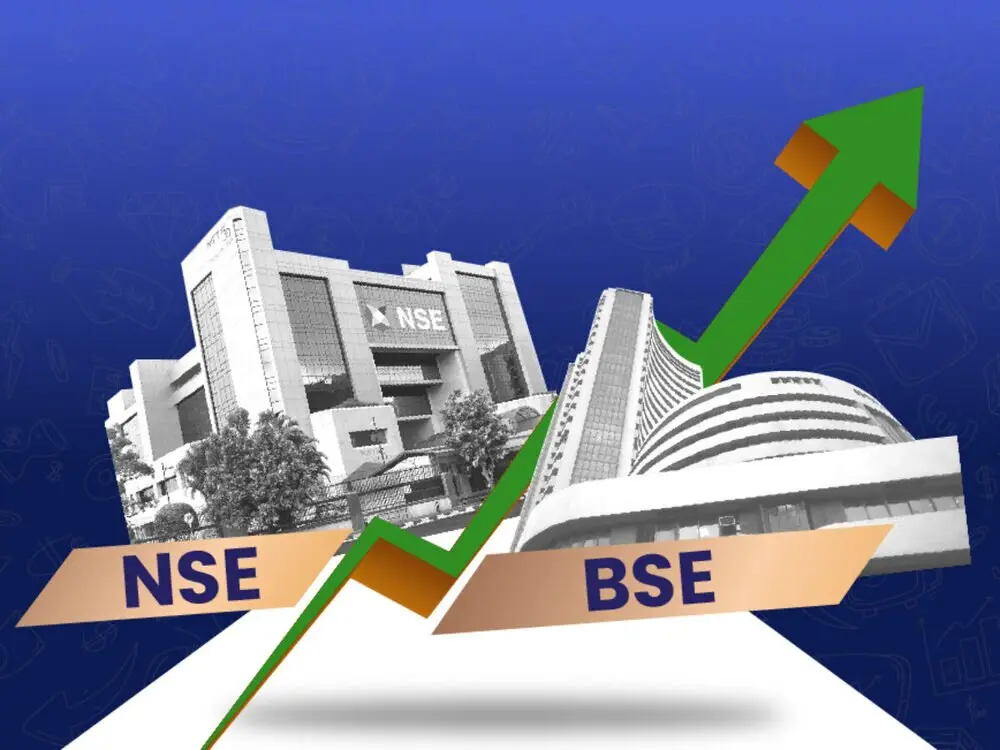
India's benchmark Nifty 50 index (.NSEI) dipped 0.1% in range-bound Mumbai trade as declines in banking and technology heavyweights offset gains in defense and metal stocks. The minor contraction reflects broader market consolidation amid elevated crude oil prices, institutional rebalancing, and steady domestic fund support.
MUMBAI — India’s benchmark stock index traded with a mild negative bias during Thursday's trading session, as India's Nifty 50 Index .NSEI down 0.1% reflected investor caution following recent volatility and mixed international cues. Slipped roughly 24 to 28 points lower into the 23,500–23,600 consolidation zone, the 50-stock blue-chip gauge tracked choppy movements across broader Asian equities as domestic market participants weighed elevated global crude oil prices and ongoing institutional fund rebalancing ahead of weekly derivatives expiries.
Heavyweights Weigh on Headline Benchmarks
Trading activity across Dalal Street exhibited tight, range-bound behavior from the opening bell. The mild drag was led primarily by private financial lenders and select consumer counters. Index heavyweights including HDFC Bank, ICICI Bank, and Axis Bank witnessed fractional declines of 0.2% to 0.6%, capping upward momentum on the headline gauge.
Automotive and IT stocks also traded in mixed territory. Technology counters faced mild selling pressure tracking cautious overnight sentiment on Wall Street, where high bond yields continue to temper aggressive tech allocations. In contrast, state-run defense enterprises and primary metal producers such as JSW Steel and Hindalco offered downside support, preventing sharper declines on the broader National Stock Exchange (NSE).
Sectoral indices mirrored the headline indecision: the Nifty Bank and Nifty Financial Services indices fell roughly 0.3%, while the Nifty Metal index gained approximately 0.5% on firm spot base metal demand.
Institutional Flows and Macro Headwinds
The fractional pullback occurs amid a backdrop of careful macro positioning across emerging markets:
Foreign Institutional Selling: Foreign Institutional Investors (FIIs) have maintained selective net outflows in cash market segments, rotating liquidity into defensive asset classes and fixed-income paper.
Elevated Energy Costs: Brent crude hovering in elevated territory creates near-term margin concerns for import-dependent domestic sectors like paints, chemicals, and aviation.
Currency Dynamics: The Indian rupee traded steady against the US dollar in early interbank trade, anchoring import parity costs for domestic manufacturers.
Domestic Institutional Absorption: Domestic Institutional Investors (DIIs) and systematic investment plan (SIP) retail inflows continue to absorb institutional supply, keeping index drawdowns shallow.
Market Impact Across Economic Stakeholders
The 0.1% consolidation carries direct tactical implications for financial market participants:
For Retail and SIP Investors: Shallow pullbacks provide steady rupee-cost averaging windows without disrupting long-term compounding trajectories.
For Derivatives and Intraday Traders: Range-bound price action between 23,450 and 23,700 dampens directional volatility, favoring option sellers through theta decay ahead of contract settlements.
For Listed Corporates: Consolidated valuations maintain an orderly environment for primary market capital raisings and initial public offerings (IPOs) scheduled across September.
For Wealth Managers: Portfolio advisers continue recommending balanced asset allocations, blending large-cap index stalwarts with high-quality debt instruments.
Official Sources
Trading volumes, index composition pricing, and market breadth data are registered directly through the official trading engines of the National Stock Exchange of India and BSE Limited. Statutory regulatory oversight and systemic monitoring are administered under the compliance guidelines of the Securities and Exchange Board of India and macroeconomic surveillance frameworks published by the Reserve Bank of India.
Quote Section
"The domestic market is exhibiting healthy consolidation near key technical support levels," according to exchange market observers and institutional desk analysts. "With the Nifty 50 fluctuating within a tight 0.1% band, buyers and sellers are waiting for fresh global macroeconomic catalysts and clear monetary policy guidance before committing to directional positions."
Why It Matters
The Nifty 50 serves as the primary barometer for the health of India's formal corporate economy, encompassing roughly 50% of the country's total listed equity capitalization. A minor dip of 0.1% highlights underlying resilience: despite persistent foreign fund rotation, firm crude oil prices, and global rate uncertainties, domestic institutional liquidity continues to establish a firm floor beneath benchmark indices. This stability ensures that the domestic capital formation engine remains functional even during broader global risk-off phases.
Key Facts at a Glance
Index Movement: India's Nifty 50 Index .NSEI down 0.1% in range-bound trading.
Core Trading Band: Fluctuating within the 23,500–23,650 support zone.
Sectoral Drags: Private banking heavyweights and selective technology counters.
Sectoral Gainers: Public-sector defense units and basic metal manufacturers.
Institutional Support: Strong retail SIP and domestic fund inflows buffering headline drawdowns.
Frequently Asked Questions
Why is India's Nifty 50 Index down 0.1% today?
The marginal decline reflects routine profit booking in private banking and technology heavyweights, coupled with mixed global market cues and elevated crude oil prices.
What are the key technical support and resistance levels for the Nifty 50?
Technical analysts track primary swing support near 23,450 to 23,500, with overhead resistance positioned between the 23,750 and 24,000 marks.
How are broader market indices performing compared to the Nifty 50?
Broader markets show mixed trends; while large-cap financial stocks face slight selling, mid-cap and small-cap segments remain relatively steady, driven by stock-specific operational announcements.
Source: Real-time market feeds and indices bulletins from the National Stock Exchange of India, trading summaries on BSE Limited, and financial stability updates from the Reserve Bank of India.