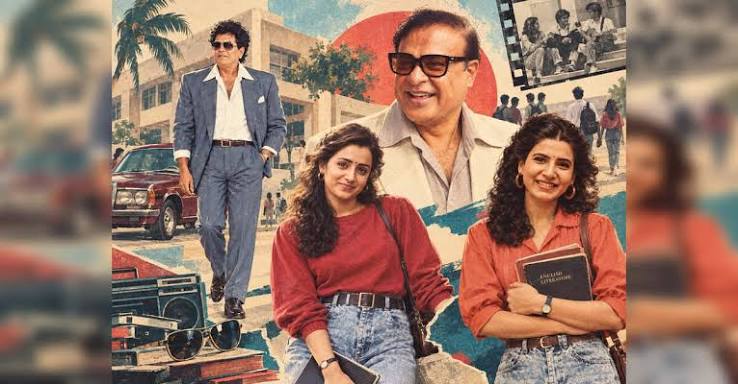
Generative AI tools are driving a widespread revival of 1980s culture by allowing users to easily simulate vintage music, fashion, and analog visuals. Driven by digital screen fatigue and idealized nostalgia, the trend is reshaping entertainment production, apparel retail, and algorithmic media consumption among younger demographics globally.
LOS ANGELES — Digital media platforms and consumer technology companies are experiencing an unprecedented surge in retro media consumption as artificial intelligence tools enable millions of users to recreate vintage aesthetics, prompting analysts to explain why everyone suddenly wants to live in the '80s — with a little help from AI. From synthetic analog synthesizer production to algorithmic film-grain photo rendering, generative software allows audiences to simulate the media textures and social environments of four decades ago. The phenomenon reflects a convergence of digital exhaustion, automated nostalgia modeling, and commercial repositioning across streaming networks and entertainment technology conglomerates worldwide.
Algorithmic Generation and the Retro Media Boom
The technical foundation supporting the 1980s digital resurgence relies on recent advancements in multimodal neural networks. Open-source diffusion models and specialized audio generative systems are now routinely trained on vast archives of 1980s pop culture, including synthesizer waveforms, VHS video artifacts, and neon-saturated graphic design templates.
Users on global social video services are utilizing these systems to transform modern digital photographs into grainy Polaroid snapshots, draft new wave and synthwave music tracks via text prompts, and generate simulated broadcast television commercials reminiscent of late-twentieth-century programming. According to digital analytics firms tracking consumer software usage, prompts combining retro terms such as "1984 mall aesthetic," "analog tape warmth," and "vintage CRT monitor" have increased sharply across consumer AI tools over the past four quarters.
Software developers have responded by integrating dedicated vintage preset filters and voice-synthesis models into mobile editing suites. These automated pipelines allow individuals to manufacture a hyper-stylized perception of the 1980s without requiring historical knowledge of physical tape machines, analog drum synthesizers, or mechanical film cameras.
Sociological Drivers Behind the Synthetic Nostalgia Trend
Cultural sociologists and digital behavior researchers identify two primary factors driving the broader population's impulse to immerse themselves in past eras through technological simulation:
Digital Fatigue and Screen Saturation: Modern consumers, experiencing continuous notification streams and high-resolution digital environments, gravitate toward the perceived tactile simplicity of the pre-internet era.
Vicarious Historical Memory: Generation Z and younger millennial demographics, who did not experience the 1980s firsthand, construct idealized interpretations of the decade based on algorithmic media feeds that filter out historical complexities.
Algorithmic Reinforcement Loops: Recommendation algorithms on streaming video platforms reward high-contrast retro aesthetics, prompting content creators to produce additional vintage content using automated tools to maximize view counts.
Desire for Community Spaces: Virtual reconstructions of 1980s third places, such as shopping malls, roller rinks, and arcades, serve as synthetic substitutes for diminishing real-world physical community hubs.
The trend has moved beyond casual social media use into institutional entertainment production, where commercial studios and advertising agencies employ neural filters to generate period-accurate visual effects at lower production costs.
Commercial Implications for Media, Fashion, and Retail
The computational resurrection of 1980s media culture has established measurable commercial impacts across consumer retail and intellectual property sectors:
For Music Streaming and Publishing: Independent artists leveraging algorithmic synthesizer plugins have fueled the expansion of commercial synthwave playlists, prompting legacy record labels to license 1980s back catalogs for digital re-sampling.
For Apparel and Fast Fashion: Retail brands utilize predictive analytics and AI-generated mood boards to mass-produce acid-wash denim, oversized blazers, and neon athletic wear aligned with viral retro media trends.
For Consumer Hardware Manufacturers: Electronics companies are producing hybrid consumer hardware, introducing portable cassette players, mechanical keyboards, and digital cameras that deliberately mimic low-resolution vintage outputs.
For Intellectual Property Holders: Film and television studios holding 1980s franchises are accelerating franchise revivals and licensing agreements, capitalizing on sustained consumer interest in the aesthetic landscape of that decade.
Official Sources
Industry data and technical documentation concerning generative modeling trends are documented in operational releases from the Consumer Technology Association and research publications from the Entertainment Software Association. Market sizing reports tracking synthetic audio and video processing tools are accessible via the Federal Trade Commission technology monitoring office and digital archive indexes at the Library of Congress.
Quote Section
"The democratization of generative neural models has decoupled historical nostalgia from lived personal experience," according to officials studying emerging media trends. "Audiences can now programmatically summon the sensory qualities of an analog past, creating a stylized digital sanctuary that contrasts with the hyper-connected demands of the modern media landscape."
Why It Matters
The widespread fascination with retro simulation highlights a profound transformation in how contemporary society uses software to process cultural memory. When consumers explore why everyone suddenly wants to live in the '80s — with a little help from AI, the answer lies in the psychological appeal of pre-digital existence juxtaposed with modern technological convenience.
Rather than abandoning modern technology, users are deploying sophisticated artificial intelligence to construct an escapist vision of an era free from omnipresent smartphones and social network scrutiny. For technology companies and enterprise content creators, understanding this dynamic provides a blueprint for developing products that fulfill the public's desire for warmth, simplicity, and tactile memory in an increasingly automated world.
Key Facts at a Glance
Cultural Phenomenon: Millions of global users are adopting generative tools to simulate 1980s music, fashion, and visual media.
Technical Driver: Multimodal AI systems trained on analog audio, VHS degradation, and period cinematography enable instant recreation of vintage aesthetics.
Demographic Shift: Generation Z and younger millennials form the primary demographic consuming and generating synthetic 1980s media.
Commercial Sector Impact: Direct revenue expansion across streaming platforms, music publishing catalogs, retro consumer electronics, and apparel retail.
Frequently Asked Questions
Why are generative tools focusing on 1980s aesthetics?
The 1980s provides a distinct aesthetic contrast to the high-resolution, minimalist look of contemporary digital design. Distinctive visual traits—such as neon palettes, analog tape grain, and electronic synthesizer melodies—are easily identified and replicated by generative machine learning algorithms.
Do younger audiences using these tools have real memories of the 1980s?
No. Most young users participating in the trend experience what sociologists term "anemoia"—nostalgia for a time period one has never lived through—constructed through digital reruns, historical media archives, and modern retro entertainment.
How are commercial entertainment studios utilizing this trend?
Production houses and music producers utilize machine learning models to replicate vintage analog soundscapes, color-grade modern digital video into period-accurate film formats, and assess consumer interest for franchise revivals.
Source: Digital culture and media technology findings published by the Consumer Technology Association, market research archives from the Entertainment Software Association, and media trend registries monitored by the Library of Congress.