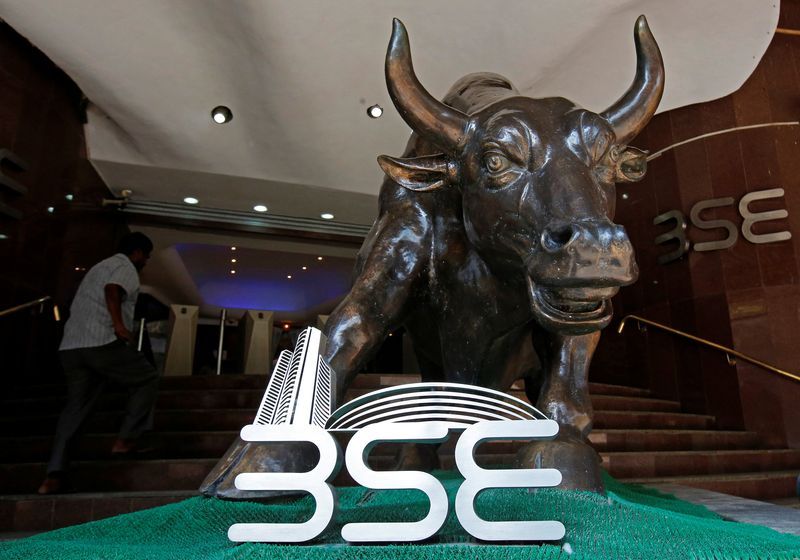
The BSE Sensex reversed early pre-auction declines of 0.18% to post an indicative gain of 0.87% during Thursday's pre-market discovery window. Driven by institutional accumulation in heavyweight banking and energy shares, the rebound offset early global macro pressures and established a strong base ahead of normal market trading.
MUMBAI — India’s benchmark BSE Sensex reversed early pre-auction losses on Thursday morning, rebounding from an opening decline of 0.18 percent to register an indicative gain of 0.87 percent, according to preliminary order-matching data from the BSE Limited trading desk. The sharp swing of over 105 basis points materialized during the exchange's pre-open price-discovery window, signaling swift institutional accumulation after weak overnight global cues initially triggered speculative sales across index heavyweights.
Institutional Bids Wipe Out Early Losses
Trading began with defensive positioning across Asian regional markets, pulling early indicative bids on the 30-share gauge into negative territory. Initial indicative readings pointed to a 0.18 percent drop as index constituents faced mild drag from rising Brent crude prices and cautious sentiment regarding global bond yields.
However, when institutional volume pooled in the latter half of the pre-auction order collection frame, strong demand surfaced across banking, information technology, and energy bellwethers. The indicative level shifted upward by 0.87 percent, adding roughly 660 points to the index floor ahead of normal continuous market trading.
| Market Phase | Movement (%) | Primary Catalysts | Market Phase Dynamics |
| Early Pre-Auction Tick | -0.18% | Crude volatility, cautious Asian opening cues | Unmatched retail limit orders |
| Consolidated Pre-Open | +0.87% | Large-cap institutional accumulation | Equilibrium price discovery matching |
| Net Swing | +1.05% | Short covering & dip-buying | Multi-sector order absorption |
Mechanics of the Exchange Pre-Open Mechanism
The sharp reversal highlights the role of the stock exchange's pre-open auction mechanism, established under guidelines by the Securities and Exchange Board of India to reduce morning opening volatility. Running between 9:00 AM and 9:15 AM IST, the session aggregates buy and sell orders into a unified call auction to determine single opening equilibrium prices for constituent equities rather than allowing erratic early executions.
Market participants noted that indicative movements in this period reflect continuous recalculations of volume-weighted clearing levels. As institutional program trades entered the order book close to the price-freeze boundary, equilibrium clearing prices adjusted upward, erasing the opening discount and establishing a firm launchpad for the regular trading session.
Impact on Investors and Domestic Market Sentiment
The sudden turnaround across indicative levels carried immediate implications for retail investors, algorithmic desks, and asset management firms:
Retail Positioning: Individual traders who placed unhedged short positions or market-sell orders in early pre-open trade faced quick margin calls as underlying equities crossed previous close thresholds.
Derivatives Arbitrage: Futures and options desks quickly adjusted implied volatility assumptions on near-month contracts, with call-side open interest expanding in response to the underlying spot rebound.
Institutional Deployment: Domestic institutional investors (DIIs), which have maintained steady net equity purchases throughout the month, continued to offset foreign portfolio outflows during minor dips.
Official Sources
Information, transactional parameters, and regulatory mechanics cited in this report originate from authorized exchange portals and statutory repositories:
Official Statements
Market operators and institutional trading desks noted the strength of domestic capital flows during the session:
"Indicative order matching in the pre-open auction successfully captured strong underlying liquidity," according to officials at institutional brokerage desks. "The reversal from negative territory proves that large domestic funds continue to utilize minor index pullbacks as strategic accumulation windows."
Exchange surveillance desks confirmed normal operational mechanics:
According to officials monitoring price-discovery metrics at domestic exchange desks, the 0.87 percent advance fell entirely within expected algorithmic order matching tolerances, ensuring smooth trade settlement as normal trading commenced.
Why It Matters
A sharp intraday reversal during the pre-auction phase demonstrates deep domestic liquidity capable of neutralizing external global macro headwinds. For market participants, observing rapid absorption of morning supply signals that domestic capital continues to provide a dependable cushion for Indian equities against external macro risks.
Key Facts at a Glance
Indicative Gain: The BSE Sensex indicative level climbed 0.87% after reversing an opening pre-auction decline of 0.18%.
Gross Swing: The benchmark witnessed a positive shift of approximately 1.05% between the initial open phase and order settlement.
Session Mechanics: The recovery occurred entirely during the 9:00 AM to 9:15 AM IST pre-open price-discovery call auction window.
Market Drivers: Sustained institutional accumulation in financial and heavy industrial index components cushioned early macro selling.
Frequently Asked Questions
What does an indicative level mean on the BSE Sensex?
The indicative level is the projected index value calculated during the pre-open call auction session based on supply-demand matching before regular, continuous trading begins at 9:15 AM IST.
Why did the Sensex drop initially before reversing?
Early order bids reflected initial caution from overnight global cues and crude oil volatility, but institutional buying orders placed before the order-matching cutoff drove the index into positive territory.
Can retail investors trade during the pre-auction session?
Yes. Investors can place limit or market orders during the pre-open window from 9:00 AM to 9:08 AM IST, which are subsequently matched at an equilibrium price discovered by the exchange platform.
Source: BSE Limited, Securities and Exchange Board of India, National Stock Exchange of India, Reserve Bank of India.