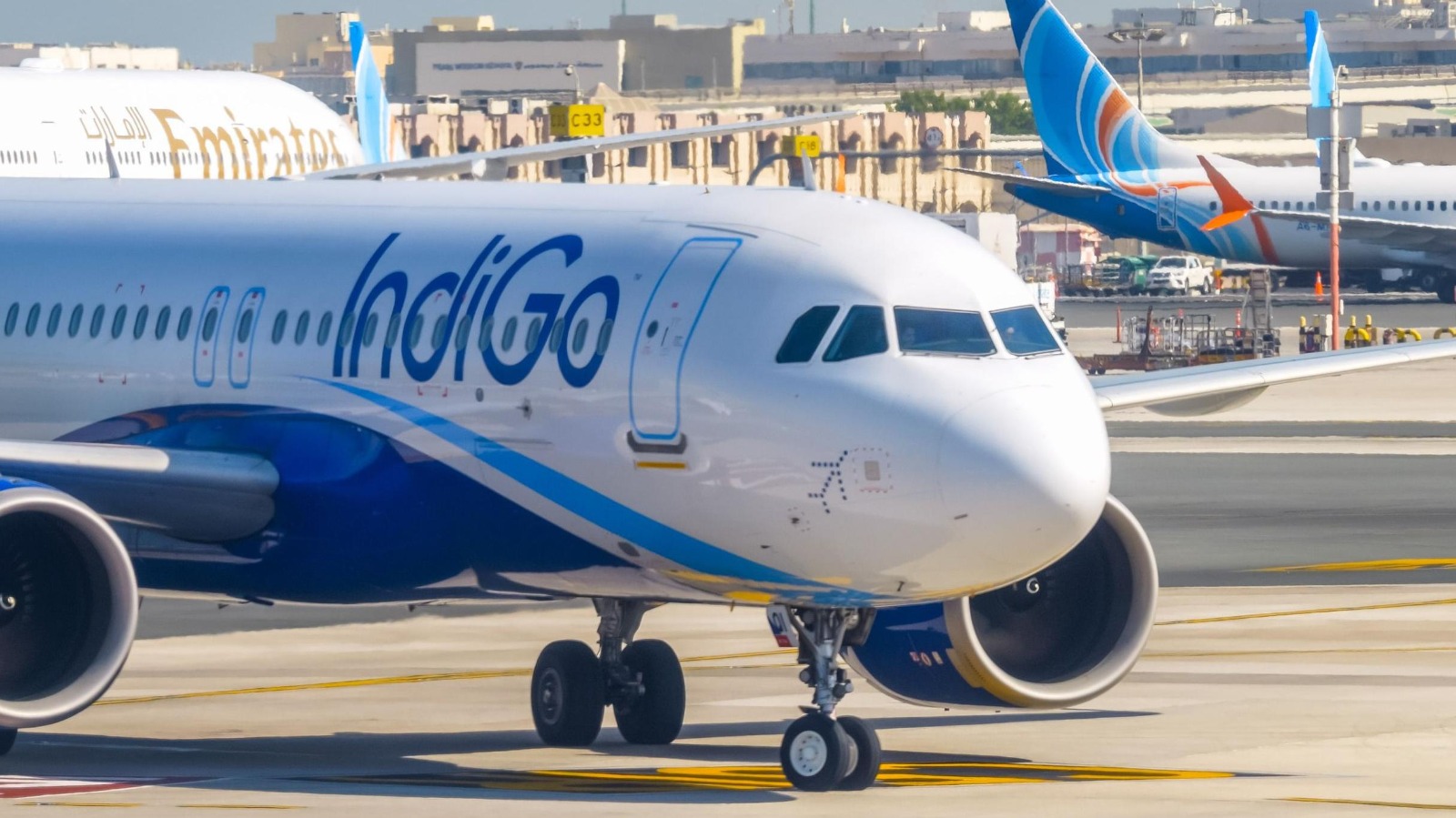
Shares of InterGlobe Aviation (IndiGo) surged 4.77 percent to hit a morning high of ₹4,666.00 per share. The sharp financial rally followed the central government's launch of a ₹10,000 crore ATF Price Stabilisation Fund alongside a steady drop in global crude oil prices below the $90 baseline.
MUMBAI — Shares of InterGlobe Aviation Limited (INDIGO.NS), the parent entity of India's dominant domestic carrier IndiGo, surged 4.77 percent during morning trading hours. The stock rallied to an intraday high of ₹4,666.00 per share, reversing a multi-session consolidation on the National Stock Exchange (NSE). According to electronic order book data monitored on Friday, June 12, 2026, the buying momentum was driven by the combination of a downward correction in global Brent crude oil prices and a newly approved federal fuel cost-control mechanism.
Government Policy Interventions Relieve Fuel Margin Stresses
The primary regulatory catalyst driving the sharp ascent of the IndiGo shares is the central government's formal implementation of a ₹10,000 crore Aviation Turbine Fuel (ATF) Price Stabilisation Fund. Enacted through a joint notification by the Ministry of Civil Aviation and the Ministry of Finance, the emergency policy provides cost certainty for domestic operators.
Under the provisions of this infrastructure mandate, a uniform domestic ATF price ceiling has been established at ₹115 per litre. Prior to this policy intervention, volatile international pricing structures had pushed domestic jet fuel costs higher, heavily pressuring airline cash flows.
Aviation turbine fuel stands as the single largest operational expenditure line item for InterGlobe Aviation, traditionally eating up 35 to 40 percent of its core operating revenues. Pumping capital directly into a stabilization buffer provides greater earnings visibility and eliminates the threat of unpredictable fuel spikes cutting into mid-term carrier margins.
Falling Global Crude Prices Boost Institutional Confidence
Aside from local policy relief, broader macroeconomic indicators have shifted in favor of high-consumption transportation businesses. International energy tracking terminals saw benchmark Brent crude prices soften below the $90 per barrel handle, dropping to their lowest pricing threshold since mid-April. This global energy drop occurred after international defense networks verified the de-escalation of military exercises around critical Middle Eastern shipping channels.
Because fuel adjustments flow into local aviation networks with a minor lag, the sudden collapse of international oil prices guarantees a substantial reduction in variable corporate inputs for the upcoming quarter. Financial institutions and domestic mutual funds viewed the energy correction as an ideal entry point to acquire large blocks of InterGlobe Aviation stock, which had faced localized selling pressure throughout May due to paper losses from dollar depreciation.
Bullish Brokerage Targets Highlight Long-Term Capacity Edge
The morning volume expansion was further accelerated by supportive institutional equity research published after recent management meetings. Analysts at major international brokerages, including Goldman Sachs, reaffirmed a definitive "Buy" rating on the budget carrier, setting a 12-month target price benchmark at ₹5,300 per share.
The primary structural parameters driving long-term investment models include:
Order Book Dominance: InterGlobe Aviation maintains an outstanding fleet expansion roadmap of approximately 900 narrow-body and wide-body aircraft, which is unmatched in the domestic aviation landscape.
International Footprint Shift: Management's stated corporate strategy aims to expand its high-yield international flight mix from 32 percent up to 40 percent by the fiscal year 2030.
Pricing Power Resilience: Despite recent capacity limits linked to international engine supply delays, the airline continues to maintain premium yields due to its massive 64 percent share of the domestic travel market.
Institutional Tracking and Asset Valuations
InterGlobe Aviation’s standard share matching and capital transitions are executed across electronic trading architectures monitored continuously by the National Stock Exchange of India (NSE) and the BSE Limited. Following the 4.77 percent share price jump, the company's total aggregate equity value expanded to approximately ₹1.80 trillion, keeping IndiGo cemented as India's most valuable aviation company and a vital anchor inside the transport index.
Statement from Institutional Desk Managers
"According to officials tracking block deal allocations across the major institutional equity desks, the morning surge in IndiGo shares reflects a rapid reallocation of capital into consumer-facing cyclical assets. Analysts stated that the introduction of the government's ₹10,000 crore ATF stabilization fund fundamentally lowers the risk profile of India's aviation sector, drawing long-term portfolio managers back into high-volume aviation equity lines."
Why It Matters
Implementing an explicit price ceiling on jet fuel alters near-term economic outcomes across the travel sector. For everyday flying consumers, price predictability at the corporate level lowers the immediate need for airlines to levy sudden fuel surcharges, keeping regional air fares stable during peak seasonal travel. For corporate travel managers and airline investors, it introduces an era of reliable financial planning, shielding company balance sheets from erratic swings in global crude oil markets.
Key Facts at a Glance
Stock Rally: IndiGo shares gained 4.77 percent to trade at an intraday high of ₹4,666.00.
Policy Support: The central government approved a ₹10,000 crore ATF Price Stabilisation Fund to cap domestic fuel shocks.
Price Ceiling Set: Local jet fuel rates will be managed against a uniform cap of ₹115 per litre.
Global Catalyst: International Brent crude slipped below $90 per barrel, lowering variable transport overheads.
Brokerage Stance: Goldman Sachs maintains a "Buy" recommendation on the carrier with a target price of ₹5,300.
FAQ Section
Why did InterGlobe Aviation (IndiGo) shares surge today?
The stock surged over 4 percent in response to the Indian government's launch of a ₹10,000 crore ATF Price Stabilisation Fund and a uniform price cap on jet fuel. This structural support, combined with a drop in global Brent crude below $90 per barrel, significantly improved the company's near-term profitability outlook.
How does the new ATF Price Stabilisation Fund protect airline earnings?
Aviation fuel typically accounts for 35 to 40 percent of an airline's operating costs. By fixing domestic jet fuel rates around a predictable ₹115 per litre cap, the fund prevents sudden, volatile price spikes from compressing the carrier's operating margins.
What is the long-term growth target for IndiGo's fleet?
According to corporate meeting updates tracked by Goldman Sachs, IndiGo currently holds a massive outstanding order book of roughly 900 new aircraft. This expansion plan is intended to transition the carrier's international route mix from 32 percent to 40 percent by the year 2030.
Source: Real-time stock transaction tickers from the National Stock Exchange of India (NSE), public policy disclosures from the Ministry of Civil Aviation, and institutional equity research updates from Goldman Sachs International.