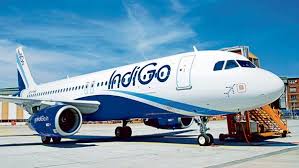
IndiGo shares rose 1.1% on Wednesday, reversing earlier weekly declines. The turnaround followed the Union Cabinet's approval of a ₹10,000 crore ($1.2 billion) Aviation Turbine Fuel Price Stabilisation Fund, which introduces a strategic price cap to insulate domestic airlines from volatile international jet fuel markets.
Shares of InterGlobe Aviation Limited, the parent company of India’s largest budget carrier IndiGo, reversed early losses to trade higher on Wednesday, June 3, 2026. The stock optimization occurred immediately after the Union Cabinet approved a ₹10,000 crore ($1.2 billion) Aviation Turbine Fuel (ATF) Price Stabilisation Fund. Investors reacted positively to the fiscal intervention, sending IndiGo shares up 1.1% to ₹4,555.50 on the National Stock Exchange (NSE), recovering from initial downward pressure caused by tight global energy supplies.
Cabinet Intervention Stabilizes Aviation Sector
The government's decision to establish the stabilization fund comes at a critical juncture for domestic airlines. Spiraling aviation turbine fuel costs, driven by the unresolved crisis in West Asia, have severely squeezed airline profit margins. Fuel typically accounts for nearly 40% of an Indian carrier's total operating expenses.
Announcing the milestone policy package, Union Minister Ashwini Vaishnaw confirmed that the ₹10,000 crore corpus is specifically intended to act as a buffer. Under this mechanism, the government has effectively capped ATF prices for domestic airline operations at ₹75.60 per litre. This cap arrives despite international jet fuel prices surging nearly 2.5 times between March and May 2026, shielding operators from immediate cost shocks.
Reversing Market Pressures from Global Export Bans
The market intervention completely altered the trading momentum for aviation equities. On Tuesday, Indian aviation stocks had faced significant selling pressure following Russia’s first-ever ban on jet fuel exports, which is set to run until November 30, 2026. While India does not directly import meaningful quantities of Russian jet fuel, the ban added substantial anxiety to a global market already strained by maritime shipping disruptions.
The baseline volatility was compounded by recent financial updates. IndiGo had reported a consolidated net loss of ₹2,536 crore for the quarter ended March 31, 2026, largely weighed down by a ₹4,881.60 crore foreign exchange loss from a weakening Indian rupee. However, the introduction of a sovereign-backed fuel shield has given institutional brokerages a reason to look past immediate macroeconomic headwinds.
Official Sources Section
Regulatory filings and share trading data are tracked through the National Stock Exchange of India (NSE). Formal policy statements regarding the fund corpus were provided during the media briefing by the Union Cabinet and detailed through the Press Information Bureau (PIB). Airline capacity metrics are verified via corporate disclosures from InterGlobe Aviation Limited.
Quote Section
"The Union Cabinet has approved the setting up of an ATF Price Stabilisation Fund with a corpus of ₹10,000 crore," stated Union Minister Ashwini Vaishnaw during the post-cabinet press briefing. "ATF prices have risen sharply due to the ongoing conflict in West Asia, and this fund is strictly aimed at cushioning the impact on domestic airlines and passengers."
Why It Matters
The implementation of the ATF stabilization fund has immediate practical benefits for consumers, businesses, and investors:
Airfare Predictability: By capping fuel costs at the source, the government reduces the likelihood of airlines introducing massive fuel surcharges, keeping commercial ticket pricing predictable for summer travelers.
Corporate Solvency: The financial package directly lowers the risk of operational disruptions, providing capital relief to major operators like IndiGo as they manage fleet expansions and asset acquisitions.
Investor Sentiment: Reversing a downward stock trend highlights how targeted state liquidity can restore investor confidence in critical infrastructure assets during global crises.
Key Facts at a Glance
Market Response: IndiGo shares turned positive, rising 1.1% to ₹4,555.50 post-announcement.
Fund Corpus: The Union Cabinet approved an explicit allocation of ₹10,000 crore ($1.2 billion).
Domestic Fuel Cap: ATF has been capped at ₹75.60 per litre for domestic airline operations.
Global Context: The package offsets market anxieties triggered by the West Asia conflict and Russia's jet fuel export ban.
FAQ Section
Q: What is the primary purpose of the ATF Price Stabilisation Fund?
A: The fund is a financial buffer set up by the Indian government to protect domestic airlines and consumers from volatile spikes in global jet fuel prices caused by international conflicts.
Q: Will this government decision lead to cheaper flight tickets?
A: While it may not instantly lower baseline fares, the price cap prevents airlines from adding steep fuel surcharges, effectively stabilizing ticket prices for consumers.
Q: Why did IndiGo shares fall earlier in the week?
A: Shares dropped after Russia announced a comprehensive ban on jet fuel exports through November 2026, which investors feared would tighten global fuel availability and raise local refinery benchmarks.
Q: How much of an airline's budget is spent on fuel?
A: Aviation Turbine Fuel (ATF) typically accounts for approximately 40% of an airline's total operating expenses in India, making profitability highly sensitive to crude price shifts.
Source: Press Information Bureau (PIB), National Stock Exchange of India (NSE), InterGlobe Aviation Limited Investor Relations