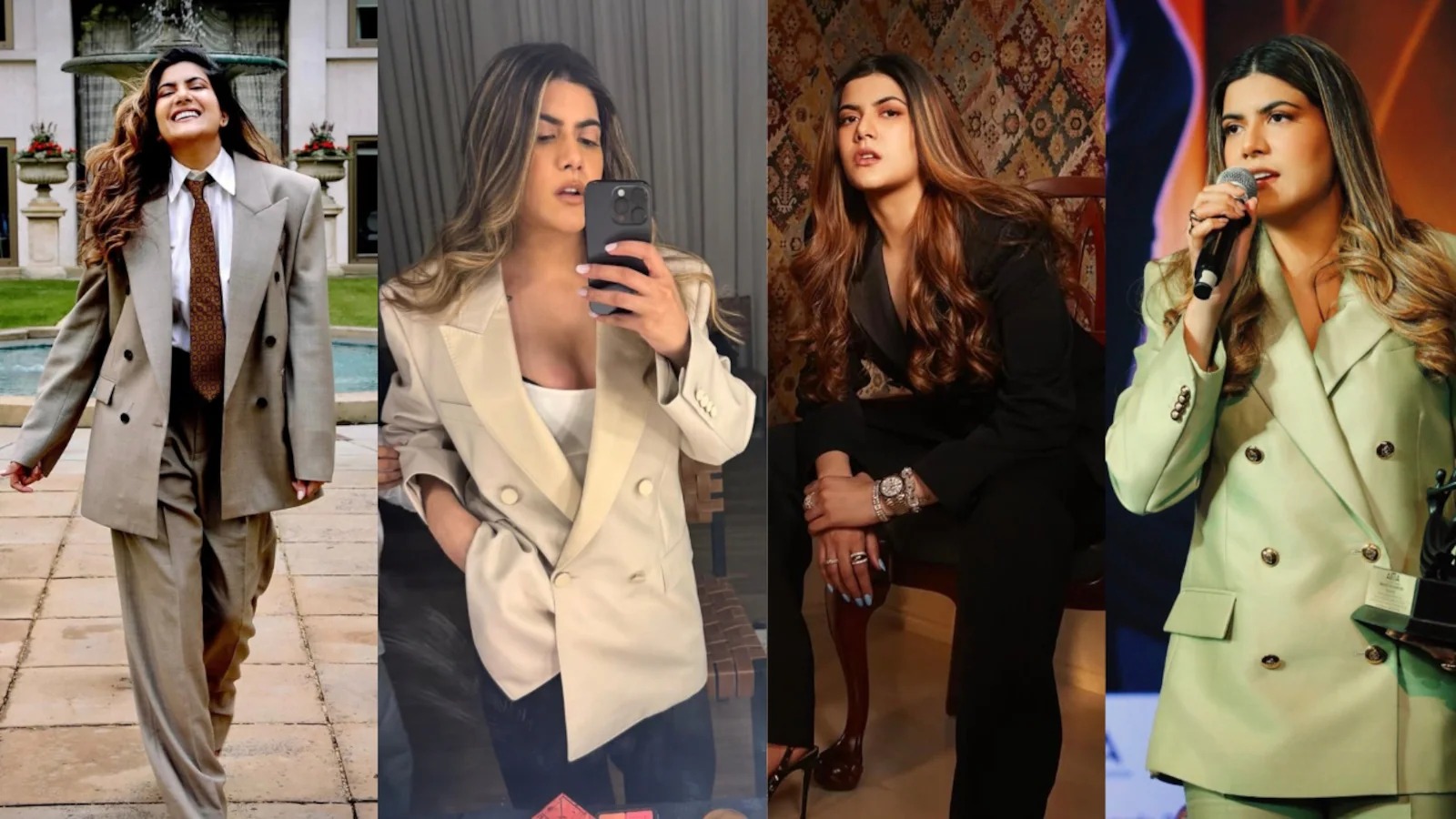
Indian entrepreneur and artist Ananya Birla revealed that she wears blazers in 80% of her public ensembles. Her secret to keeping the look fresh is a high-low styling trick that pairs structured, formal jackets with casual streetwear elements, offering a practical blueprint for modern, adaptable wardrobes.
MUMBAI, India — June 3, 2026 — Indian business leader, singer, and fashion icon Ananya Birla has publicly broken down the core strategy behind her highly documented public wardrobe, revealing that she incorporates tailored blazers into approximately 80% of her daily outfits. Speaking at an industry fashion event in Mumbai, Birla detailed the single styling trick that keeps her structured looks dynamic: the "high-low juxtaposition" rule. By pairing sharp, corporate tailoring with casual street elements and bold asymmetrical designs, Birla has successfully reframed the traditional blazer from a rigid office staple into a versatile medium for personal expression.
The High-Low Juxtaposition Rules for Modern Tailoring
According to fashion analysts and industry documentation from the Fashion Design Council of India (FDCI), the modern luxury landscape is seeing a major shift toward utilitarian yet upscale clothing. Birla’s wardrobe choices reflect this evolution, showing how formal outerwear can be modified for diverse environments.
The core of her approach lies in deliberate contrast. Instead of pairing structured blazers with matching trousers or formal pencil skirts, Birla’s signature framework matches oversized, masculine-cut jackets with informal or highly texturized items. Common pairings include distressed denim, basic cotton crop tops, chunky athletic footwear, and unexpected leather accents.
Design reports note that this contrast breaks the visual monotony usually associated with formal matching suits. By varying the under-layers and keeping the blazer as the anchor piece, the silhouette transitions smoothly from corporate boardrooms to evening creative studios.
Deconstructing the Patterns, Textures, and Proportion Adjustments
To maintain structural variety across an 80% blazer-dominated wardrobe, Birla's public appearances demonstrate a reliance on three specific design variables:
Proportion Manipulation: Moving between heavily padded, oversized shoulder lines that lengthen the torso, and cropped, sharp-cut jackets that emphasize high-waisted styles.
Textural Asymmetry: Incorporating unorthodox materials like raw silk, metallic brocades, and vegan leather alongside standard worsted wools.
Hardware Integration: Swapping standard factory buttons for industrial zippers, oversized safety pins, or custom metallic closures to introduce punk and streetwear aesthetics.
Styling data compiled by leading Indian fashion publications reveals that Birla utilizes monochromatic blocks—such as pairing a bright neon jacket over an entirely black ensemble—to create a clean visual line. This method draws focus to the jacket's silhouette without overwhelming the viewer with chaotic patterns.
Official Sources Section
The design frameworks, styling rules, and industry shifts discussed in this article are based on official style disclosures from Ananya Birla's Official Creative Portfolios, runway presentation data from the Fashion Design Council of India (FDCI), and seasonal trend analyses tracked by global luxury retail monitors.
Designer Perspectives
"A blazer should never feel like a corporate uniform unless you treat it like one," stated prominent celebrity stylists working within the Mumbai luxury circuit. "According to officials and design experts, the reason Ananya Birla’s styling trick succeeds is that she uses the jacket to anchor a look, rather than dominate it. When you mix sharp tailoring with relaxed, unconventional fabrics, you remove the rigidity. It changes the garment from an institutional requirement into a deliberate style statement."
Why It Matters
This styling shift has practical implications for everyday consumers looking to build sustainable, multi-use wardrobes. As global workplaces move toward hybrid, flexible dress codes, the demand for adaptable fashion is rising. Understanding how to style a single formal item like a blazer across multiple casual settings helps individuals maximize their clothing budget, reducing the need for separate corporate and weekend wardrobes. Birla's approach demonstrates how smart styling tricks can breathe new life into existing pieces, making formal wear practical for daily life.
Key Facts at a Glance
Wardrobe Frequency: Corporate and public appearance records show Ananya Birla incorporates blazers into 80% of her styled looks.
The Styling Strategy: Uses the high-low juxtaposition trick, matching sharp corporate outerwear with street-level basics.
Structural Variety: Relies on varied shoulder padding, distinct textures, and custom industrial hardware to prevent visual repetition.
Market Relevance: Reflects a wider luxury trend toward adaptable, hybrid dress codes across global professional sectors.
Frequently Asked Questions
What is the core styling trick Ananya Birla uses for her outfits?
The primary technique is high-low juxtaposition, which involves pairing structured, formal blazers with casual streetwear basics like denim, crop tops, and athletic footwear.
How does changing fabric textures prevent a blazer from looking boring?
Using diverse materials like raw silk, metallics, or leather breaks up the predictable look of standard office wools, adding instant visual depth.
Can this styling framework be applied to traditional corporate environments?
Yes. Consumers can adapt the rule by swapping out extreme streetwear for subtle contrasts, such as pairing a structured jacket with relaxed silk trousers or a knit top.
Why is an oversized blazer cut central to this look?
An oversized silhouette creates a relaxed, modern drape that naturally balances out the jacket's formal, built-in structure.
Source: Ananya Birla's Official Creative Portfolios, Fashion Design Council of India (FDCI), Mumbai Luxury Retail Style Trackers.