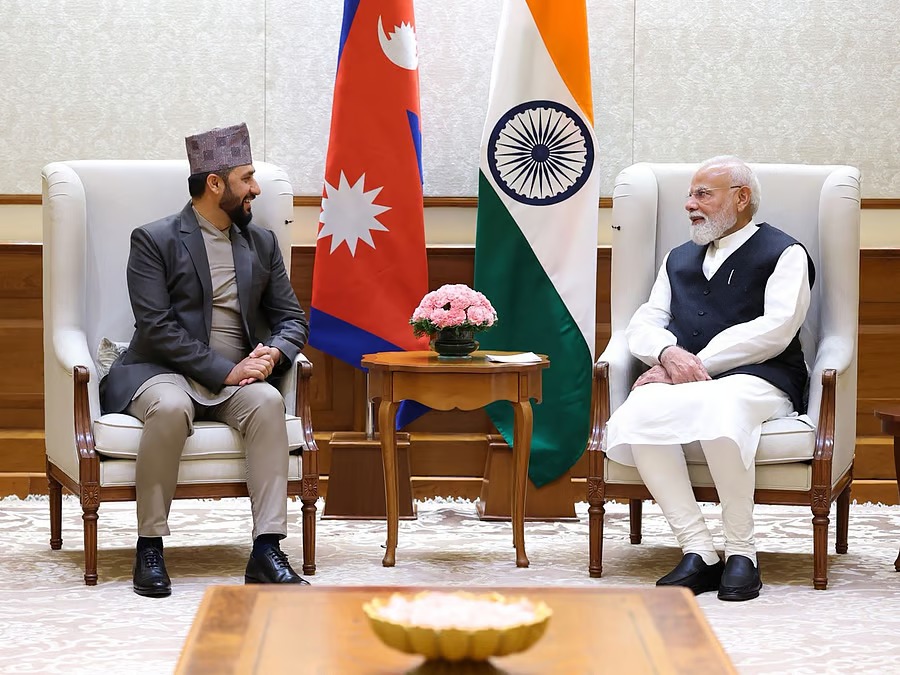
Prime Minister Narendra Modi met Nepalese RSP Chairman Rabi Lamichhane in New Delhi on Wednesday, reaffirming Nepal as a priority partner under India's "Neighbourhood First" policy. The high-level talks focused on expanding infrastructure connectivity, development partnerships, and people-to-people ties following Nepal's recent political transition.
NEW DELHI, India - June 3, 2026 - Prime Minister Narendra Modi on Wednesday met with Rabi Lamichhane, the Chairman of Nepal's ruling Rastriya Swatantra Party (RSP), in New Delhi. The high-level encounter served as a key platform for India to formally reaffirm its commitment to its "Neighbourhood First" policy. The diplomatic talks come in the immediate wake of Nepal’s recent general elections, which saw a surge in support for the RSP and ushered in a significant political transition in Kathmandu, altering the geopolitical dynamics of the Himalayan republic.
Elevating the Multifaceted India-Nepal Partnership
Official briefs from the Prime Minister's Office (PMO) confirmed that the discussions focused heavily on elevating the special and multifaceted relationship between the two historic neighbors. The dialogue covered several areas of mutual interest, including expanding bilateral trade, stabilizing cross-border supply chains, and fast-tracking regional infrastructure development.
The meeting was attended by a high-level Indian delegation, reflecting the strategic importance placed on the talks. External Affairs Minister S. Jaishankar, National Security Advisor Ajit Doval, and Foreign Secretary Vikram Misri were all present at the Prime Minister's Office for the discussions.
According to diplomatic trackers, Lamichhane’s multi-day visit to India marks the first major bilateral outreach by a senior Nepalese political leader since Kathmandu's government shifted following the March elections. The transition led to the rise of youth-backed leaders in Nepal, paving the way for a reset in how New Delhi engages with the changing political guard in the sub-continent.
Infrastructure Connectivity and Institutional Ties
Prior to his audience with Prime Minister Modi, Lamichhane engaged in separate strategic briefings across New Delhi's policy establishment. On Tuesday, the RSP chairman held talks with Union Home Minister Amit Shah to discuss cross-border security management and regularize bilateral party-to-party contacts under the "Know BJP" initiative.
Furthermore, detailed sessions with the Ministry of External Affairs (MEA) centered strictly on enhancing cross-border transit. In statements published during the visit, Lamichhane strongly advocated for expanding cross-border energy grids, boosting regional air connectivity, and standardizing infrastructure connectivity to drive mutual economic growth.
| Cooperation Vector | Focus Area | Primary Objectives |
| Infrastructure | Cross-Border Transit | Expanding regional air connectivity and road networks. |
| Energy | Hydro & Grid Integration | Upgrading power-sharing systems between both nations. |
| Diplomacy | Party-to-Party Engagement | Building institutional ties between youth leaders and the BJP. |
MEA Spokesperson Randhir Jaiswal noted during a weekly media briefing that India deeply values these multi-layered political contacts. He affirmed that they provide an essential baseline for deepening government-to-government, cultural, and people-to-people relations without demanding complex geopolitical trade-offs.
Official Sources Section
The diplomatic directives, corporate policy aims, and statements detailed in this report were verified using official press releases from the Press Information Bureau (PIB), social media updates from the Prime Minister’s verified executive handles, and official media briefings from the Ministry of External Affairs.
Executive Statements
"Delighted to meet the Chairman of the Rastriya Swatantra Party of Nepal, Mr. Rabi Lamichhane," Prime Minister Narendra Modi stated in an official announcement following the conclusion of the talks. "I welcome and fully share his desire to work closely together for a shared and prosperous future. Nepal is a priority partner under our Neighbourhood First policy and we look forward to collaborating with the new government to elevate the special and multifaceted relationship between our two countries to greater heights."
"We held a constructive dialogue on strengthening Nepal-India relations, focusing on our development partnership and multifaceted engagements," stated RSP Chairperson Rabi Lamichhane. "These linkages play a crucial role in promoting long-term growth and regional prosperity."
Why It Matters
The diplomatic re-engagement carries immediate practical implications for regional security, cross-border commerce, and transport logistics. By actively engaging with the RSP—a party heavily driven by Nepal's younger "Gen Z" demographic—New Delhi is establishing essential lines of communication with a new generation of leaders. For businesses and international investors, a stable relationship secures vital trade routes and ensures policy consistency for major cross-border projects, such as hydroelectric ventures. For everyday citizens, travelers, and migrant workers, stabilized ties protect open-border privileges and preserve deep cultural links.
Key Facts at a Glance
Policy Reaffirmation: Prime Minister Modi formally designated Nepal as a priority partner under India's "Neighbourhood First" foreign policy framework.
High-Level Attendance: The meeting included top Indian officials, including External Affairs Minister S. Jaishankar and National Security Advisor Ajit Doval.
Political Transition: The visit marks the first high-profile diplomatic exchange following Nepal's general elections in March.
Development Focus: Bilateral priorities have been directed toward improving air connectivity, infrastructure links, and people-to-people ties.
Frequently Asked Questions
What is the core objective of India's "Neighbourhood First" policy?
The foreign policy framework prioritizes building clean, mutually beneficial economic, physical, and cultural ties with India's immediate sub-continental neighbors.
Which senior Indian officials participated in the bilateral meetings?
The discussions were attended by Prime Minister Narendra Modi, Home Minister Amit Shah, External Affairs Minister S. Jaishankar, and National Security Advisor Ajit Doval.
What specific infrastructure sectors were highlighted for cooperation?
The two delegations focused heavily on improving cross-border transport infrastructure, regional air connectivity links, and joint energy development initiatives.
Why is Rabi Lamichhane’s visit considered a major diplomatic milestone?
As the head of the Rastriya Swatantra Party, his visit marks the first official political delegation to travel to New Delhi since Nepal's recent general election.
Source: Press Information Bureau (PIB) Delhi, Ministry of External Affairs Media Briefings, Rastriya Swatantra Party Official Communications.