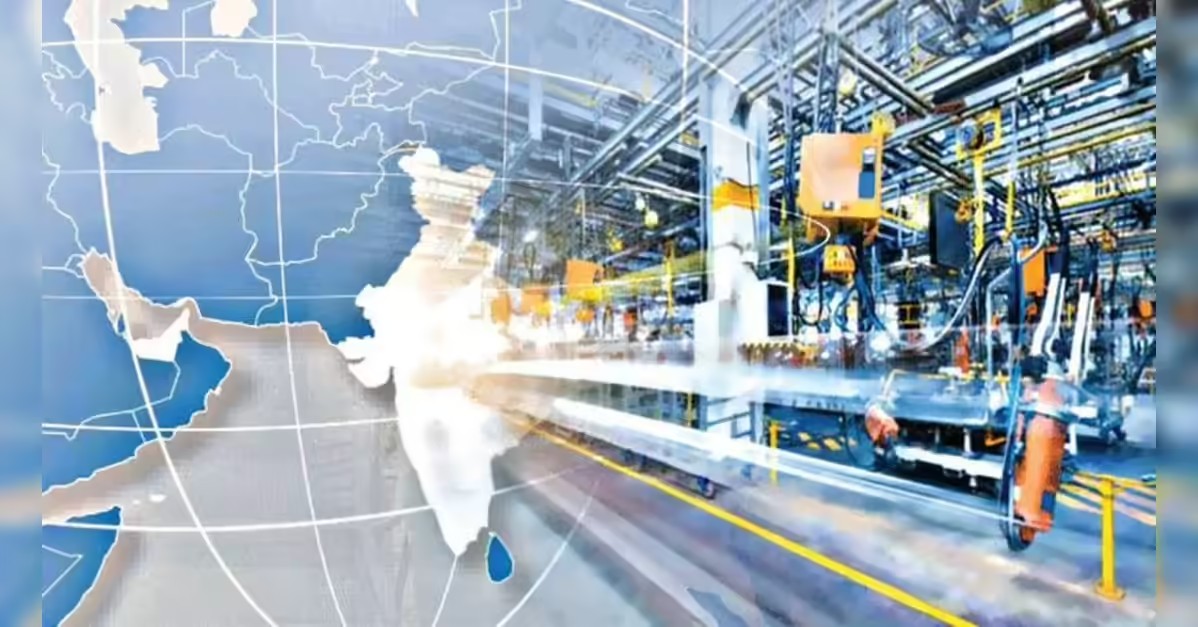
India’s manufacturing sector, despite its scale and potential, continues to lag behind global peers due to limited investment in innovation and research. Without a strong R&D backbone, the sector risks stagnation, missing opportunities to drive competitiveness, sustainability, and long-term growth in a rapidly evolving global economy.
India’s manufacturing industry has long been hailed as a cornerstone of economic growth, yet its innovation engine remains underpowered. While global competitors integrate cutting-edge technologies and invest heavily in R&D, India’s factories often rely on outdated processes, leaving productivity gains and value creation untapped.
Innovation Gap In Manufacturing
The absence of robust R&D frameworks has created a structural weakness in India’s manufacturing ecosystem. Companies often prioritize cost efficiency over innovation, resulting in limited product differentiation and reduced global competitiveness. This gap is particularly evident in sectors like electronics, automotive, and advanced materials, where global players dominate with innovation-led strategies.
Policy And Industry Challenges
Government initiatives such as “Make in India” have boosted manufacturing visibility, but policy execution has not sufficiently addressed the innovation deficit. Weak collaboration between academia, industry, and research institutions further compounds the challenge. Additionally, limited funding for applied research and slow adoption of emerging technologies hinder progress.
Global Lessons And Opportunities
Countries like South Korea and Germany showcase how sustained R&D investments can transform manufacturing into innovation-driven powerhouses. India has the opportunity to replicate such models by incentivizing private sector R&D, fostering industry-academia partnerships, and creating innovation clusters that integrate startups, corporates, and research labs.
Future Pathways
To unlock its full potential, India must embed innovation into the DNA of its manufacturing sector. This requires a shift from incremental improvements to breakthrough technologies, supported by strong policy frameworks, targeted funding, and a culture that values experimentation and risk-taking.
Key highlights
- India’s manufacturing sector struggles with limited R&D investment
- Cost efficiency often prioritized over innovation and competitiveness
- Government initiatives yet to fully bridge the innovation gap
- Global models highlight benefits of sustained R&D focus
- Future growth hinges on embedding innovation into manufacturing DNA
Sources: Industry reports, government policy documents, global manufacturing benchmarks