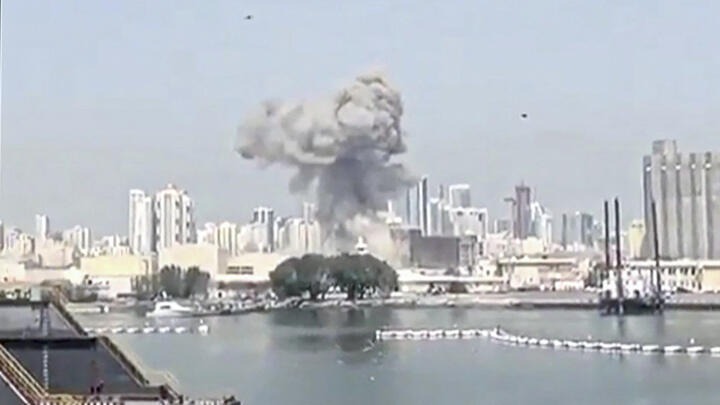
Following U.S. airstrikes on ten Iranian military targets in retaliation for an attack on an oil tanker, Iran launched drone and missile strikes against Bahrain and Kuwait on Sunday. The escalation threatens the collapse of the recently signed Islamabad Memorandum of Understanding, with both sides warning of further, potentially decisive, conflict.
DUBAI — Tensions in the Persian Gulf surged Sunday as Iran’s paramilitary Revolutionary Guard launched a series of coordinated drone and missile strikes against Bahrain and Kuwait. The attack, which hit key military and residential infrastructure, follows a significant U.S. military operation against Iranian targets, threatening to dismantle a fragile interim peace agreement intended to end the ongoing regional conflict.
The Sunday morning escalation was a direct response to a U.S. offensive conducted late Saturday. According to U.S. Central Command, American fighter jets struck ten Iranian military targets, including surveillance infrastructure, communication hubs, air defense systems, and drone storage facilities. The U.S. operation was launched after Iranian forces allegedly targeted the Kiku, a Panamanian-flagged tanker carrying Qatari crude oil, as it transited the Strait of Hormuz.
Escalating Conflict in the Gulf
The Iranian strikes marked a sharp departure from the tentative calm established by the Islamabad Memorandum of Understanding, signed just ten days ago by U.S. President Donald Trump and Iranian President Masoud Pezeshkian.
In Bahrain, the Interior Ministry reported that an eight-story residential building near the international airport was severely damaged by the Iranian strikes. While officials confirmed no fatalities, images released by the ministry showed the structure’s top floor reduced to rubble with windows blown out across the building.
Meanwhile, in Kuwait, the military successfully intercepted two incoming ballistic missiles. Air raid sirens echoed across the country as the Kuwaiti army urged residents to seek immediate shelter. Iran’s Revolutionary Guard later claimed responsibility for the strikes, stating they had targeted the Ali Al Salem Air Base in Kuwait and the U.S. Fifth Fleet naval headquarters in Bahrain.
A Ceasefire on the Brink
The back-and-forth exchange has placed the recently signed ceasefire in extreme jeopardy. President Trump, writing on social media, warned Tehran that continued violations would leave the U.S. with no choice but to "militarily complete the job," adding, "If that happens, the Islamic Republic of Iran will no longer exist!"
Iranian officials responded with equal intensity, warning that any further "enemy aggression" would be met with a "crushing response." The Revolutionary Guard explicitly cautioned that continued U.S. military action would lead to a "complete halt" of ongoing diplomatic processes, effectively signaling the potential collapse of the 60-day negotiating window established under the June 17 memorandum.
Official Sources
The U.S. military’s Central Command (CENTCOM) confirmed the weekend strikes, characterizing them as a direct response to "continued Iranian aggression against commercial shipping." The Iranian Revolutionary Guard issued a formal statement on Sunday morning confirming the retaliation against Kuwait and Bahrain.
Why It Matters
The return to active hostilities threatens to derail efforts to restore stability in the Strait of Hormuz, a crucial global maritime chokepoint. With Iran currently disputing international control of the strait and U.S.-led maritime coalitions attempting to maintain open traffic, the region faces a renewed risk of a broader fuel and food crisis. For citizens in the Gulf states, the conflict has moved from a theoretical security concern to an immediate physical threat, as missile fire strikes residential areas and military bases alike.
Key Facts at a Glance
The Catalyst: U.S. airstrikes on ten Iranian military targets in retaliation for an attack on the oil tanker Kiku.
Iranian Retaliation: Missile and drone strikes launched against U.S.-allied military bases in Bahrain and Kuwait on Sunday.
Casualties: No fatalities reported in Kuwait or Bahrain, though residential and military infrastructure sustained significant damage.
Diplomatic Status: The Islamabad Memorandum of Understanding, signed June 17, is currently at risk of total collapse.
Frequently Asked Questions
Why did the U.S. strike Iran on Saturday?
The U.S. military stated the strikes were in response to Iranian forces attacking a Panama-flagged oil tanker, the Kiku, in the Strait of Hormuz.
What is the status of the U.S.-Iran ceasefire?
The ceasefire is currently on the brink of collapse, with Iran threatening to halt all negotiations if U.S. military operations continue.
Have there been any casualties?
No fatalities have been reported following the Iranian strikes on Bahrain and Kuwait, though local ministries confirmed significant damage to buildings and infrastructure.
What is the significance of the targeted bases?
The targeted facilities include the Ali Al Salem Air Base in Kuwait and the U.S. Fifth Fleet headquarters in Bahrain, both of which are critical to U.S. naval and air operations in the region.
Source: AP News, Gulf News, The Hindu, The Times of Israel, Wikipedia