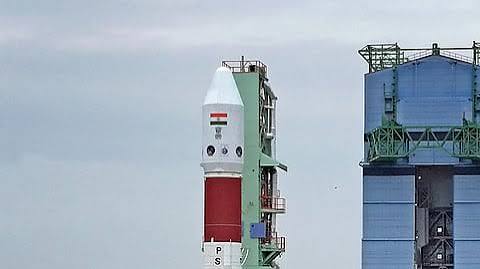
ISRO Chairman V. Narayanan confirmed that the Gaganyaan mission has successfully cleared over 8,000 structural ground tests, including 60 major demonstrations in the past fiscal year. Prioritizing absolute safety, the agency will launch three uncrewed test flights before executing its historic maiden human spaceflight mission to Low Earth Orbit.
BENGALURU — The Indian Space Research Organisation (ISRO) confirmed on June 27, 2026, that its flagship human spaceflight initiative, the Gaganyaan mission, remains systematically on track, having completed over 8,000 rigorous ground and structural tests. Speaking in Bengaluru at the 17th annual Air Chief Marshal L.M. Katre Memorial Lecture, ISRO Chairman V. Narayanan emphasized that while technical progress remains highly substantive, engineering timelines are under continuous review to prioritize astronaut safety. The development marks a critical operational phase as the space agency systematically transitions from hardware development to uncrewed flight validations before sending Indian astronauts into Low Earth Orbit.
Technical Benchmarks and Structural Validation
According to the keynote lecture organized by the Air Force Association (Karnataka) at the Hindustan Aeronautics Limited (HAL) Management Academy, ISRO’s engineering divisions have accelerated structural integrity and propulsion evaluations. Over 60 major tests or demonstrations were successfully executed during the 2025–2026 financial year alone.
The cumulative 8,000 ground tests have focused primarily on validating mission-critical subsystems. These include the environmental control and life support systems (ECLSS), thermal protection shields, avionics, and the critical Crew Escape System (CES). The CES is designed with solid rocket motors featuring reverse flow nozzles capable of safely pulling the crew module clear of the launch vehicle in a high-altitude emergency.
Evolving Timelines and Multi-Phase Safety Reviews
Chairman Narayanan clarified that the baseline timeline for the initial uncrewed validation flight, designated as G1, is undergoing meticulous technical reviews. While teams are actively working toward a launch window by the end of 2026, the strict "human-rating" verification of the Launch Vehicle Mark-3 (LVM3) could shift the first uncrewed flight into the third quarter of 2027.
The space agency has formally mandated a sequence of three successive uncrewed test missions to validate automatic re-entry, parachute deployment, and sea-splashdown recovery protocols. Only after verifying the telemetry and physical integrity of these non-crewed flights will the Union Department of Space approve the final crewed itinerary, potentially slating the landmark astronaut flight for late 2027 or 2028.
Industrial Partnerships and Infrastructure Expansion
The address heavily highlighted ISRO’s deep-rooted industrial integration with public sector aerospace manufacturing. The agency underscored its enduring strategic partnership with HAL, which manufactures the primary aluminum-alloy structures and crew module fairings.
Furthermore, the space agency highlighted its parallel technological milestones, including the successful June 24 hot test of its 175-tonne thrust semi-cryogenic engine power head at the ISRO Propulsion Complex in Mahendragiri. This propulsion advancement, though intended for future heavy-lift iterations, runs concurrent to the human-rated liquid and solid propulsion systems already locked in for the Gaganyaan configuration.
Official Sources Section
The program metrics, historical data, and structural parameters detailed in this report are sourced directly from the official addresses delivered at the Air Force Association (Karnataka) forum, technical bulletins provided by the Indian Space Research Organisation (ISRO), and project updates managed by the Union Department of Space (DoS).
Quote Section
"According to officials at the Indian Space Research Organisation, human spaceflights demand uncompromising safety standards above all experimental timelines. Organizers stated that before actual human beings are launched into orbit, the human-rating parameters of the LVM3 must be fully validated through three independent uncrewed flights, ensuring redundant safeguards are flawless across every phase of the mission profile."
Why It Matters
The steady progress of the Gaganyaan mission carries profound geopolitical and commercial implications for the domestic aerospace landscape. Achieving independent human spaceflight capabilities will place India into an elite tier of only three other nations—the United States, Russia, and China—that possess autonomous crewed launch infrastructure.
For the private manufacturing sector and scientific institutes, the ongoing technology spin-offs in advanced metallurgy, life-support electronics, and automated recovery systems are stimulating a highly skilled industrial ecosystem, creating premium engineering employment opportunities nationwide.
Key Facts at a Glance
Total Test Volumes: Over 8,000 ground and structural test procedures have been successfully finalized for the mission architecture.
Pre-Flight Mandate: ISRO will execute exactly three uncrewed orbital test flights to validate safety systems before clear human clearance is granted.
Fiscal Progress: More than 60 major high-stakes technology demonstrations and hot-firings were logged in the 2025–2026 fiscal cycle.
Prime Launch Fleet: The mission utilizes a specialized human-rated variant of the LVM3 heavy-lift rocket to position the crew module at an altitude of 400 km.
FAQ Section
What is the primary focus of the 8,000 ground tests conducted for Gaganyaan?
The tests focus on validating the structural integrity, avionics, thermal protection sheets, life-support mechanisms, and emergency crew escape capabilities under simulated extreme space environments.
Why is there a possibility of the uncrewed flight timeline shifting to 2027?
ISRO prioritizes astronaut safety above rigid scheduling. The human-rating process demands exhaustive verification of structural subsystems, meaning the first uncrewed flight may be adjusted to the third quarter of 2027 based on incremental safety evaluations.
How many astronauts are being trained, and where will they go?
Four designated Indian astronauts (Gaganyatris)—Shubhanshu Shukla, Prasanth Balakrishnan Nair, Ajit Krishnan, and Angad Pratap—are training for a planned three-day mission orbiting roughly 400 km above the Earth in Low Earth Orbit.
Source: Indian Space Research Organisation Official Press, Department of Space Government Releases