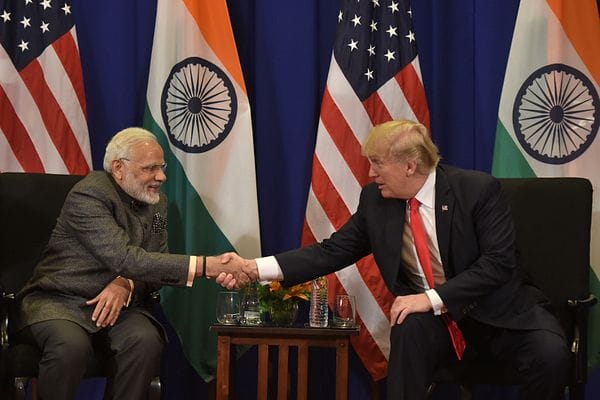
Union Minister Piyush Goyal announced that an interim trade pact between India and the United States is highly likely to roll out in July 2026. The agreement focuses on a "vibrant" first phase designed to optimize market access, harmonize customs standards, and reinforce bilateral supply chain resilience across key engineering, tech, and pharmaceutical industries.
NEW DELHI — India’s Union Minister of Commerce and Industry, Piyush Goyal, announced on June 5, 2026, that a highly anticipated interim trade pact between India and the United States is likely to be rolled out in July 2026. This announcement follows an intensive series of bilateral discussions aimed at sealing a "vibrant" first phase of a broader economic partnership. The development is crucial today as both nations seek to secure resilient supply chains, lower tariff barriers on select commodities, and foster institutional investment amid shifting global macroeconomic alignments.
India and United States Converge on First Phase Interim Trade Pact
The upcoming interim trade pact represents a significant breakthrough after multi-round negotiations between trade desks in New Delhi and Washington, D.C. Rather than waiting for a comprehensive free trade agreement (FTA), which involves lengthy multi-sectoral clearances, both governments have prioritized a fast-tracked interim trade pact to lock in mutual economic gains.
According to statements from the Ministry of Commerce and Industry, the "vibrant" first phase will focus on easing market access constraints, streamlining custom clearance procedures, and addressing mutual regulatory standards. The July rollout timeline indicates that the core legal and text reviews have entered their final drafting stages, leaving minor administrative protocols to be concluded by the respective trade delegations over the coming weeks.
Easing Barriers to Strengthen Economic Security
The strategic positioning of this interim trade pact reflects a shared intent to decouple critical manufacturing sectors from volatile regional dependencies. By establishing clear guidelines on product testing and standardized documentation, the commerce ministry expects to see a rapid acceleration in bilateral trade volumes across technological, engineering, and agricultural verticals immediately following the formal rollout.
Macroeconomic Impact on Businesses, Investors, and Exporters
The upcoming interim trade pact is poised to deliver measurable advantages across multiple tiers of the domestic and international business landscape. For export-oriented industries in India, such as textiles, pharmaceuticals, and information technology services, the reduction of regulatory friction translates directly to improved cost competitiveness in the premium American consumer market.
For retail and corporate investors monitoring listed logistics, agricultural, and tech manufacturing stocks, the minister's announcement provides long-term clarity for capital deployment. Lower tariff burdens and mutual recognition of manufacturing certifications will allow multinational corporations to confidently scale their production operations in India, creating secondary employment booms across domestic component assembly lines.
Official Sources Section
The baseline metrics and structural updates regarding the bilateral negotiation timeline were officially issued by Union Minister Piyush Goyal during an industry briefing organized by the Ministry of Commerce and Industry in New Delhi. Periodic monitoring files and corporate trade compliance updates are routinely indexed by the Ministry of Commerce and Industry. Broader financial impacts on market capitalizations are listed transparently on the exchange desks of BSE Limited and the National Stock Exchange of India Limited.
Quote Section
Evaluating the regulatory momentum, trade administration chiefs highlighted the cooperative spirit defining the current economic landscape.
"According to officials from the international trade relations desk, the bilateral framework has been constructed to recognize the unique economic strengths of both global democracies," Union Minister Piyush Goyal stated during the briefing. "Organizers stated that the July implementation of this interim trade pact will serve as an essential foundational layer, ensuring subsequent phases can expand swiftly into deeper defense, semiconductor, and clean energy co-development."
Why It Matters
The practical implications of an India-US interim trade pact extend far beyond simple customs declarations and tariff percentage adjustments. For global supply chains, a reliable trade corridor between New Delhi and Washington acts as an anchor against geopolitical disruptions, ensuring that critical medical components and technological hardware flow without bureaucratic interruptions. Furthermore, it sets a template for how India can negotiate similar fast-tracked agreements with other major economic blocs, utilizing modular, phased packages rather than protracted single-text treaties.
Key Facts at a Glance
Timeline Anchored: An interim trade pact between India and the United States is scheduled for a projected rollout in July 2026.
Phase One Strategy: The deal focuses on concluding a "vibrant" first phase to deliver immediate market access and remove non-tariff barriers.
Strategic Growth: Designed to significantly boost export margins for Indian pharmaceutical, software, and manufacturing sectors.
Institutional Security: The agreement emphasizes secure, resilient supply chains to insulate bilateral trade from external geopolitical shocks.
FAQ Section
What makes an interim trade pact different from a full Free Trade Agreement (FTA)?
An interim trade pact allows negotiating nations to finalize mutually beneficial terms on a select group of sectors or products quickly, rather than waiting to resolve complex disputes across all economic sectors required for a full FTA.
Which sectors will benefit most from this July rollout?
The first phase is expected to positively impact tech services, pharmaceuticals, precision engineering goods, and textile exporters by lowering administrative friction and standardizing certifications.
Will this trade pact affect retail prices for ordinary consumers?
Yes. Easing import-export duties and clearing logistics bottlenecks typically lowers production and transport costs, which can lead to more competitive pricing on consumer electronics, pharmaceuticals, and specialized goods.
Source: Official Press Statements from the Ministry of Commerce and Industry, Union Ministerial Briefings