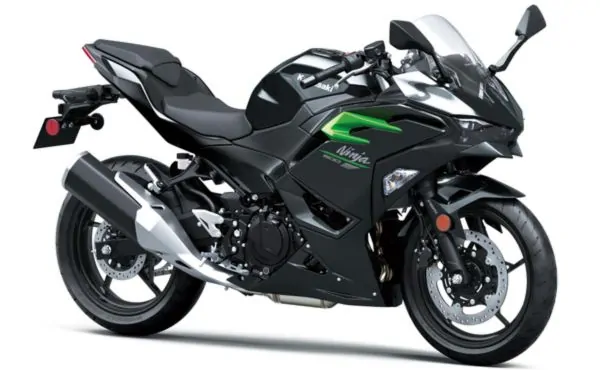
The updated 2026 Kawasaki Ninja 500 has launched in India at 5.76 lakh rupees ex-showroom, introducing E20 fuel compliance. Due to its status as a CBU import, on-road prices reach over 7.06 lakh rupees, with monthly installment configurations ranging between 11,900 and 18,100 rupees across various multi-year tenures.
Kawasaki Ninja 500 EMI Options Explained Post 2026 Price Hike
India Kawasaki Motors updates its mid-weight supersport with E20 fuel compliance and signature livery.
MUMBAI, India — India Kawasaki Motors (IKM) has formally launched the updated 2026 Kawasaki Ninja 500 at an ex-showroom price of 5.76 lakh rupees ($6,900), introducing a marginal price hike of 10,000 rupees over the previous variant. The mid-weight motorcycle, which arrives in the domestic market as a Completely Built Unit (CBU), has been updated to meet mandatory E20 fuel compliance standards and features a new signature Lime Green colorway.
Because the motorcycle is subject to steep import duties as a CBU, its total cost on the road crosses 7 lakh rupees in premium regional micro-markets like Mumbai and Bengaluru. For automotive enthusiasts and prospective buyers navigating this high price point, understanding the precise structured loan terms, localized Equated Monthly Installment (EMI) breakdowns, and down payment thresholds is essential to planning an accurate acquisition strategy.
On-Road Pricing Structure and Down Payment Benchmarks
The retail cost of the 2026 Kawasaki Ninja 500 varies significantly across regional states depending on local Regional Transport Office (RTO) registration tax slabs, comprehensive insurance coverages, and mandatory handling charges. While the ex-showroom base price is standardized at 5,76,000 rupees, the aggregate on-road price reaches approximately 7,06,000 rupees in Mumbai and stretches up to 7,17,960 rupees in Bengaluru.
To finance the premium model, commercial retail banks and non-banking financial companies (NBFCs) typically mandate a minimum down payment equivalent to 10% to 20% of the baseline on-road price. Financial sector datasheets show that most premium motorcycle buyers opt for a standard upfront down payment of 1,40,000 rupees, leaving an approximate net loan principal balance of 5,66,000 to 5,77,000 rupees to be amortized over the chosen tenure.
Structured EMI Amortization Across Tenures
For retail loans processed at an average premium vehicle interest rate of 9.5% per annum, the monthly financial obligation varies predictably based on the length of the repayment contract. Financing models indicate three primary consumer pathways for managing the loan principal:
Short-Term Horizon (36 Months): Assuming a standard net loan balance of 5,66,000 rupees, a three-year tenure generates a monthly payment of approximately 18,135 rupees. This configuration minimizes the aggregate interest payout over the life of the loan.
Medium-Term Horizon (48 Months): Spreading the balance across a four-year window reduces the monthly baseline payout to roughly 14,215 rupees, offering balanced cash flow flexibility.
Long-Term Horizon (60 Months): For individuals looking to maximize immediate monthly liquidity, a five-year loan contract drops the regular monthly installment down to approximately 11,895 rupees, though it maximizes total accrued interest.
Technical Specifications and Market Context
Mechanically, the 2026 iteration remains completely unchanged from its predecessor. The motorcycle continues to derive power from a 451cc liquid-cooled, parallel-twin engine that develops 45 horsepower at 9,000 rpm and 42.6 Nm of peak torque at 6,000 rpm, paired with a six-speed manual gearbox featuring an assist and slipper clutch.
The premium vehicle features a negative LCD instrument cluster with smartphone Bluetooth integration, dual-channel ABS, and a accessible 785mm seat height. However, financial analysts point out that because the model is imported as a CBU rather than assembled locally as a Completely Knocked Down (CKD) unit, its price remains significantly higher than direct competitors like the locally manufactured Aprilia RS 457, which retails between 4.22 lakh and 4.37 lakh rupees ex-showroom.
Official Sources Section
According to official product portfolios and dealer dispatches released by India Kawasaki Motors, bookings for the E20-compliant 2026 variant are open across all authorized premium network showrooms. Statutory documentation confirms that corporate asset loan processing rates are subject to slight real-time fluctuations based on an applicant's verified CIBIL credit score and internal banking appraisal standards.
Quote Section
"According to officials at primary premium dealerships, the transition to E20 fuel compliance ensures long-term regulatory viability for the model across urban centers. Financing remains highly streamlined, with major banking partners offering up to 90% funding on the total on-road price for qualified profiles."
Why It Matters
The financial structuring of high-end motorcycle purchases carries direct practical implications for private consumers, dealership networks, and auto financing sectors. For individual enthusiasts, calculating precise EMI tables and hidden RTO costs prevents sudden post-purchase cash flow shortages. For corporate lenders, the continuous health of CBU financing pipelines acts as an important gauge of luxury consumer demand and discretionary credit appetite within the middle-to-high income brackets of the national economy.
Key Facts at a Glance
Updated Base Price: The 2026 Kawasaki Ninja 500 is officially launched at 5,76,000 rupees ex-showroom.
CBU Import Drag: High import structures push the final on-road cost past 7,06,000 rupees in major metro cities.
Key Lifecycle Update: The current model adds official compliance for E20 ethanol-blended fuel alongside a Lime Green graphic update.
Repayment Range: Monthly payments range between roughly 11,900 and 18,100 rupees depending on loan tenures.
FAQ Section
Q: Why is the Kawasaki Ninja 500 significantly more expensive than the Aprilia RS 457? A: The Aprilia RS 457 is manufactured locally in India, keeping costs low. The Ninja 500 is imported as a Completely Built Unit (CBU) from Japan, attracting heavy customs duties that inflate the price.
Q: What is the exact company-claimed mileage of the Ninja 500? A: According to certified laboratory testing data, the motorcycle delivers an official fuel economy figure of 26.31 kilometers per liter.
Q: Can I finance 100% of the ex-showroom price of the motorcycle? A: Yes, multiple premium vehicle lenders offer loans covering up to 100% of the ex-showroom cost, provided the buyer pays the remaining RTO taxes, comprehensive insurance, and logistical processing fees upfront.
Source: India Kawasaki Motors (IKM) Official Portal, Autocar India Automotive Intelligence