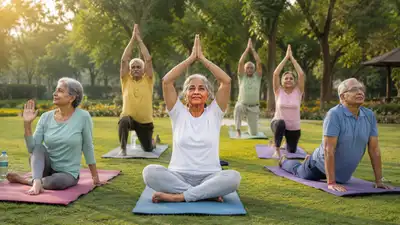
On International Yoga Day 2026, community networks across India are utilizing specialized, low-impact yoga protocols to support an aging population. Aligned with the official theme "Yoga for Healthy Ageing," these grassroots initiatives target the multi-billion rupee silver economy, offering structured group exercises that enhance senior mobility and directly reduce social isolation.
NEW DELHI, India — Community-driven yoga networks across India are spearheading a grassroots public health transformation aimed at keeping the country’s rapidly expanding elderly population physically independent and socially integrated. Observing the 12th annual International Day of Yoga today, June 21, 2026, thousands of senior-focused wellness groups, housing societies, and non-profit organizations have mobilized localized training camps tailored specifically to the unique biomechanical and emotional needs of geriatric practitioners.
This targeted community push arrives at a critical juncture as India adapts to shifting demographic realities. With advanced medical access extending lifespans, public healthcare focus has pivoted decisively toward maximizing "healthspan"—the number of years a person lives free from chronic disability. By offering accessible, low-impact exercise and structured group spaces, local yoga communities are providing a vital shield against the dual modern public health crises of senior physical decline and urban isolation.
Expanding the Infrastructure of the Silver Economy
The systematic expansion of senior-centric yoga modules is deeply connected to India’s rapidly growing "silver economy." Valued by economic consortiums at approximately 73,000 crore rupees ($8.75 billion), the sector encompasses specialized elder care products, assistive technology, and preventative rehabilitation services designed specifically for the aging demographic.
To lower barriers to entry for fragile or mobility-restricted seniors, community networks have moved away from complex physical postures, substituting them with specialized, evidence-based adaptions:
Chair Yoga Assemblies: Utilizing standard household chairs to perform seated stretches, protecting vulnerable knee and hip joints while maintaining spinal alignment.
Prop-Assisted Support: Integrating blocks, bolster pillows, and resistance straps to assist balance and minimize fall risks during group workouts.
Low-Impact Pranayama: Focusing heavily on rhythmic breathing exercises to naturally improve respiratory capacity and lower systemic blood pressure without cardiovascular strain.
Mitigating Senior Isolation and Chronic Lifestyle Disorders
Beyond the obvious physical milestones of balance and flexibility, community organizers emphasize that the primary value of local yoga circles is psychological. Rapid urbanization and the gradual transition away from traditional multi-generational joint family structures have left an unprecedented number of Indian seniors living alone, raising regional rates of geriatric depression and cognitive decline.
Structured group yoga creates a predictable, recurring social anchor for senior citizens. According to medical advisories, the combination of shared meditation, physical touch during assisted alignments, and communal interaction after sessions acts as a powerful non-pharmaceutical countermeasure against loneliness, significantly lowering cortisol levels and improving cognitive resilience.
Official Sources Section
According to official policy briefs published by the Ministry of Ayush, the government has formally instituted "Yoga for Healthy Ageing" as the central directive theme for the 2026 International Day of Yoga. Statutory updates confirm the ministry has deployed "10 Yoga Protocols for Non-Communicable Diseases and Target Groups," which includes an audited, evidence-based regimen meticulously designed for the elderly. Concurrently, the Ministry of Social Justice and Empowerment is leveraging its Seniorcare Ageing Growth Engine (SAGE) framework to fund startups that combine digital health monitoring with localized senior wellness circles.
Quote Section
"According to officials from the Ministry of Ayush, scientific data peer-reviewed over the last decade proves that regular, low-impact yoga significantly improves long-term balance and mobility in senior citizens. By transitioning these frameworks into community-led neighborhood assemblies, we are successfully reducing the financial burden placed on public geriatric hospital wards."
Why It Matters
The institutionalized push for elderly yoga carries immense economic and social implications for ordinary families, healthcare providers, and insurance regulators. For individual households, a physically independent grandparent significantly reduces domestic caregiving fatigue and cuts down on recurring pharmaceutical costs associated with arthritis, insomnia, and mild hypertension. For the state, scaling community wellness programs serves as an efficient, highly cost-effective model of preventive healthcare, delaying institutional nursing requirements and preserving hospital capacity for critical care.
Key Facts at a Glance
Strategic Policy Theme: The 12th International Day of Yoga focuses officially on "Yoga for Healthy Ageing" to address global demographic shifts.
Silver Economy Baseline: The Indian elder-care and wellness market is currently valued at an estimated 73,000 crore rupees.
Evidence-Based Support: The Ministry of Ayush has launched 10 standardized target protocols, featuring a dedicated module for senior citizens.
Holistic Benefits: Regular group practice is scientifically shown to improve bone density, lower blood pressure, and mitigate geriatric isolation.
FAQ Section
Q: Can elderly citizens with severe knee arthritis safely practice yoga? A: Yes. Community centers utilize specialized "Chair Yoga" and prop-assisted routines that eliminate all direct strain on the lower joints while still engaging core upper-body flexibility.
Q: What is the primary difference between standard yoga and the elderly protocol? A: The elderly protocol focuses strictly on gentle joint movements, passive stretching, balance restoration, and breathing techniques, intentionally omitting high-impact inversions or strenuous weight-bearing poses.
Q: How does the SAGE initiative intersect with International Yoga Day? A: The Seniorcare Ageing Growth Engine (SAGE) provides government grants and infrastructural support to startups and community networks that create innovative wellness platforms and apps for senior citizens.
Source: Ministry of Ayush, Press Information Bureau (PIB) India