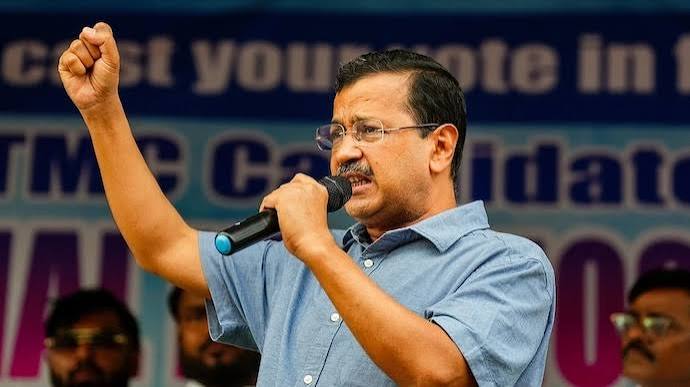
Aam Aadmi Party leader Arvind Kejriwal has promised to ban E20 petrol in Goa within five days if his party wins the 2027 Assembly election. Citing widespread vehicle engine damage, lower mileage, and rising sugar prices, Kejriwal's pledge escalates political friction over India's national ethanol-blending policy.
PANAJI — Aam Aadmi Party (AAP) National Convenor Arvind Kejriwal has made E20 petrol a central political flashpoint ahead of the upcoming Goa Assembly elections. Speaking at an E20 town hall event during his two-day tour of the Bharatiya Janata Party (BJP)-ruled state, the former Delhi Chief Minister vowed that an AAP government would outlaw the sale of 20 percent ethanol-blended petrol within five days of taking office.
The pledge injects intense debate over the nationwide fuel policy into local electoral politics. Kejriwal asserted that failure to implement the ban would prompt him to exit active politics, intensifying pressure on the central administration's green energy mandates.
Technical Concerns and Economic Ripple Effects
Kejriwal's hardline stance follows mounting complaints from vehicle owners regarding engine knocking, reduced fuel efficiency, and long-term fuel system corrosion. Since E20 became the mandatory default standard across retail fuel outlets nationwide following the April 2026 rollout, owners of older legacy vehicles have voiced severe apprehensions about component compatibility. According to AAP leadership, Goa remains disproportionately affected due to its high density of private two-wheelers and four-wheelers relative to the national average.
Beyond automotive performance, Kejriwal drew a direct correlation between national ethanol procurement policies and the recent spike in domestic sugar prices. He alleged that the diversion of sugarcane equivalent to millions of tonnes of sugar for ethanol refining triggered an artificial supply crunch, driving retail sugar prices past elevated thresholds within a single month.
According to official political announcements, stakeholder town halls, and policy briefs:
The 2027 Electoral Pledge: A commitment to prohibit E20 petrol sales within five days of an AAP government formation in Goa.
Consumer Impact: Widespread motorist grievances citing a 30 to 40 percent drop in vehicle mileage and accelerated engine wear.
Agricultural Diversion: Allegations that heavy ethanol blending policies disrupted domestic sugar inventories and increased market volatility.
National Context: Part of a broader nationwide AAP campaign against the forced implementation of single-blend ethanol fuel.
Official Sources Section
Aam Aadmi Party Official Portal: National town hall transcripts, press statements, and public grievance collection metrics regarding E20 fuel.
Ministry of Petroleum and Natural Gas, Government of India: Policy guidelines governing the national roadmap for ethanol blending and energy security targets.
Society of Indian Automobile Manufacturers (SIAM): Technical frameworks and vehicle compliance advisories concerning fuel transition standards.
Quote Section
"If our government is formed in Goa after March 10, 2027, the sale of ethanol-blended petrol will be banned in the state within five days. Otherwise, I will leave politics,"
— stated Aam Aadmi Party National Convenor Arvind Kejriwal during the town hall in Goa.
Why It Matters
For vehicle owners, commercial transport operators, and agricultural stakeholders, the political mobilization around E20 fuel highlights the friction between national decarbonization goals and consumer experience. While federal regulators maintain that ethanol blending successfully curbs crude oil import bills and reduces vehicular emissions, local discontent over engine performance and food-commodity inflation provides opposition parties with a potent grassroots issue ahead of regional polls.
Key Facts at a Glance
Target Region: Goa, heading toward Assembly elections in early 2027.
Core Policy Challenge: Universal availability of E20 fuel introduced across fuel pumps.
Proposed Remedy: A five-day legislative ban on ethanol-blended petrol following a change in state leadership.
Contifying Claims: Vehicle mechanical damage, lower mileage yields, and surges in domestic sugar pricing.
FAQ Section
What is E20 petrol, and when did it become mandatory?
E20 petrol is a blend consisting of 20 percent ethanol and 80 percent conventional petrol. It became the sole standard petrol variant available at retail fuel stations nationwide in April 2026.
What did Arvind Kejriwal promise regarding E20 petrol in Goa?
Kejriwal vowed that an AAP government would ban the sale of E20 petrol in Goa within five days of coming to power after the March 2027 state elections.
Why is the Aam Aadmi Party opposing the E20 fuel mandate?
The party cites widespread consumer complaints regarding diminished vehicle mileage, potential damage to older engine systems, and secondary inflation in domestic sugar prices caused by sugarcane diversion.
Where can motorists report vehicle performance issues related to E20 fuel?
The AAP has established public outreach channels, including dedicated WhatsApp grievance lines, to document consumer experiences with the fuel blend.
Source: Aam Aadmi Party, India Today, Times of India, ANI News