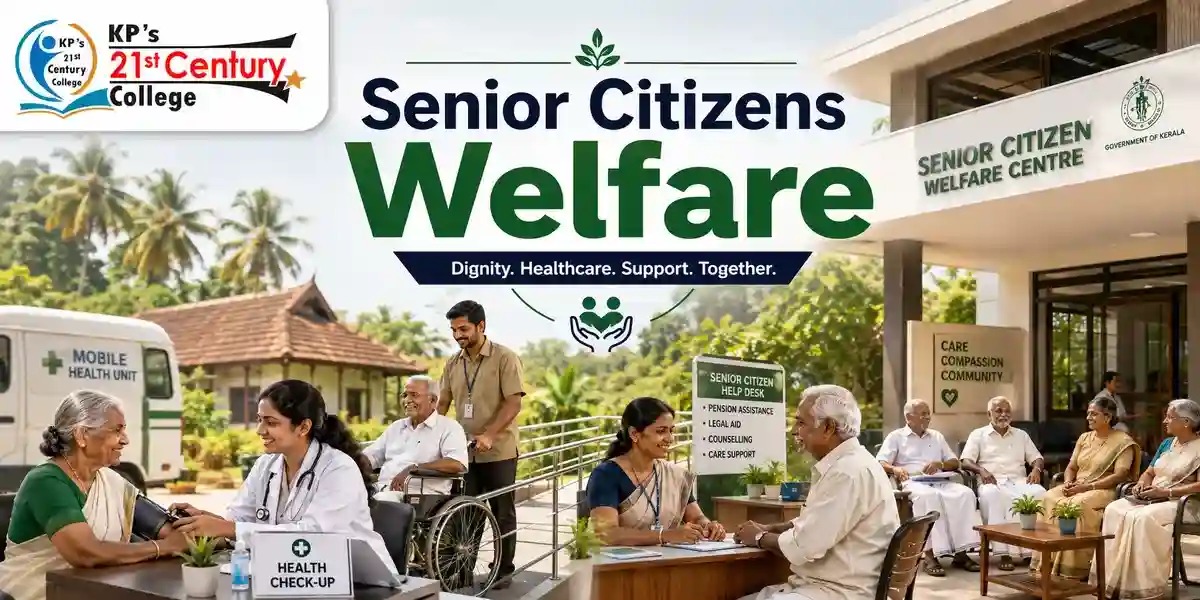
Kerala is rolling out comprehensive senior citizens' welfare initiatives to tackle the growing crisis of elderly isolation. Backed by a dedicated Elderly Budget of over ₹46,236 crore, the state has launched programs like Sallapam and Vaathilppadi Sevanam to bring companion phone lines and doorstep medical services to its aging population.
THIRUVANANTHAPURAM — The Government of Kerala is rapidly deploying state-wide infrastructure to combat elderly isolation, establishing itself as the first Indian state to formally structurally insulate its aging demographic from social abandonment. As part of an ongoing multi-tiered administrative rollout on Thursday, June 25, 2026, the state's newly instituted Department for Senior Citizens’ Welfare has fast-tracked local community networks to ensure no single elderly resident is forced to navigate their twilight years without structured institutional support.
With over 18.7 percent of its total population currently aged above 60 nearly double the national average Kerala is facing a rapid demographic transition. Driven by high out-migration rates of working-age adults leaving behind elderly parents, the state has turned basic public administration into an active "care economy". The state's targeted interventions combine localized volunteer networks with technological connectivity to directly eliminate loneliness and psychological vulnerability among senior citizens.
Dedicated Senior Citizens' Welfare Department Leads Policy Push
In response to the growing old-age dependency ratio, which is currently recorded at 26.1 percent against the national baseline of 15.7 percent, the Kerala administration has codified its senior citizens' welfare strategies into a standalone executive portfolio. This structural move decouples elderly care from generic social justice distribution, allowing for independent regulatory oversight and dedicated budget allocation.
The policy shift is financially supported by the historic allocation of ₹46,236.52 crore earmarked exclusively under a dedicated "Elderly Budget" framework. This massive budget allocation accounts for 19.07 percent of the state’s total public expenditure layout. According to administrative planning documents, the funds are being actively routed to clear past healthcare deficits, construct day-care companionship centers within local self-government institutions, and establish specialized geriatric wings across all district-level medical facilities.
"Sallapam" and "Vaathilppadi Sevanam" Bring Services to the Doorstep
To systematically eliminate the invisible crisis of senior isolation, the state has institutionalized two flagship grassroots campaigns:
The Sallapam Initiative: Designed directly by the Social Justice division, this program bridges generational divides by pairing isolated senior citizens with trained Master of Social Work (MSW) university students. Operating via coordinated telephonic channels linked to the national Elderline network, these student volunteers act as structured "phone mates," offering scheduled companionship, monitoring psychological health indicators, and recording oral histories to preserve traditional wisdom.
Vaathilppadi Sevanam (Doorstep Service Delivery): Orchestrated by the Local Self Government Department (LSGD), this program deploys a network of active Accredited Social Health Activist (ASHA) workers and civil volunteers directly to the doorsteps of mobility-restricted elderly residents. The volunteers handle vital administrative tasks, including processing social security pensions, distributing emergency lifecycle medications, and executing digital life certificate mustering, removing the structural barriers that often isolate the elderly from state support.
Addressing the Unique Challenges of the Feminisation of Aging
State public health statistics reveal that the demographic transition in Kerala is deeply gendered, a phenomenon specialists term the "feminisation of aging". While registered old-age widowers constitute less than 10 percent of the aging male population, widows make up roughly 58.6 percent of senior women. Many of these women live entirely alone, exposing them to property rights disputes, high treatment costs for chronic multi-morbidities, and acute social exclusion.
To counter this vulnerability, the newly minted Senior Citizens’ Welfare division is forming localized legal aid cells across all Panchayats. These cells provide free, swift arbitration for property inheritance issues, while mobile palliative healthcare vans perform weekly home visits to monitor chronic lifestyle illnesses like uncontrolled hypertension and diabetes.
Official Sources Section
The operational data and budget numbers for these active programs have been verified through official releases from the following bodies:
Quote Section
"Addressing elderly loneliness requires moving past basic financial pensions to build genuine human connection," stated public health officials tracking the expansion of the Care Economy. "Organizers stated that by integrating youth volunteer teams with digital service delivery networks, local governments are successfully removing the physical and emotional barriers that isolate our senior populations."
Why It Matters
The implementation of targeted senior citizens' welfare strategies provides a crucial template for developing regions worldwide facing declining birth rates and heavy youth out-migration. For families working abroad, the presence of state-backed doorstep health systems and telephone companionship networks mitigates the constant anxiety of leaving aging parents behind. Economically, converting unstructured public health spending into an organized silver economy directly reduces the long-term strain on intensive care hospital infrastructure.
Key Facts at a Glance
Pioneering Portfolio: Kerala is the first state to present a standalone Elderly Budget, allocating ₹46,236.52 crore for senior welfare.
Widespread Roadblocks Cleared: The Vaathilppadi Sevanam initiative delivers critical medicines and security pensions directly to seniors' homes.
Combating Loneliness: The Sallapam program connects isolated seniors with student phone mates to provide regular companionship.
High Demographic Density: Senior citizens currently comprise over 18.7 percent of Kerala's total population, and that figure is projected to cross 22 percent by 2036.
FAQ Section
Q1: What is the primary purpose of Kerala's Sallapam scheme?
The Sallapam scheme connects lonely or isolated senior citizens with trained student volunteers via phone to improve mental well-being, offer companionship, and foster intergenerational bonds.
Q2: How does the Vaathilppadi Sevanam scheme assist senior citizens?
It uses local ASHA workers and volunteers to deliver essential government services like social security pensions, life certificates, and emergency medicines directly to the homes of the elderly.
Q3: What does the term "feminisation of aging" mean in Kerala's policy context?
It refers to the fact that a large majority of the elderly population living alone consists of women, particularly widows (58.6%), who face unique health, economic, and legal vulnerabilities.
Q4: How can an elderly resident access these companionship and help services?
Seniors or their caregivers can register their details through local panchayat offices or contact the national Elderline toll-free helpline at 14567.
Source: Official Budget Documents from the Government of Kerala, Gazette notifications from the Kerala Social Justice Department, and demographic consensus registries from the Ministry of Social Justice and Empowerment.