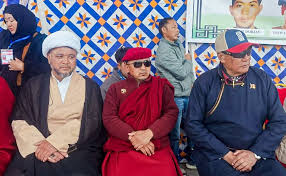
A comprehensive, peaceful shutdown organized by the LAB and KDA paralyzed commercial activities across Leh and Kargil on June 23, 2026. The protest follows allegations that the Centre omitted critical promises regarding an autonomous legislative assembly from official meeting minutes, though transport networks were exempted to preserve local tourism.
LEH — A comprehensive, region-wide shutdown paralyzed life across the twin districts of Leh and Kargil today, June 23, 2026. The mass agitation, organized by the joint leadership of the Ladakh Apex Body (LAB) and the Kargil Democratic Alliance (KDA), received a widespread response from the local population. The peaceful strike highlights growing community mistrust toward the Union Government regarding the long-term political and constitutional future of the strategic border territory.
The strict civil shutdown saw the complete closure of commercial establishments, private offices, and local market centers. The collective strike marks a significant escalation in the ongoing regional movement that began after the reorganization of the erstwhile state of Jammu and Kashmir in 2019. Local groups accuse the Union Ministry of Home Affairs (MHA) of omitting key governance benchmarks from official high-level meeting minutes.
Omitted Governance Accords Spark Widespread Mistrust
The immediate catalyst for today's widespread strike stems from a contentious dispute over the official records of a high-level meeting held on May 22, 2026, between an MHA-led sub-committee and a six-member delegation representing Ladakh. The delegation included prominent climate activist Sonam Wangchuk and the newly elected Member of Parliament, Hanifa Jan.
According to joint statements issued by LAB and KDA leadership, the Union government agreed in principle during the May talks to draft a unique administrative blueprint under a proposed Article 371K for Ladakh. This administrative model was intended to grant the high-altitude territory a democratic legislative structure with executive, financial, and legislative authority over local matters, explicitly placing the administrative bureaucracy—including the Chief Secretary—under an elected executive.
However, when draft copies of the minutes were shared with local leaders earlier this month, the specific clauses detailing an autonomous legislative setup and control over regional bureaucracy were reportedly absent.
Complete Commercial Standstill Exempts Vital Tourist Transit
Public response to the shutdown call was absolute across both Buddhist-majority Leh and Muslim-majority Kargil districts, emphasizing the unified front maintained by the two socio-political groups. Main markets, such as the historic Leh Main Bazaar and Kargil’s central business squares, remained entirely shuttered throughout the day.
To safeguard the region's fragile, seasonal hospitality economy, the organizers deliberately exempted transport networks. Public buses, tourist taxis, and essential supply trucks continued to operate normally along the Srinagar-Leh and Manali-Leh national highways. This structural exemption ensured that thousands of international and domestic travelers visiting the cold desert during the peak summer tourist window faced no immediate transit gridlocks. Emergency medical services and government departments handling essential utilities were also excluded from the strike.
Official Sources Section
According to official briefings provided by the Ministry of Home Affairs and regional administrative circulars issued by the Ladakh Union Territory Administration, security forces were placed on high alert across sensitive municipal intersections to maintain public order. The local administration confirmed that no incidents of violence or unlawful property damage were reported from either district during the day-long closure.
Quote Section
"According to officials from the Ladakh Apex Body, the omission of key decisions from the official minutes has deeply impacted public trust. The leadership stated that if the final, official records do not faithfully incorporate the legislative commitments made on May 22, the civil society alliances will be forced to return to their original, uncompromising demands for full statehood and comprehensive Sixth Schedule safeguards."
Why It Matters
The absolute shutdown demonstrates that public sentiment in Ladakh remains highly mobilized regarding constitutional safeguards and local self-governance. For businesses and external investors eyeing tourism or green energy infrastructure projects in the region, the persistent political friction indicates that long-term policy predictability remains dependent on a finalized, statutory governance agreement between New Delhi and local community stakeholders.
Key Facts at a Glance
Widespread Adherence: Markets, shops, and private enterprises across Leh and Kargil observed a total closure on June 23, 2026.
Core Grievance: Local leaders allege that the Centre backtracked on May 22 assurances regarding a legislative assembly under a proposed Article 371K.
Transit Maintained: Transport networks remained fully operational to protect the peak summer tourist season from economic disruption.
Unified Front: The protest was co-anchored by the Ladakh Apex Body (LAB) and the Kargil Democratic Alliance (KDA), demonstrating cross-district unity.
FAQ Section
Q1: Why did the Ladakh Apex Body and Kargil Democratic Alliance call for a shutdown? A: The shutdown was organized to protest the Centre's alleged failure to include agreed-upon decisions regarding an autonomous legislative assembly and bureaucratic control in the official minutes of the May 22 bilateral talks.
Q2: Were tourists and transport services affected by the strike in Leh and Kargil? A: No. Organizers explicitly exempted public and private transport systems from the strike to prevent disruption to travelers and support the local economy during the peak tourist season.
Q3: What specific constitutional amendment or article are the Ladakh groups seeking? A: While the groups originally demanded inclusion under the Sixth Schedule, recent discussions centered on creating a unique governance framework for the Union Territory under a newly proposed Article 371K.
Source: Press declarations and joint corporate briefings issued by the Ladakh Autonomous Hill Development Council and official security updates archived by the Ministry of Home Affairs.