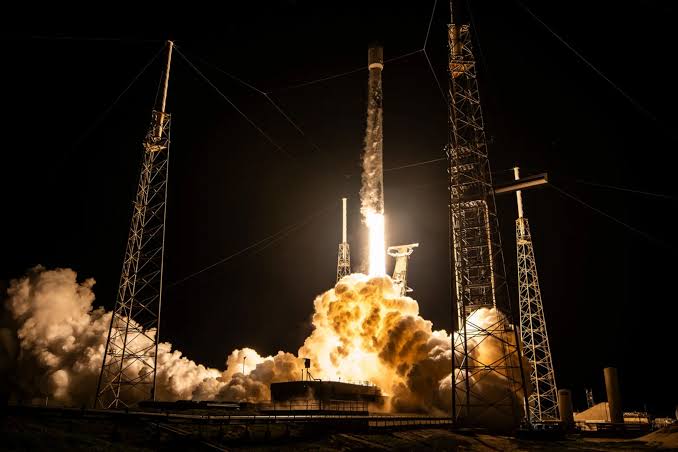
SpaceX is set to launch a Falcon 9 rocket carrying direct-to-cell SOS satellites from Cape Canaveral, triggering expected sonic booms across Central Florida. The weekend mission highlights expanding emergency mobile connectivity while producing distinct acoustic shockwaves during the booster's supersonic return to the Space Coast.
CAPE CANAVERAL, FLA. — Space Exploration Technologies Corp. (SpaceX) is scheduled to execute a weekend rocket launch from the Space Coast, carrying a specialized payload of direct-to-cell communications and emergency SOS-enabled satellites into low-Earth orbit. The operation is expected to produce sharp sonic booms across Central Florida as the launch vehicle’s first-stage booster returns for a pinpoint landing.
The mission, originating from Space Launch Complex 40 (SLC-40) at Cape Canaveral Space Force Station, targets a late-night window. As the Falcon 9 booster breaks the sound barrier during its descent trajectory back toward Landing Zone 1 (LZ-1), atmospheric pressure waves will generate thunderous noise signatures audible across Orange, Seminole, and Brevard counties.
Booster Recovery and Atmospheric Dynamics
The upcoming deployment underscores SpaceX’s heavy cadence of orbital logistics, specifically tailored toward expanding satellite-to-cellular connectivity that enables direct emergency messaging and SOS capabilities for mobile consumers. Following stage separation, the reusable Falcon 9 first stage will execute a controlled flip and burn sequence to reverse course toward the Space Coast.
According to technical mission briefings and aerospace monitoring reports:
Supersonic Re-entry: The booster will exceed Mach 1 during its descent, creating localized shockwaves that propagate inland across Central Florida depending on low-level wind profiles and atmospheric temperature gradients.
Acoustic Reach: Residents in metropolitan Orlando and surrounding communities can anticipate sharp, thunder-like rumblings within minutes of liftoff.
Payload Objective: The satellites feature direct-to-cell hardware designed to route emergency SOS text transmissions and cellular data seamlessly without requiring specialized user hardware modifications.
Official Sources Section
Quote Section
According to statements released by regional emergency management and aerospace communication officials monitoring weekend launch operations:
"Residents across Central Florida are advised that scheduled aerospace re-entry maneuvers will produce distinct sonic booms as boosters return to the Space Coast, representing routine operations for orbital delivery schedules."
Why It Matters
For consumers and telecommunications infrastructure providers, the expansion of direct-to-cell satellite constellations represents a major leap forward in universal emergency connectivity, bridging cellular blackspots in rural and disaster-prone regions. Locally, however, the frequent cadence of supersonic booster recoveries highlights the evolving sensory reality of living adjacent to the world's most active commercial spaceport.
Key Facts at a Glance
Launch Provider: SpaceX (Falcon 9 vehicle).
Launch Site: Cape Canaveral Space Force Station, Florida.
Payload Focus: Direct-to-cell satellites equipped with emergency messaging and SOS support.
Expected Fenomenon: Supersonic shockwaves and sonic booms audible across Central Florida during booster recovery.
FAQ Section
What causes the loud rumbling or boom sound during a SpaceX launch?
The sound is a sonic boom generated when the Falcon 9 first-stage booster breaks the sound barrier during its high-speed descent back toward Cape Canaveral for landing.
Will the sonic boom be heard across all of Central Florida?
Audibility depends heavily on atmospheric conditions such as wind shear, humidity, and temperature gradients, which can amplify or dampen the shockwaves traveling inland toward Orlando.
What is the purpose of the satellite payload on this mission?
The mission deploys direct-to-cell communication nodes designed to provide cellular coverage and emergency SOS capabilities directly to unmodified mobile handsets.
Are these rocket booster landings safe for residents?
Yes. The sonic booms are routine acoustic byproducts of controlled supersonic flight and structural deceleration, posing no physical hazard to structures or individuals on the ground.
Source: SpaceX, Cape Canaveral Space Force Station, WKMG ClickOrlando