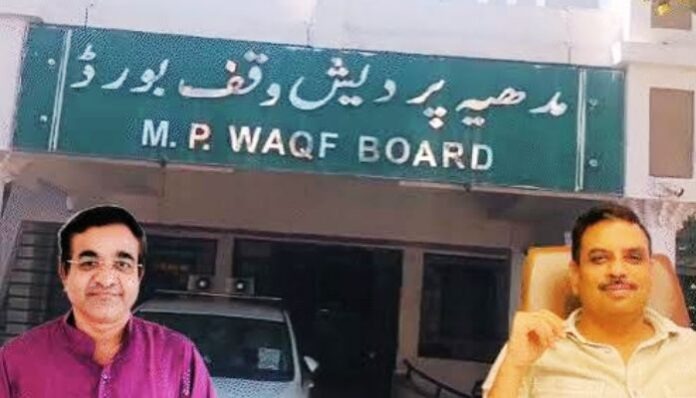
Madhya Pradesh has become the first Indian state to reconstitute its State Waqf Board under the amended national Act, appointing Sanwar Patel as chairman. The new 10-member board historicizes governance by including two Hindu members, Manoj Malpani and Animesh Bhargava, aiming to optimize administrative transparency.
BHOPAL — In a landmark legislative shift, Madhya Pradesh has officially become the first state in India to reconstitute its State Waqf Board under the newly amended national statutory framework. Following a directive issued by Madhya Pradesh Chief Minister Mohan Yadav, the state government published a gazette notification structuralizing a newly configured 10-member administrative body.
The primary structural highlight of the overhaul, confirmed on July 6, 2026, is the inclusion of two Hindu members into the leadership ranks for the first time since the inception of institutionalized Waqf property management in India. The transition follows the strict statutory rollout of national amendments designed to bring institutional transparency and inter-faith governance balances to regional religious endowments.
Strategic Shift in Waqf Governance Architecture
Under the older provisions governing the central Waqf Act of 1995, it was legally mandated that the entirety of the operational board save for the administrative chairperson position in select historical anomalies had to be comprised exclusively of members belonging to the Muslim community. However, the revised Waqf (Amendment) Act permits the incorporation of non-Muslim technical experts, legal analysts, and administrative representatives directly into both the Central Waqf Council and corresponding State Waqf Boards.
The state government exercised its primary legal powers conferred under Section 13(1) of the Waqf Act, 1995, as amended, aligning the selections precisely with the procedural conditions specified under Section 14.
Board Roster and New Non-Muslim Personnel
According to the gazette notification published by the state administration, Sanwar Patel has been officially appointed to serve as the Chairman of the reconstituted MP Waqf Board. The two newly designated non-Muslim (Hindu) personnel inducted onto the panel are:
The comprehensive 10-member panel also balances mandatory gender and local government representations. The remaining eight seats include Najma Heptulla (retaining her elected seat from a prior term valid until April 2028), Atif Aqueel (MLA from Bhopal North), Faizan Khan (Ujjain), Fatema Choudhary (Indore), Shaista Sultan (Councillor from Berasia Bhopal), and Shabana Khan (Councillor from Ratlam). The Commissioner of the Backward Classes and Minority Welfare Department will fulfill the necessary duties of the ex-officio member.
Official Sources Section
Legal structures, board designations, and regulatory appointments are validated via the public records issued within the Madhya Pradesh State Gazette. Statutory context regarding the national framework changes is verified via baseline legal publications maintained by the Ministry of Minority Affairs and regional property logging departments tracking compliance under the Madhya Pradesh Government Portal.
Quote Section
State spokespersons clarified the underlying administrative intent guiding the fast-tracked implementation of the new law.
"Madhya Pradesh has become the first state in the country to reorganise the Waqf Board under the new Act," an official told news agency PTI. "The swift reconstitution ensures prompt and efficient implementation of the updated legal provisions, optimizing public accountability and property documentation."
Why It Matters
The administrative overhaul establishes a historical precedent that changes the dynamic of religious asset administration across India. Historically, Waqf properties—ranging from commercial buildings to community land plots—were vulnerable to severe encroachment disputes and slow modernization due to decentralized record-keeping.
By immediately installing non-Muslim and diverse civic experts onto the board, the state sets up a new standard for local transparency. For citizens, this could reduce long-standing property litigation, while for municipal bodies, it will likely improve urban development coordination, as multi-faith boards work to standardize mapping and protect public space boundaries.
Key Facts at a Glance
National Precedent: Madhya Pradesh marks the first Indian state to reconstitute its Waqf Board under the updated law.
Inter-Faith Inclusion: Two non-Muslim members, Manoj Malpani and Animesh Bhargava, have been formally appointed.
Leadership Roster: Sanwar Patel assumes the position of Chairman for the 10-member panel.
Statutory Foundation: The changes were enacted under Section 13(1) and Section 14 of the newly amended Act.
Frequently Asked Questions (FAQ)
What are the main responsibilities of the State Waqf Board?
The State Waqf Board is a statutory body tasked with managing, recording, and safeguarding designated religious, educational, and social welfare Waqf properties while preventing illegal encroachments.
Who are the two Hindu members included in the new MP Waqf Board?
Manoj Malpani from Indore and Animesh Bhargava from Raghogarh (Guna) have been inducted as the non-Muslim representatives.
Why did the rule change to allow non-Muslim members?
The national legislative framework was amended in 2025 to introduce greater transparency, incorporate civic expertise, and modernize the administrative accountability of religious boards.
Source: Madhya Pradesh State Gazette Notifications, Press Trust of India (PTI) Syndications, Ministry of Minority Affairs Legal Repository.