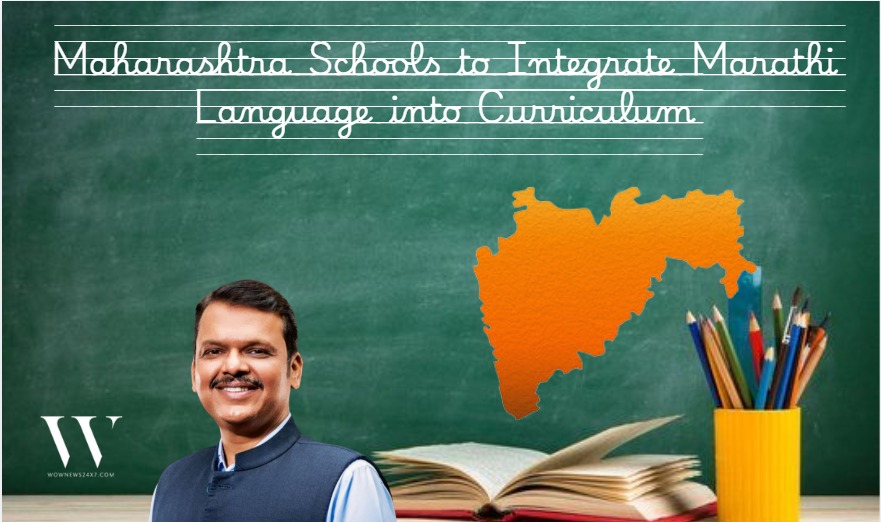
The Maharashtra government has mandated that Marathi be taught as a compulsory subject for students from Classes 1 to 10 in all schools, regardless of their board affiliation. This move, enforced by the state’s Education Department, aims to ensure all students attain language proficiency and preserve the state’s cultural heritage.
MUMBAI — The Government of Maharashtra has officially mandated that Marathi must be taught as a compulsory subject for students from Class 1 to Class 10 across all schools in the state, including those affiliated with national and international boards. This directive, issued by the School Education Department, applies to all institutions, whether they are governed by the Maharashtra State Board, CBSE, ICSE, IB, or IGCSE.
The policy shift is designed to ensure that students across the state develop proficiency in the local language, reinforcing cultural identity while maintaining the state's diverse educational landscape. The government move follows years of legislative debate regarding the preservation of the Marathi language in an increasingly globalized schooling system.
Implementation Across All Boards
The new mandate requires schools to incorporate Marathi language instruction starting from the current academic year. According to the state’s notification, schools are expected to implement a staggered approach to ensure full compliance. Institutions that fail to introduce Marathi as a primary or secondary language subject face potential regulatory action, including the revocation of their no-objection certificates (NOCs).
"This decision is not merely about education; it is about ensuring that every child living in Maharashtra is connected to the linguistic roots of the state," an official from the Maharashtra State Board of Secondary and Higher Secondary Education explained.
Balancing Linguistic Diversity
While the directive imposes a strict requirement, the state government has provided some flexibility for schools to manage their existing curricula. Schools that are currently struggling to recruit qualified Marathi instructors are being offered support through the state’s District Institute of Education and Training (DIET) centers.
The mandate has sparked varied reactions. While regional cultural organizations have welcomed the decision as a necessary move to protect Maharashtra's linguistic identity, some administrators of international schools have raised concerns regarding the challenges of integrating a new subject into an already dense international curriculum.
Ensuring Compliance and Quality
To monitor the progress of this rollout, the Department of School Education has established a district-level monitoring committee. These committees will conduct periodic audits of school records to ensure that students are receiving adequate instruction. Furthermore, the state government is prioritizing the development of standardized textbooks specifically designed for students in non-state board schools to ensure the quality of instruction remains uniform across all platforms.
Why It Matters
For residents and parents, the mandate means that all students will now be required to achieve a baseline competency in Marathi, regardless of the school board their children attend. For the business community and educational institutions, this represents a significant shift in compliance requirements. Schools must now restructure their staffing to accommodate qualified Marathi teachers, a requirement that could lead to new recruitment opportunities within the state’s education sector.
Key Facts at a Glance
Scope: Marathi is now mandatory for students from Class 1 to 10.
Applicability: Applies to all schools, including those under CBSE, ICSE, IB, and IGCSE boards.
Monitoring: District-level committees will oversee the integration and compliance of the language mandate.
Objective: To preserve linguistic heritage and ensure state-wide fluency in the official language.
FAQ
Does this apply to international schools in Maharashtra?
Yes, the mandate applies to all schools operating within the state, including those affiliated with international boards like IB or IGCSE.
What happens if a school does not comply?
Schools that fail to implement the instruction of Marathi may face administrative penalties, which could include the withdrawal of their recognition or NOCs.
Are there standardized materials for non-state board schools?
Yes, the Maharashtra government is providing specific, standardized textbooks and curriculum frameworks tailored for students in non-state board schools to ensure consistent learning quality.
Source: School Education and Sports Department, Government of Maharashtra, Maharashtra State Board of Secondary and Higher Secondary Education, SCERT Maharashtra