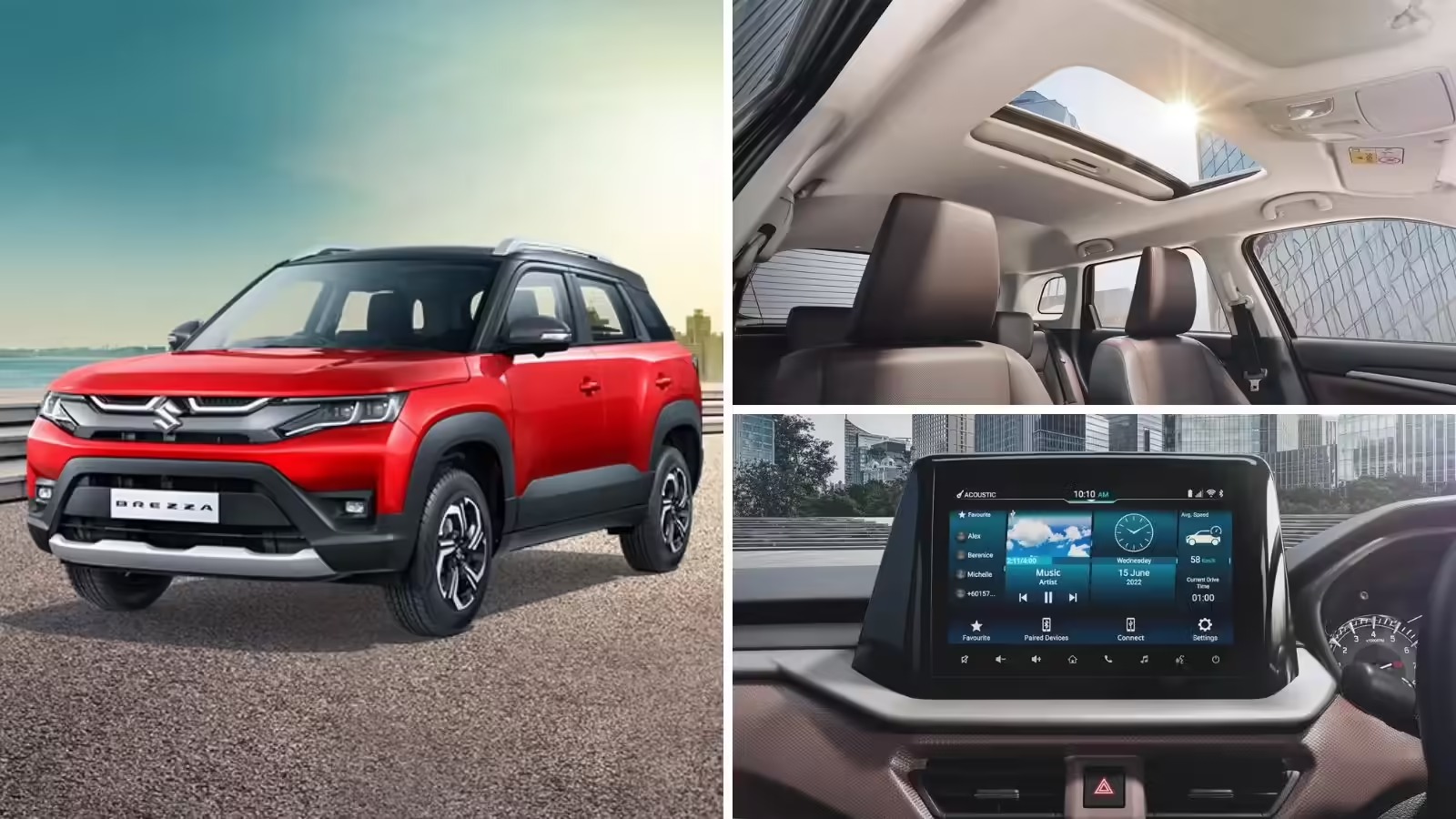
Maruti Suzuki will launch the updated Brezza facelift in India on July 23, 2026. The mid-life refresh is set to introduce a 1.0-litre Boosterjet turbo-petrol engine to leverage lower tax brackets, a space-saving underbody CNG tank layout, and premium interior upgrades like a 10.1-inch touchscreen and ventilated front seats.
NEW DELHI, India — Maruti Suzuki India Limited has announced that the highly anticipated Brezza facelift will make its official domestic debut on July 23, 2026. The upcoming launch marks the first major comprehensive mid-life update for the second-generation compact SUV since its initial release in 2022. Trade sources and test-mule tracking reveal that the update will introduce a mixture of subtle styling revisions, major premium cabin upgrades, and crucial powertrain additions.
This development is critically important today as the sub-four-metre SUV segment remains one of India’s most fiercely contested automotive battlegrounds. By updating its core volume product, Maruti Suzuki aims to counter a recent 14% year-on-year sales drop recorded in May 2026. The structural modifications are designed to help the brand compete directly with heavily updated segment rivals that have increasingly captured performance-oriented and feature-conscious family buyers.
Introduction of the 1.0-Litre Boosterjet Turbo Powertrain
The most significant mechanical upgrade expected with the 2026 facelift is the introduction of Maruti Suzuki's 1.0-litre Boosterjet turbo-petrol engine option alongside the existing powertrain. The three-cylinder, 998cc turbocharged mill—currently utilized in the Maruti Suzuki Fronx—generates 99 bhp of power and 147.6 Nm of peak torque. This engine will likely be paired with a new six-speed manual transmission, addressing a long-standing performance gap, as the Brezza has previously relied solely on its 1.5-litre naturally aspirated K15C petrol engine.
Beyond delivering sportier driving dynamics, transitioning to a sub-1.2-litre engine size yields a notable financial advantage under India’s current Goods and Services Tax (GST) structure. Sub-four-metre vehicles equipped with petrol engines under 1,200cc qualify for a lower 18% GST tax slab. If Maruti Suzuki passes this tax optimization directly to consumers, the turbo-petrol variants could enter the market with highly competitive introductory pricing structures.
Underbody CNG Placement to Maximize Boot Capacity
For value-conscious consumers and high-mileage fleet operators, the 2026 Brezza facelift is heavily tipped to revolutionize luggage practicality. Standard factory-fitted CNG vehicles traditionally sacrifice a massive portion of their cargo volume because the high-pressure fuel cylinder is bolted directly into the trunk floor.
According to automotive supply-chain intelligence, Maruti Suzuki will re-engineer the chassis layout to adopt an underbody-mounted CNG tank system. This specialized structural arrangement, which the manufacturer recently introduced on the multi-purpose Victoris platform, shifts the alternative fuel apparatus beneath the rear floorboard. The engineering shift frees up the vehicle's standard boot capacity, eliminating the historical trade-off between ultra-low running costs and family holiday luggage space.
Premium Cabin Overhaul and Exterior Revisions
While the external profile preserves the vehicle's signature boxy silhouette, visible updates include reprofiled front and rear bumpers, a restyled front grille, and updated LED headlamp signatures. At the rear, the vehicle is expected to gain a modern, segmented connected LED light bar across the tailgate, similar to the premium styling found on larger corporate stablemates.
Inside, the cabin takes a significant step upmarket to match aggressive tech trends. The existing 9-inch infotainment screen is set to be replaced by a larger 10.1-inch high-definition touchscreen unit. Furthermore, to combat extreme tropical climates, top-tier variants will finally integrate ventilated front seats, ambient cabin lighting, and a powered driver's seat.
Official Sources Section
The manufacturing timelines, vehicle dimension baselines, and engineering trends cited in this report originate from official product scheduling updates and investor presentations published by Maruti Suzuki India Limited. Technical engine parameters, component performance figures, and tax-tier classifications are cross-referenced with vehicle homologation certificates managed by the Ministry of Road Transport and Highways (MoRTH), Government of India.
Quote Section
While formal public quote sheets will be distributed closer to the mid-month reveal, regional dealership planners and organizational briefs have outlined the positioning of the vehicle:
"According to officials familiar with the corporate product roadmap, the July 23 rollout is intended to fully re-establish the brand's feature supremacy in the compact tier. The focus of the 2026 refresh balances structural compliance with regional taxation laws and a calculated move toward luxury amenities like front-seat ventilation and space-saving fuel packaging that modern Indian car buyers demand."
Why It Matters
For everyday Indian consumers and prospective car buyers, the facelift introduces greater choice, blending fuel economy with premium creature comforts that were previously reserved for higher-segment vehicles. From an industry perspective, the pricing restructuring driven by the smaller turbo engine could ignite a fresh price war among manufacturing plants, directly affecting market valuations for rival automakers and reshaping buying patterns across semi-urban and urban dealership zones.
Key Facts at a Glance
Launch Timing: The vehicle is scheduled to make its nationwide commercial debut on July 23, 2026.
Turbo Addition: Expected to offer the 1.0-litre Boosterjet turbo-petrol engine (99 bhp / 147.6 Nm) alongside the trusted 1.5-litre motor.
Tax Optimization: Moving to a 1.0-litre engine allows the vehicle to qualify for the lower 18% GST small-car tax category.
Innovative CNG Layout: Features an underbody-mounted CNG cylinder layout to preserve full trunk utility.
Premium Upgrades: Top variants gain a 10.1-inch infotainment interface, ventilated front seats, and connected LED tail lamps.
FAQ Section
Q1: Will the existing 1.5-litre naturally aspirated petrol engine be discontinued?
A1: No. Industry data indicates that the current 1.5-litre K15C Smart Hybrid engine will remain on sale to cater to traditional buyers who prefer linear power delivery, while the 1.0-litre turbo will be positioned as a sportier, tech-forward alternative.
Q2: What are the primary rival models competing against the 2026 Brezza facelift?
A2: The updated SUV will continue to defend its market share against formidable segment rivals, including the Tata Nexon, Hyundai Venue, Kia Sonet, Mahindra XUV 3XO, and the newly launched Skoda Kylaq.
Q3: Is the starting price of the vehicle expected to go up significantly?
A3: While top-spec trims featuring ventilated seats and advanced electronics will likely command a slight premium, the entry-level turbo-petrol variants could see competitive pricing due to the tax concessions gained from using a smaller-displacement engine under 1,200cc.
Source: Maruti Suzuki Corporate Newsroom, Society of Indian Automobile Manufacturers (SIAM) Database.