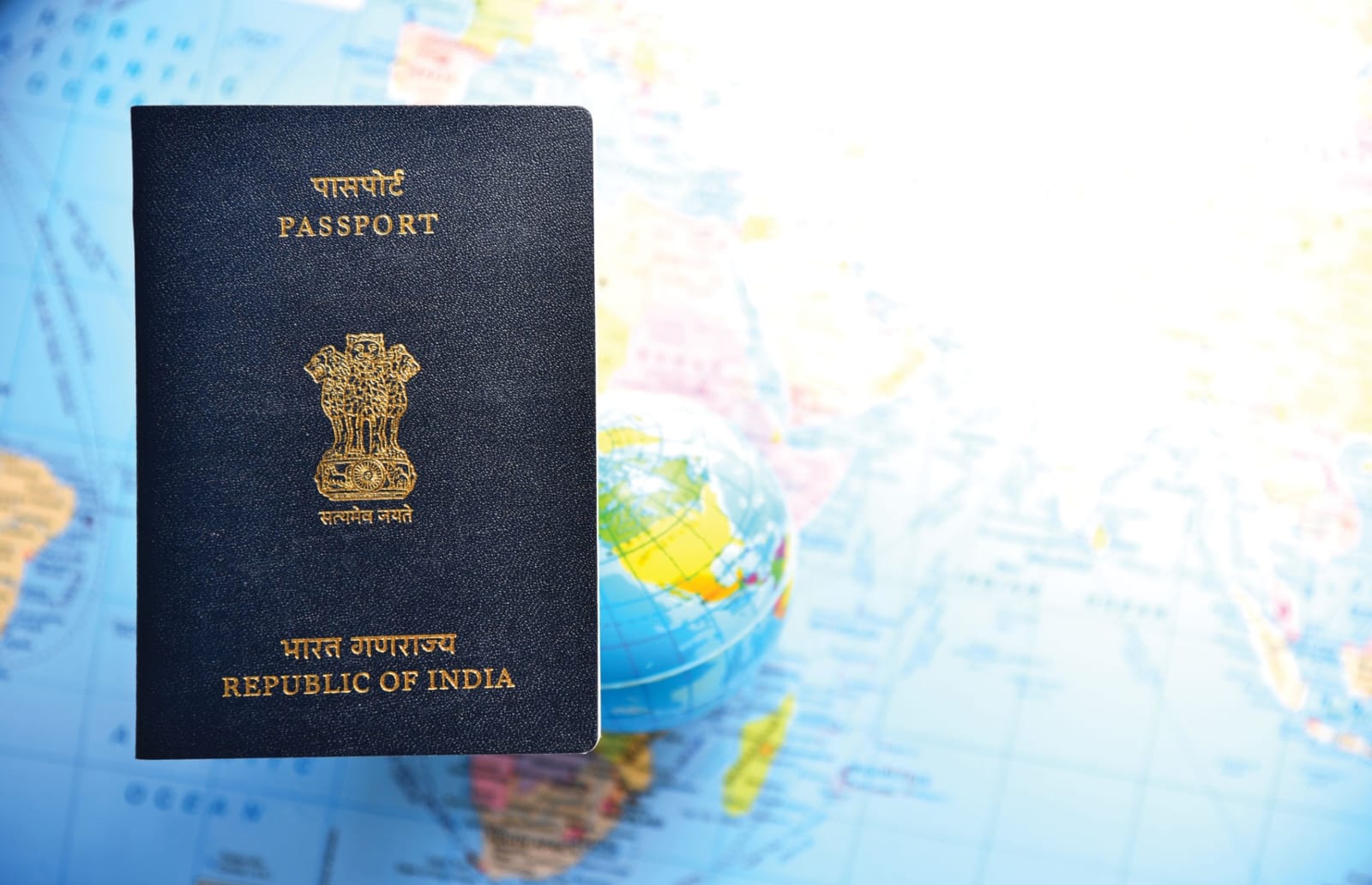
A recent Ministry of External Affairs clarification stating that an Indian passport is a travel document rather than conclusive proof of citizenship has ignited a legal debate. Because alternative documents like Aadhaar and voter IDs are also non-definitive, the statement highlights the absence of a single foundational document confirming Indian nationality.
NEW DELHI — A recent official statement from the Ministry of External Affairs (MEA) clarifying that an Indian passport is primarily a travel document and not conclusive proof of citizenship has ignited a major nationwide debate on what legally establishes nationality in India. The declaration, made during official events marking Passport Seva Divas, has caught legal experts, civil rights advocates, and ordinary citizens off guard, given that passports are statutorily restricted only to recognized nationals. This administrative nuance comes at a time when identity documentation remains a highly sensitive regulatory subject across the country, raising practical concerns for everyday citizens, travelers, and legal professionals navigating the domestic administrative landscape.
The MEA Declaration and the Passport Act Paradox
According to statements released by ministry officials during the 14th Passport Seva Divas, an Indian passport serves strictly to facilitate international transit and certify national affiliation to foreign immigration authorities. However, the ministry emphasized that the document does not independently function as an unassailable determination of citizenship under domestic law.
This position presents a notable legal paradox under existing statutory frameworks. Under Section 5 of the Passports Act, 1967, regional passport offices are mandated to conduct exhaustive inquiries before issuing a booklet. Furthermore, Section 6(2)(a) explicitly commands that the state must refuse a passport if the applicant is found not to be a citizen of India. Because the state explicitly verifies citizenship to fulfill its statutory duty before issuing a passport, the MEA's latest stance has triggered widespread public queries on why a document barred to non-citizens cannot formally serve as an independent confirmation of legal status.
Status of Alternative Identity Documents
The MEA's stance highlights a foundational characteristic of Indian administrative law: India does not possess a single, centralized national citizenship identification card. Popularly held credentials are also excluded from proving ultimate nationality:
Aadhaar Cards: The Supreme Court of India has previously clarified that Aadhaar functions exclusively as an allocation tool for state welfare and a proof of biometric identity and local residency. The Aadhaar law explicitly permits certain non-citizen residents to acquire it, completely detaching it from nationality claims.
Voter Identity Cards (EPIC): Issued under the Representation of the People Act, 1950, voter IDs show registration on electoral rolls. While only citizens are eligible to register, electoral registration authorities retain ongoing regulatory powers to re-verify inclusions, meaning courts do not treat old cards as standalone, conclusive proof in active disputes.
Permanent Account Number (PAN): Governed by the Income Tax Department, PAN cards are issued purely for financial tracking, revenue administration, and tax purposes, and are completely decoupled from nationality.
Legal Requirements Under the Citizenship Act, 1955
Because individual identity documents do not settle legal status independently, legal experts note that proving citizenship requires a complex mosaic of ancestral records governed strictly by the timeline of an individual's birth.
According to provisions outlined under the Citizenship Act, 1955, eligibility criteria are divided into specific historic windows:
| Date of Birth Range | Requirements for Indian Citizenship by Birth |
| January 26, 1950 – July 1, 1987 | Absolute citizenship by birth within India, irrespective of parental lineage. |
| July 1, 1987 – December 3, 2004 | Born in India, and at least one parent must have been an Indian citizen at the time of birth. |
| On or after December 3, 2004 | Born in India, and either both parents must be citizens, or one parent is a citizen while the other is not an illegal immigrant. |
Official Sources Section
The ongoing administrative guidelines have been gathered in accordance with official programmatic announcements by the Ministry of External Affairs, specific policy directives available on the Passport Seva Portal, and statutory criteria detailed under the Ministry of Home Affairs' Indian Citizenship Online operational network.
Quote Section
Reflecting on the administrative reality of passport operations, an official spokesperson from the Ministry of External Affairs explained during the conference:
"In 2025, 1.5 crore passports and related services were delivered, of which passports alone accounted for 1.39 crore. While our services have successfully scaled via 545 service centers nationwide, the document legally functions to certify nationality for travel purposes abroad, whereas definitive domestic citizenship determinations are governed strictly by separate legal rules under the Citizenship Act."
Why It Matters
The practical implication of the MEA's statement is significant for ordinary citizens and legal professionals alike. Because individual foundational documents like passports, voter IDs, or Aadhaar cards are not independently definitive, the legal system relies on a structural presumption of citizenship unless an explicit dispute or audit arises. In active judicial proceedings, courts evaluate a total composite mosaic of lineage documentation—including birth certificates, land records, school leaving certificates, and parental background details—to settle an individual's legal status, creating an unexpected administrative burden if a citizen's status is ever contested.
Key Facts at a Glance
Primary Travel Purpose: The MEA affirms that passports serve to certify nationality for international transit and consular protection abroad, but do not override the specific domestic mechanisms of the Citizenship Act, 1955.
Statutory Inversion: Under Section 6(2)(a) of the Passports Act, 1967, non-citizens are explicitly banned from receiving a passport, fueling public confusion over its non-conclusive legal status.
No Single Central Document: India does not issue a universal, standalone citizenship certificate for citizens by birth; certificates are only issued to individuals who acquire nationality via explicit registration or naturalization.
Infrastructure Growth: The MEA reported that the national passport network expanded from 77 centers a decade ago to 545 operational centers today, lowering average internal processing times to six working days.
FAQ Section
Q1: If an Indian passport is not conclusive proof, can non-citizens legally obtain one?
No. Under the Passports Act, 1967, authorities must conduct police verification and baseline inquiries to ensure an applicant is a citizen before issuance. The MEA’s distinction is technical: a passport reflects an executive evaluation of status for travel, but it is not a structural, unassailable judicial determination under citizenship law.
Q2: Is a birth certificate alone enough to guarantee Indian citizenship?
It depends entirely on the date of birth. For individuals born after July 1, 1987, a birth certificate must be supported by documentation proving the legal citizenship status of one or both parents, as birth within India alone stopped conferring automatic citizenship after that date.
Q3: Can an Aadhaar card or voter ID card be used to prove citizenship in a court of law?
No. Courts and statutes have repeatedly clarified that Aadhaar is strictly proof of identity and local residency. Similarly, while voter IDs are meant for citizens, they are not treated as independent, absolute proof of citizenship because electoral lists are subject to administrative revision and ongoing regulatory checks.
Source: Ministry of External Affairs (MEA), Passport Seva Portal, Indian Citizenship Online - Ministry of Home Affairs.