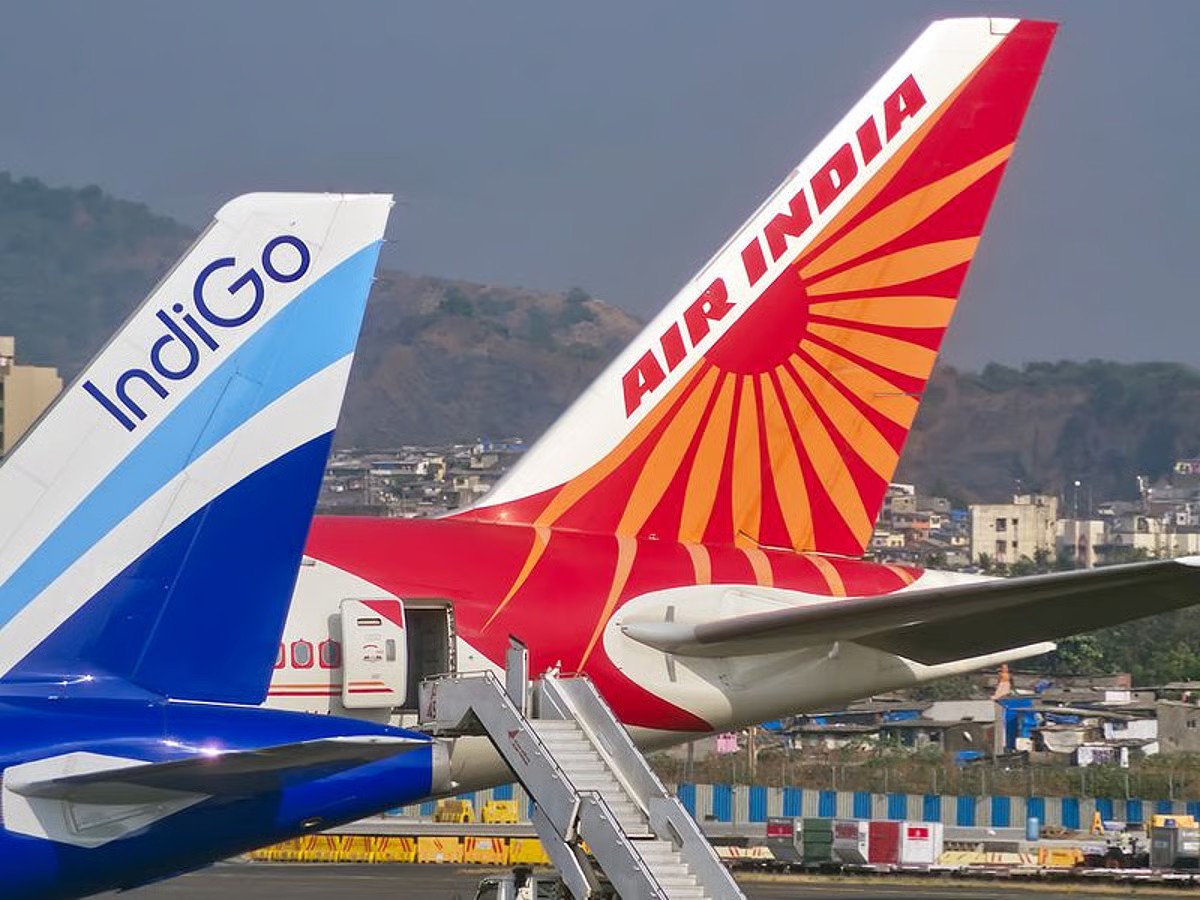
An Air India Airbus A320neo inadvertently executed a wrong turn while taxiing after landing at Ahmedabad Airport on Wednesday, coming face-to-face with an outbound IndiGo flight. Air Traffic Control safely halted both aircraft at a safe distance, and the Air India plane was towed to its parking bay without further incident.
AHMEDABAD, India — A commercial passenger jet operated by Air India and an outbound IndiGo aircraft came face-to-face on a dynamic taxiway lane at Sardar Vallabhbhai Patel International Airport on Wednesday evening, June 24, 2026. The ground proximity event occurred at approximately 8:00 PM IST following an administrative navigation deviation during the arriving flight's post-landing taxi phase.
According to preliminary airport logs, Air India Flight AI2493, an Airbus A320neo aircraft carrying 164 passengers from Mumbai, had touched down normally and was cleared by Air Traffic Control (ATC) to proceed to parking Stand 34L. The flight crew was specifically instructed to navigate via taxiways C and G. However, the aircraft inadvertently executed a wrong turn, entering an active sequencing lane where an IndiGo flight bound for Mumbai was actively taxiing into position.
Technical Separation and Air Traffic Intervention
Aviation surveillance data indicates that while the two commercial aircraft occupied the same physical centerline taxiway layout, standard ground safety buffers were maintained at all times. Air traffic controllers immediately noticed the orientation overlap and ordered both flight crews to bring their respective airframes to an immediate halt.
The arriving Air India Airbus A320neo, registered under tail number VT-TQV, stopped at a considerable and completely safe distance from the idling IndiGo aircraft. To resolve the block and restore standard taxiway traffic operations, ground control personnel instructed the IndiGo flight crew to hold its position and provide right-of-way, while an airport tug was dispatched to hook up to the Air India plane. The aircraft was safely towed backward into its designated parking bay by 8:18 PM IST, allowing passenger deplaning to proceed without further incident.
Safety Impact and Investigative Mandates
The incident caused temporary taxi delays for subsequent arriving and departing flights as ground handling teams worked to clear the active taxiway section. No injuries were reported among the 164 passengers or crew members aboard the inbound Air India flight, and no structural or mechanical damage was sustained by either airframe.
Under standard operating procedures regulated by the Directorate General of Civil Aviation (DGCA), any unauthorized runway or taxiway deviation requires a formal inquiry. Investigators will evaluate cockpit voice recordings, digital flight data tracking logs, and airport ground radar charts to identify why the flight crew diverged from the clear taxi paths specified by air traffic controllers.
Official Sources Section
The operational sequence and administrative responses have been established through official updates issued by air traffic management supervisors at Sardar Vallabhbhai Patel International Airport and formal corporate releases from the airline operators. Investigative updates remain aligned with the air safety reporting guidelines managed by the Ministry of Civil Aviation.
Quote Section
"We are aware of an incident where our flight AI2493 operating from Mumbai to Ahmedabad on 24 June after landing inadvertently took a wrong turn during taxiing," Air India stated in an official corporate announcement. "There was no compromise on the safety of passengers and crew. The aircraft was towed back to the parking bay and an investigation has been initiated."
Why It Matters
Taxiway errors, known in the aviation industry as surface deviations, present serious operational challenges within high-density municipal airports. This event illustrates how strict adherence to visual reference markings, immediate controller intervention, and automatic cockpit braking responses prevent ground errors from developing into critical runway incursions, thereby preserving overall consumer safety across the regional aviation network.
Key Facts at a Glance
Navigational Miss: Air India flight AI2493 missed its assigned path via taxiways C and G, resulting in a face-to-face orientation with an outbound IndiGo plane.
Separation Integrity: Air Traffic Control verified that a considerable, non-hazardous physical distance was preserved between both aircraft throughout the event.
Ground Resolution: The affected Air India aircraft was attached to a ground tug and towed safely into its parking bay within 18 minutes of stopping.
Passenger Status: All 164 passengers and crew members on board deplaned normally with zero reported injuries or equipment damage.
Regulatory Review: A formal corporate and regulatory investigation has been opened to analyze cockpit communication logs and ground control instructions.
Frequently Asked Questions
Did the two airplanes come dangerously close to colliding?
No. While the two aircraft were nose-to-nose on the same taxiway strip, they were halted at a safe distance by air traffic controllers, ensuring that passenger safety was never compromised.
What is the distinction between a taxiway deviation and a runway incursion?
A taxiway deviation occurs when an aircraft takes an incorrect path on auxiliary transit lanes. A runway incursion involves an unauthorized aircraft entering an active takeoff or landing strip, which carries a much higher structural risk.
Will the pilots involved face disciplinary action?
In accordance with DGCA safety protocols, the flight crew will be de-rostered from active flying duties pending the outcome of the formal safety investigation to determine if the turn was caused by human error or ambiguous ground signage.
Source: Air India Corporate Communications Office, Directorate General of Civil Aviation Safety Log, Ahmedabad Airport Air Traffic Control Logs.