Speaking at an economic forum in France, Finance Minister Nirmala Sitharaman stated that India's expanding middle class has become the nation's primary engine of growth. Driven by tax reliefs and digital infrastructure, middle-class consumption across 500 emerging cities is projected to command 93 percent of total national spending by 2036.
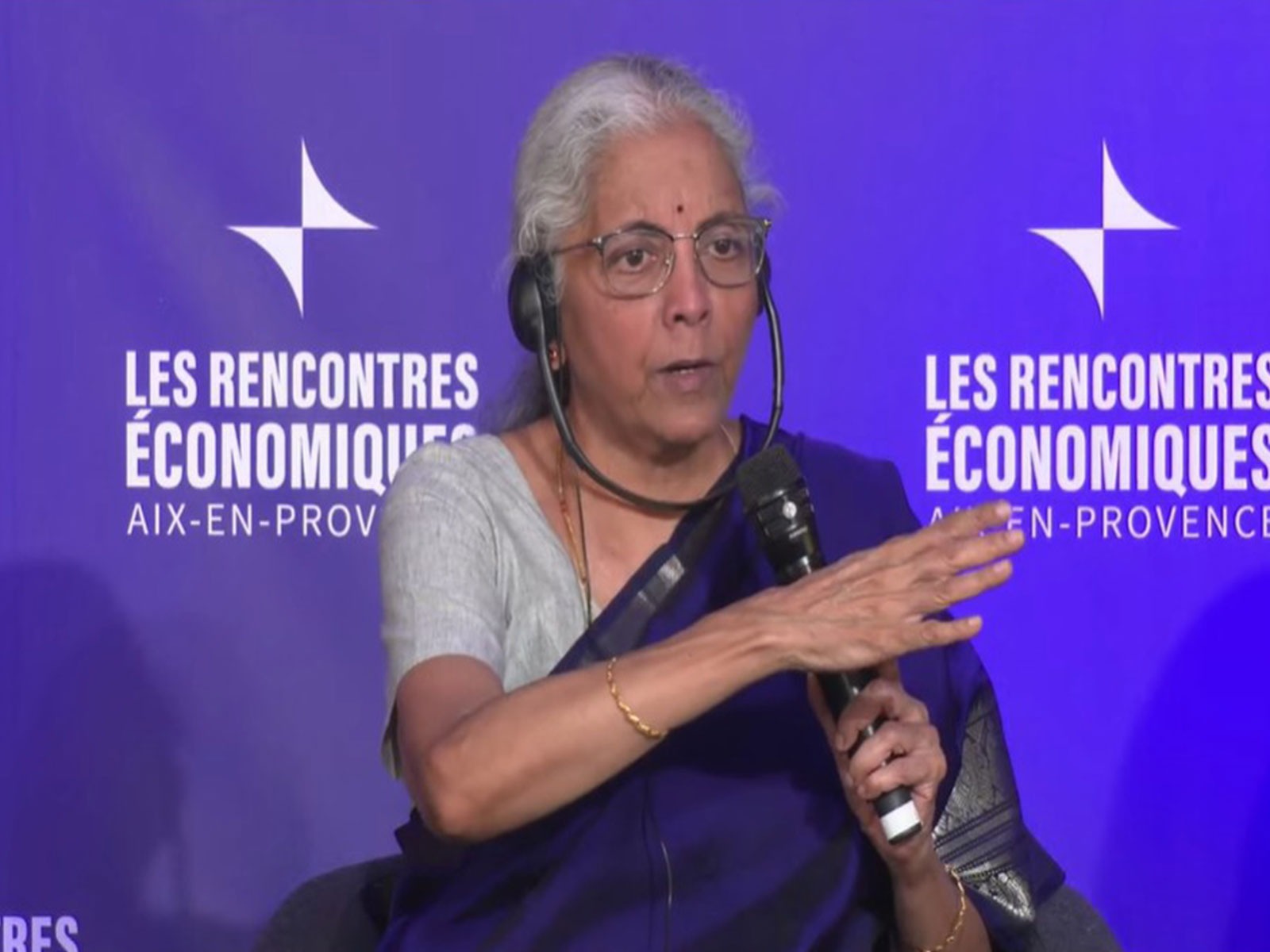
AIX-EN-PROVENCE — India's rapidly expanding middle class has transitioned from being a mere beneficiary of development to the primary "engine of growth" powering the nation's economic momentum, Union Finance Minister Nirmala Sitharaman announced on Friday, July 3, 2026. Speaking at a high-level panel during Les Rencontres Économiques d'Aix-en-Provence 2026 in France, Sitharaman detailed how post-pandemic consumer spending, structural tax reliefs, and aggressive digital financial inclusion have created a resilient domestic demand loop. The Finance Minister emphasized that this consumption-driven cycle is shields the country from turbulent global crosswinds, positioning India to soon overtake China in absolute middle-class population size.
Middle Class Emerges as Core Macroeconomic Driver
Participating in a global panel session titled "How to promote the rise of a new middle class?" at Aix-Marseille University, Sitharaman provided extensive data demonstrating the scale of India's internal market expansion. The demographic now accounts for roughly 31 percent of India's total population. Since the initial wave of economic liberalisation in the 1990s, this mid-income segment has expanded at a steady compound annual growth rate (CAGR) of 6.3 percent.
According to formal projections presented from the Organisation for Economic Co-operation and Development (OECD), this high-velocity trajectory will cause India to surpass China in absolute middle-class population numbers between 2030 and 2035. Furthermore, structural assessments from the World Economic Forum (WEF) reveal a massive long-term transformation in domestic resource allocation. Estimates show that by the year 2036, an overwhelming 93 percent of all aggregate consumer spending within India will be directly driven by middle-class or slightly affluent households.
Decentralizing Wealth Beyond Mega-Cities
A central pillar of India's contemporary macroeconomic model is the geographic decentralization of household disposable wealth. The Finance Minister noted that consumer spending power is no longer restricted to traditional primary metropolitan hubs like Mumbai, Delhi, Kolkata, Chennai, or Bengaluru.
Instead, consumption patterns point to a massive distribution of wealth down into rural-adjacent zones. Approximately 500 tier-II and tier-III smaller municipal cities are rapidly transforming into the nation's newest high-growth hubs of economic activity. This broad-based geographic dispersion prevents localized capital concentration, ensures stable interior employment grids, and anchors consumer goods logistics chains deep within the country's secondary markets.
Targeted Policy Reforms Underpinning Household Spending
The government's long-term strategy to expand and protect this economic layer relies on specific regulatory interventions designed to enhance net disposable income. The Finance Minister listed several fiscal and structural measures actively supporting household balance sheets:
Direct Income Tax Relief: Under the modernized income tax structure, individual earners generating up to ₹12 lakh annually are completely exempt from personal income tax liabilities, directly increasing monthly take-home liquidity.
Goods and Services Tax (GST) Rationalization: Systematic rate cuts across a large collection of daily consumer commodities have effectively lowered the retail cost of essential household goods.
Collateral-Free Institutional Credit: Government-backed credit guarantee funds enable small and micro-entrepreneurs to secure commercial startup capital without traditional asset pledges, establishing robust credit histories.
Healthcare Cost Protections: The institutional scale-up of universal health insurance alongside the low-cost generic Jan Aushadhi pharmacy grids has cut out-of-pocket medical expenses by nearly 80 percent, safeguarding middle-class savings from sudden medical shocks.
Official Sources Section
The corporate datasets, demographic percentages, and ministerial insights cited across this report are derived directly from official transcripts disseminated by the Ministry of Finance, official event records from Les Rencontres Économiques d'Aix-en-Provence 2026, statistical bulletins from the Ministry of Statistics and Programme Implementation (MoSPI), and verified global briefings published by the Press Information Bureau (PIB) India.
Quote Section
The panel session highlighted how current structural reforms directly fuel an ongoing internal economic cycle.
According to official transcripts and forum media releases published in France:
"In India, the middle class is the engine of the growth. And since after COVID, you've seen India remaining the fastest growing large economy. Primarily, it is because of the consumption, which is triggering from the middle class."
Sitharaman clarified how the state views this demographic block moving forward:
"We see the middle class not just as a beneficiary of growth, but actually the engines of growth. It is their consumption... which is making the economy grow."
Detailing the real-world impact of recent domestic tax modifications, she added:
"People earning 1.2 million rupees up to that number don't pay any tax at all. As a result we've allowed people to have more money in their hands which again goes into the consumption cycle."
Why It Matters
The structural evolution of India's middle class has major practical implications for global corporate investors, domestic manufacturers, and international trade partners. A consumer market where 93 percent of spending is driven by a resilient, asset-owning middle class located across 500 emerging cities offers long-term predictability for foreign direct investments (FDI). By shifting reliance away from highly volatile export dependencies and anchoring growth to predictable domestic household consumption, India secures its position as the primary anchor of macroeconomic stability throughout Asia.
Key Facts at a Glance
The Growth Engine: India’s middle class now encompasses 31 percent of the total population, expanding at a 6.3 percent annual rate since 1995.
Global Projections: OECD models indicate India will officially surpass China in total middle-class population size between 2030 and 2035.
Spending Dominance: By 2036, middle-class and affluent consumers are projected to account for 93 percent of all retail spending in India.
Urban Redesign: Economic activity has decentralized away from mega-cities, with 500 tier-II and tier-III cities emerging as new retail powerhouses.
Fiscal Stimulus: Tax policy adjustments making annual incomes up to ₹12 lakh tax-free have directly boosted household discretionary cycles.
FAQ Section
Q: What percentage of India's population is currently categorized as middle class?
A: According to data presented by the Finance Minister, the middle class currently makes up approximately 31 percent of India's population, tracking steady post-liberalisation growth.
Q: When is India expected to overtake China in middle-class population size?
A: Based on demographic research and projections from the OECD, India is on track to surpass China in absolute middle-class population metrics between 2030 and 2035.
Q: How do recent income tax changes affect middle-class consumer spending?
A: By exempting annual incomes up to ₹12 lakh from taxation under the new tax regime, the government leaves significantly more disposable income directly in the hands of households to fuel the retail consumption cycle.
Source: Official ministerial declarations from the Ministry of Finance, international briefing archives from the Press Information Bureau (PIB) India, and economic session logs hosted by Les Rencontres Économiques d'Aix-en-Provence.