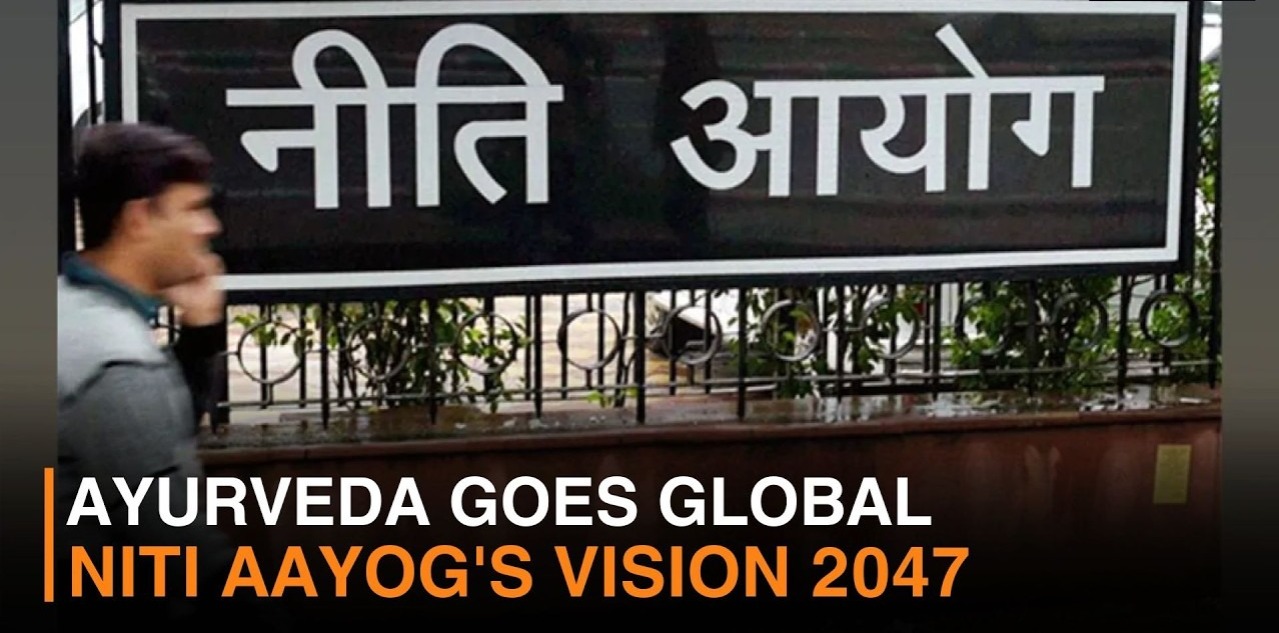
NITI Aayog has launched a strategic roadmap to transform Ayurveda into a globally recognized, evidence-based healthcare system by 2047. The policy outlines a phased strategy to upgrade manufacturing standards, establish a global practitioner registry, expand clinical trials, and systematically transition formulations from basic wellness supplements to therapeutic drugs.
NEW DELHI — India’s premier policy think tank, NITI Aayog, officially released its comprehensive report titled "Strategic Roadmap for Making Ayurveda Global" on Thursday, July 2, 2026. The landmark publication, prepared in collaboration with PricewaterhouseCoopers (PwC), outlines an ambitious phased development strategy stretching through 2047 to transition Ayurveda from a complementary wellness therapy into a globally integrated, evidence-based system of medicine. Despite exports doubling over the past decade, regulatory barriers have historically kept traditional formulations categorized strictly as dietary supplements in international markets. The new central roadmap establishes concrete mechanisms to systematically upgrade manufacturing standards, expand clinical research, and facilitate international practitioner licensing.
Addressing Systemic Gaps and the 95 Percent Workforce Bottleneck
The newly launched policy framework addresses core structural constraints that have previously limited the international expansion of Indian traditional medicine. The report highlights a glaring workforce disparity: while India boasts a domestic talent pool of over 3.55 lakh qualified and trained Ayurveda practitioners, approximately 95 percent of these professionals remain localized within India. This geographical concentration is heavily driven by fragmented licensing rules, a lack of globally aligned quality controls, and constrained professional mobility across international borders.
To resolve these workforce challenges, NITI Aayog has formally recommended the creation of a centralized Global Ayurveda Register (GAR). Integrated with digital credentials aligned to World Health Organisation (WHO) standards, the register will allow foreign regulatory agencies to seamlessly verify practitioner training. Furthermore, the plan mandates the negotiation of formal Mutual Recognition Agreements (MRAs) with key trade blocs including the G20, ASEAN, and BRICS to enable legal practice and smooth cross-border visa processing for Indian medical professionals.
Upgrading Trade Standards and Manufacturing Infrastructure
From a commercial perspective, India's traditional medicine sector has demonstrated strong upward momentum. Total exports of Ayush and allied herbal products expanded from $1.09 billion in 2014 to $2.16 billion in 2023, establishing a retail footprint across approximately 150 target nations. However, the report notes that high-value finished Ayurvedic medicines face global market exclusion because manufacturing setups lack standardized compliance documentation required by strict Western health regulators.
To shift the country's export profile from low-value raw materials to high-margin therapeutic drugs, NITI Aayog recommends a comprehensive industrial upgrade:
WHO-GMP Alignment: Mandating domestic pharmaceutical production units to fully align operations with WHO Good Manufacturing Practices (GMP) norms.
Export Pharmacopoeia: Drafting a specialized, export-focused Ayurvedic Pharmacopoeia featuring rigorous chemical fingerprinting and stability data.
Real-Time Analytics: Launching a digital, real-time Ayurveda trade dashboard under the Ayush Export Promotion Council to monitor global supply lanes and offer trade intelligence.
Overseas Infrastructure: Establishing dedicated finishing and packaging units in key overseas transit hubs to cut shipping transit strains.
Official Sources Section
The long-term development plans, technical benchmarks, and demographic statistics outlined in this report are compiled directly from the official publication released by NITI Aayog, Government of India. Additional programmatic reviews and historical trade milestones are verified through joint updates published by the Ministry of Ayush and official press notifications hosted on the Press Information Bureau (PIB) India platform.
Quote Section
The strategic launch underscored the need for a multi-ministerial approach to realize India's long-term traditional healthcare targets.
According to official transcripts released during the New Delhi presentation:
"The globalization of Ayurveda presents a unique opportunity to establish India as a global leader in traditional medicine while unlocking substantial economic value, creating employment, strengthening exports, and reinforcing India's cultural and knowledge-based soft power. Realizing this vision will require a whole-of-government approach to ensure coordinated and time-bound implementation."
Vaidya Rajesh Kotecha, Secretary of the Ministry of Ayush, noted the direct synergy between existing ministries:
"The report's recommendations would complement the Ministry's efforts and provide renewed momentum for establishing Ayurveda as a globally recognized system of healthcare."
Why It Matters
The rollout of NITI Aayog's strategic framework carries critical practical implications for global healthcare consumers, insurance firms, and medical investors. By transforming Ayurveda into a scientifically backed, evidence-informed medical discipline, the initiative creates alternative, validated choices for chronic disease management worldwide. For the international travel sector, the launch of specialized Medical Value Travel (MVT) hubs linked to insurance pilots in OECD countries simplifies international medical access, turning holistic wellness into a highly secure, regulated economic asset.
Key Facts at a Glance
The Vision: A comprehensive phased strategy spanning up to 2047, fully aligned with the central government’s Viksit Bharat@2047 development agenda.
Export Expansion: Sector exports doubled from $1.09 billion in 2014 to $2.16 billion in 2023, spanning 150 countries.
Practitioner Register: Proposes a digital Global Ayurveda Register with WHO-aligned credentials to fix the current 95% domestic localization bottleneck.
Research Push: Mandates international clinical trials, the creation of an International Ayurveda Research Alliance, and electives in global medical colleges.
FAQ Section
Q: Why are most Ayurvedic products currently sold as dietary supplements abroad?
A: Developed markets enforce strict regulatory compliance, demanding extensive chemical stability data and multi-country clinical trials, which generic raw formulations historically lacked, forcing them into the supplement category rather than therapeutic drugs.
Q: What is the purpose of the proposed Global Ayurveda Register?
A: The register creates a verified database of Indian practitioners using WHO-aligned digital credentials, simplifying foreign licensing and enabling medical mobility across international healthcare networks.
Q: How will this roadmap alter medical tourism to India?
A: The strategy introduces dedicated Medical Value Travel zones, bundles diagnosis and telemedicine under specific Ayush visa packages, and introduces insurance pilot collaborations with OECD nations to capture a share of the traditional wellness market.
Source: Official strategy blueprints, implementation manuals, and technical reports published by NITI Aayog, India, joint updates from the Ministry of Ayush, and press briefs from the Press Information Bureau (PIB).