Karnataka Greater Bengaluru Development Minister Krishna Byre Gowda announced an ₹8,000 crore road overhaul program covering 2,500 kilometers across Bengaluru. The project features white-topping, integrated underground utility ducts, expanded footpaths, and upgraded drainage to build durable, pothole-free transit corridors across the city.
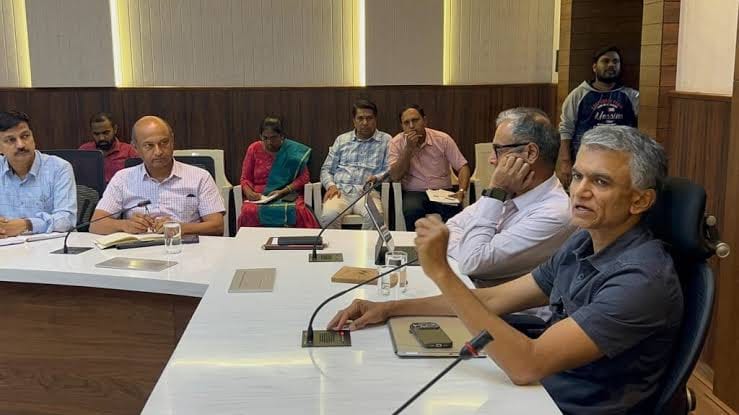
BENGALURU, August 27, 2026 — Karnataka Greater Bengaluru Development Minister Krishna Byre Gowda announced a major municipal infrastructure initiative today aimed at transforming the IT capital's transit network. Under the broad municipal mandate, the state government will undertake a comprehensive 2,500-kilometer road expansion and resurfacing program across the Greater Bengaluru region at an estimated cost of ₹8,000 crore.
The targeted overhaul combines extensive concrete white-topping, asphalt resurfacing, integrated utility ducts, and upgraded pedestrian infrastructure to provide a long-term fix for recurring urban congestion and road surface deterioration.
Comprehensive Infrastructure Plan for City Corridors
Addressing civic planning priorities, Minister Krishna Byre Gowda outlined that the ₹8,000 crore capital expenditure will cover major arterial roads, high-density traffic belts, and residential connector networks managed under the Greater Bengaluru Authority (GBA).
The phased engineering blueprint focuses on durable white-topping construction across high-volume corridors to ensure operational longevity over 20 to 30 years. Under the initiative managed via Bengaluru Smart Infrastructure Limited (B-SMILE), municipal execution teams are scheduled to begin white-topping key high-density zones, including the Outer Ring Road (ORR), while concurrently re-laying connecting ward roads.
The physical parameters of the development initiative comprise:
Network Coverage: 2,500 kilometers of urban roads, major arterial corridors, and suburban connectors.
Project Budget: ₹8,000 crore total financial outlay funded through state infrastructure allocations.
White-Topping Deployment: Concrete overlay projects targeting core commercial belts and heavily traveled transit routes.
Logistics Integration: Concurrently constructed 3-meter-wide footpaths, underground utility channels, and storm-water drainage channels.
Utility Integration and Pedestrian Safety
A core focus of the multi-billion-rupee redevelopment program is mitigating the historical issue of repetitive road cutting by municipal utility agencies. Newly designed corridors will integrate dedicated underground utility ducts for water supply lines from the Bangalore Water Supply and Sewerage Board (BWSSB), power distribution networks, and optical fiber cables (OFC).
In targeted dense commercial areas—such as the inner city's Pete districts—the road revamp program incorporates specialized emergency capabilities, including built-in high-pressure fire hydrant systems beneath white-topped thoroughfares. Municipal engineers have also been mandated to implement standardized safety features, dedicated bus bays, and accessible public footpaths across all completed segments.
Civic Oversight and Implementation Timelines
The State Cabinet and civic administration have introduced strict project oversight mechanisms to minimize public disruption during active construction phases. To maintain traffic flow along high-volume technology corridors like the Outer Ring Road during major construction cycles, the administration is coordinating with IT industry bodies, including the Outer Ring Road Companies' Association (ORRCA), to facilitate partial remote-work arrangements and planned traffic diversions.
Project execution guidelines mandate six-month completion timelines for phase-wise works, with strict financial penalties for contractors failing to meet quality or schedule benchmarks.
Official Sources Section
According to official project disclosures made by Greater Bengaluru Development Minister Krishna Byre Gowda and municipal execution filings with Bengaluru Smart Infrastructure Limited (B-SMILE), the ₹8,000 crore infrastructure framework is being executed under the oversight of the Government of Karnataka and the Greater Bengaluru Authority.
Quote Section
According to officials, "White-topping and integrated road development works are being executed with the direct objective of building durable, pothole-free roads that eliminate recurring long-term maintenance costs and provide long-lasting infrastructure for the city."
Why It Matters
Bengaluru's rapid urban expansion has historically strained municipal road networks, leading to severe traffic delays and frequent pothole damage following monsoon seasons. Upgrading 2,500 kilometers of roadway with long-lasting concrete white-topping and integrated utility conduits will drastically reduce routine maintenance cycles. For commuters, businesses, and logistics operators, the massive expenditure promises smoother transit flow, reduced travel times, and improved safety across Karnataka's economic hub.
Key Facts at a Glance
Total Investment: ₹8,000 crore designated for citywide road infrastructure enhancement.
Scope: 2,500 kilometers of roads targeted for white-topping and asphalt resurfacing.
Executing Body: Greater Bengaluru Authority and Bengaluru Smart Infrastructure Limited (B-SMILE).
Target Corridors: Commercial belts, high-density routes including the Outer Ring Road, and suburban residential connectors.
Infrastructure Additions: Utility ducts for water and power lines, 3-meter footpaths, and localized fire hydrant systems.
Frequently Asked Questions (FAQ)
What is the total cost of Bengaluru's road revamp project?
The Karnataka state government has allocated an estimated ₹8,000 crore to complete the multi-phase road infrastructure redevelopment across the city.
How many kilometers of roads will be redeveloped?
The project covers approximately 2,500 kilometers of roadways, including major commercial thoroughfares, arterial highways, and municipal residential routes.
What is white-topping, and why is it being used?
White-topping is a construction technique where existing asphalt roads are overlaid with a high-strength concrete surface. It provides a durable lifespan of 20 to 30 years and significantly reduces recurring pothole formation.
How will the project reduce future road digging?
The upgraded roads feature integrated utility ducts, allowing water, electricity, and telecommunications cables to be serviced through dedicated chambers without cutting into the main road surface.
Source: Official announcements and press disclosures issued by Greater Bengaluru Development Minister Krishna Byre Gowda and the Government of Karnataka on August 27, 2026.