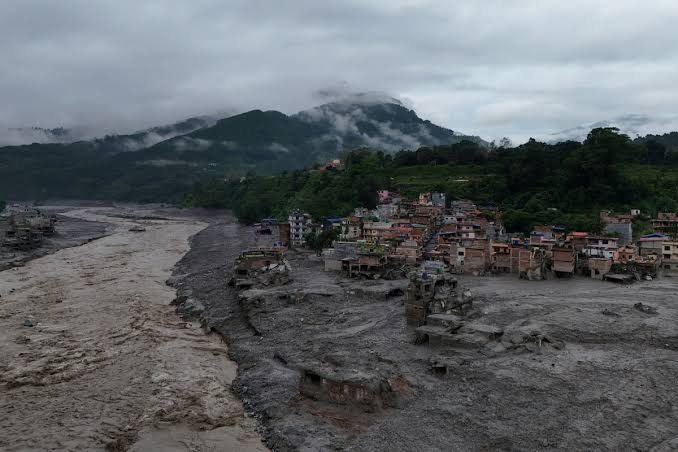
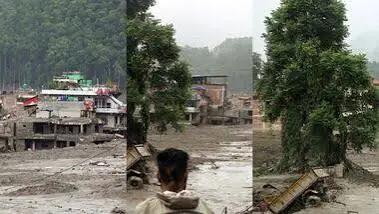
A magnitude 5.0 earthquake struck northern Tibet at a depth of 10 kilometers, hundreds of miles away from the catastrophic flash floods impacting the Nepal border. While monitoring agencies continue tracking regional seismic activity, no immediate damages or casualties have been reported from the northern epicenter.
BEIJING / KATHMANDU — A magnitude 5.0 earthquake struck China's northern Tibet region late Thursday, according to data from the German Research Centre for Geosciences (GFZ).
The seismic event registered at a shallow depth of 10 kilometers. Seismological authorities confirmed that the epicenter was located hundreds of miles north of the districts in Nepal and southern Tibet that were devastated by a massive flash flood earlier in the week. While local emergency teams remain heavily deployed responding to the unfolding humanitarian crisis along the southern Himalayan river corridors, the latest northern tremor has not resulted in immediate reports of structural damage or casualties.
Tectonic Activity and Regional Monitoring
The Thursday tremor follows a series of seismic and geological disruptions across the broader Himalayan and Tibetan plateau regions. Earlier in the week, China's earthquake networks center recorded a magnitude 4.7 quake in Nagqu, Tibet.
While initial automated telemetry from international agencies occasionally registers significant ground movements in the high-altitude terrain, geologists note that many high-magnitude signals in the region are induced by massive mass-wasting events—such as glacial ice collapses and rock avalanches—rather than direct tectonic shifting. State-run media reported that emergency management agencies are maintaining continuous telemetry across northern Tibetan seismic stations to monitor potential aftershocks and secondary risks.
According to official updates from the German Research Centre for Geosciences (GFZ), Xinhua News Agency, and regional disaster monitoring groups:
Magnitude & Depth: Recorded at magnitude 5.0 at a depth of 10 km.
Geographic Location: Northern Tibet, hundreds of miles away from the Nepal-Tibet border flood zone.
Related Activity: Follows a magnitude 4.7 quake registered in Nagqu, Tibet, earlier in the week.
Immediate Impact: No immediate casualties or infrastructure damage reported from the northern epicenter.
Official Sources Section
Quote Section
"According to seismological monitoring centers and official reports, the magnitude 5.0 earthquake struck northern Tibet at a depth of 10 kilometers, situated hundreds of miles north of the areas impacted by this week's devastating Himalayan flash floods."
Why It Matters
For emergency responders and disaster management teams already stretched thin by the catastrophic flooding along the Bhote Koshi and Trishuli river basins, subsequent seismic activity across the Tibetan plateau heightens vigilance. Monitoring tectonic and geological stability is critical for preventing compounding disasters, particularly as authorities manage dangerous barrier lakes and vulnerable mountain infrastructure.
Key Facts at a Glance
Event: Magnitude 5.0 earthquake.
Location: Northern Tibet, China.
Depth: 10 kilometers.
Proximity: Hundreds of miles north of the recent Himalayan flash flood zone.
FAQ Section
Where did the magnitude 5.0 earthquake strike?
The earthquake struck the northern region of China's Tibet autonomous region at a depth of 10 kilometers.
Is the earthquake connected to the recent catastrophic floods in Nepal?
No, seismological and disaster management authorities confirmed that the epicenter is located hundreds of miles north of the flood-affected border zones.
Were there any casualties reported from the northern Tibet earthquake?
Initial reports from monitoring agencies and state media indicated no immediate casualties or severe structural damage from the Thursday tremor.
Where can researchers view official seismic data regarding the quake?
Complete telemetry, epicenter mapping, and magnitude logs are published directly through the German Research Centre for Geosciences Portal.
Source: GFZ, Xinhua News Agency, NDRRMA Nepal, Reuters