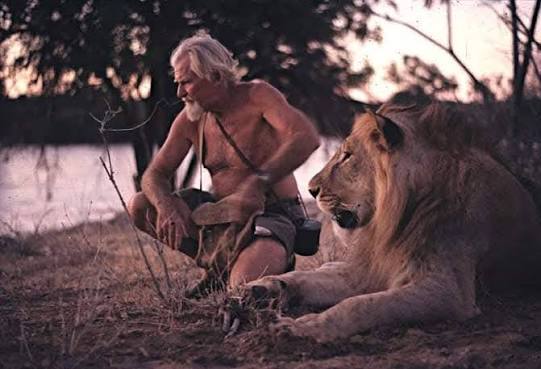
In 1970, conservationist George Adamson leased 500 square miles of Kenyan bush to rehabilitate captive lions. Following his death in 1989, the territory was officially gazetted as Kora National Park. Today, the remote sanctuary preserves his monumental legacy in African wildlife protection and habitat restoration.
NAIROBI — Decades after legendary British wildlife conservationist George Adamson leased 500 square miles of remote wilderness in eastern Kenya to rehabilitate captive and orphaned big cats, Kora remains a cornerstone of East African ecological preservation.
Famously known as the "Father of Lions" (Baba ya Simba in Swahili) alongside his work popularized by the book and film Born Free, Adamson spent nearly two decades turning the arid bushland into a sanctuary. Following his tragic killing by bandits in August 1989, the Kenyan government officially upgraded the reserve to a national park to honor his enduring conservation legacy.
Pioneering Wildlife Rehabilitation in the Tana River Basin
Arriving in the Kora region in 1970 after retiring as a senior wildlife warden, Adamson established his remote base camp, Kampi ya Simba, to reintroduce captive-raised lions back into their natural habitat. Operating far from urban centers alongside dedicated conservation partners like Tony Fitzjohn, Adamson faced severe logistical hurdles, hostile terrain, and rising threats from poachers.
The wilderness area—flanked by the Tana River and characterized by rocky inselbergs such as Mansumbi and Kora Rock—gradually transformed into a vital biological research hub. Though illegal poaching during the 1980s severely depleted local mammal populations, the area's subsequent designation under state protection allowed conservation organizations to restore its native flora and fauna.
According to historical archives, Kenya Wildlife Service (KWS) records, and conservation trust statements:
Establishment: George Adamson initiated his lion rehabilitation project in the Kora wilderness in 1970.
Designation Milestone: Following Adamson's death in 1989, the territory was officially gazetted as Kora National Park.
Geographic Scope: Encompasses approximately 1,788 square kilometers in Tana River County, bordered by the Tana and Mwitamvisi rivers.
Restoration Impact: Facilitated multi-decade habitat recovery programs supporting elephants, leopards, cheetahs, and reintroduced endangered species.
Official Sources Section
Quote Section
"According to historical conservation records and official wildlife management trusts, George Adamson's decades-long dedication in the remote Kora wilderness laid the foundational framework for modern big cat rehabilitation and national park protection in East Africa."
Why It Matters
For modern conservationists, ecotourism planners, and wildlife researchers, Kora National Park serves as a testament to grassroots ecological restoration. While remote and rugged, the park protects fragile riverine forests and dry acacia bushlands, offering vital migratory corridors and habitat security for large mammals while keeping the pioneering legacy of international wildlife preservation alive.
Key Facts at a Glance
Founder: George Adamson ("Father of Lions").
Park Size: 1,788 square kilometers.
Transition Year: 1989 ( upgraded from a remote reserve to a National Park).
Key Geographic Feature: Bounded by the Tana River, featuring iconic rocky inselbergs like Kora Rock.
FAQ Section
What was George Adamson's main objective in Kora starting in 1970?
George Adamson moved to the remote region to establish a sanctuary for rehabilitating captive and orphaned lions, successfully training them to survive independently in the wild.
When did Kora officially become a national park?
Kora was gazetted as a national park under state protection in 1989 following George Adamson's death, ensuring the preservation of his life's work.
What wildlife can be found in Kora National Park today?
The park hosts diverse fauna, including African bush elephants, leopards, cheetahs, hippopotamuses, striped hyenas, and various antelope species.
Where can visitors review official data regarding Kora's protected status?
Comprehensive park data and biodiversity indices are maintained through the Kenya Wildlife Service Portal and the World Database on Protected Areas.
Source: Kenya Wildlife Service, George Adamson Trust Archives, World Database on Protected Areas, Wikipedia historical records