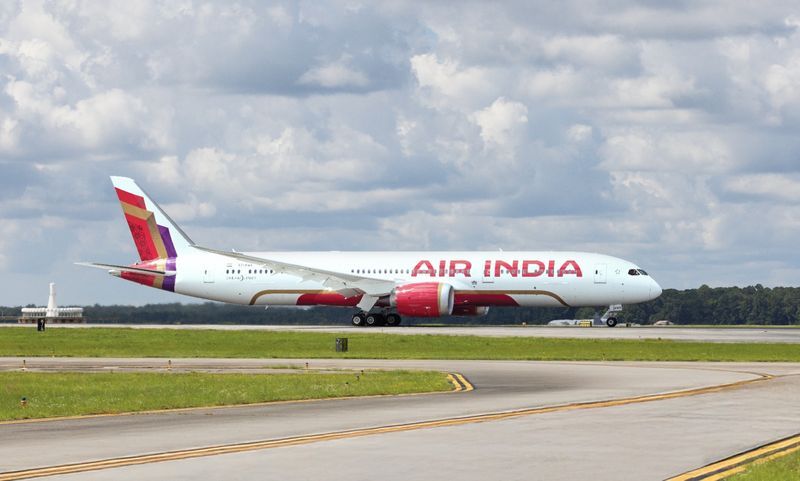
The Ministry of Civil Aviation issued a show-cause notice to Air India after three Italian nationals flew from Delhi to Munich without completing mandatory exit immigration checks. Arriving from Amritsar under a hub-and-spoke connection, the passengers erroneously bypassed border controls, prompting urgent inter-ministerial security reviews.
Facing rigorous regulatory scrutiny following a serious security oversight at Indira Gandhi International Airport, Air India has been summoned to explain how three international travelers departed the country without mandatory border clearance.
Spurring high-level government intervention across multiple national security directorates, the Ministry of Civil Aviation issued a formal show-cause notice to Air India regarding severe procedural lapses during domestic-to-international passenger transfers. The security breach, which unfolded in the early hours of September 4, 2026, involved three Italian nationals who arrived in New Delhi from Amritsar via Air India domestic flight AI-1115. Within an hour of landing, the travelers boarded a codeshare Lufthansa flight bound for Munich without ever presenting themselves at the immigration clearance counters. The incident has exposed major gaps in airport transfer coordination, prompting the Ministry of Home Affairs to convene emergency stakeholder reviews.
Evaluating Transfer Protocols, Ground Handling Failures, and Regulatory Action
Analyzing the mechanics of the security breakdown reveals a systemic failure in executing standard operating procedures (SOPs) for hub-and-spoke transit operations. According to regulatory findings and official ministerial disclosures released in September 2026, key elements under investigation include:
The Transit Route Error: Upon arriving from Amritsar with domestic-category boarding passes, the passengers were incorrectly guided through the International-to-International (I-to-I) transfer channel rather than being routed to departure immigration.
Missing Border Clearances: The three travelers accessed the international departure concourse directly, boarding Lufthansa flight LH-763 to Germany without logging an exit stamp with the Bureau of Immigration.
Accountability and Monitoring: The show-cause notice questions the supervisory oversight of Air India’s designated nodal officers, round-the-clock monitoring teams, and ground-handling partners, including SATS personnel.
Delayed Discovery: The unauthorized departure went completely unnoticed during real-time operations, coming to light only later during manual post-flight passenger manifest reconciliations.
Why It Matters
The practical implications of the Delhi airport immigration breach extend directly into national border security protocols and international aviation compliance. For regulatory bodies like the Directorate General of Civil Aviation (DGCA) and the Bureau of Civil Aviation Security (BCAS), the incident underscores vulnerabilities in transit passenger management that require immediate corrective enforcement. For Air India and ground-handling partners, the lapse risks heavy administrative penalties, mandatory retraining mandates, and heightened oversight across all hub-and-spoke transfer corridors.
Key Facts at a Glance
Incident Date: September 4, 2026.
Involved Flight Route: Amritsar to New Delhi (Air India flight AI-1115) connecting to Munich (Lufthansa flight LH-763).
The Violation: Three foreign nationals bypassed mandatory departure immigration checks entirely.
Regulatory Response: The Ministry of Civil Aviation issued a strict show-cause notice with a mandatory seven-day response window.
FAQ Section
What caused the immigration lapse involving Air India?
Three Italian passengers arriving on a domestic leg from Amritsar were incorrectly routed through the international transfer area instead of being sent to immigration checkpoints.
Which flights were involved in the security breach?
The passengers traveled from Amritsar to Delhi on Air India flight AI-1115 and subsequently departed for Munich on Lufthansa flight LH-763.
What action has the government taken against Air India?
The Ministry of Civil Aviation issued a formal show-cause notice to Air India CEO Campbell Wilson, demanding an explanation within seven days or face administrative and regulatory penalties.
How was the security breach discovered?
The omission was not caught during boarding operations; it was detected subsequently during routine manual passenger manifest reconciliations.
Where can readers track further updates on this investigation?
Official statements and regulatory updates are accessible via the Ministry of Civil Aviation Portal and The Economic Times.
Source: Ministry of Civil Aviation, The Economic Times, The Times of India, NDTV