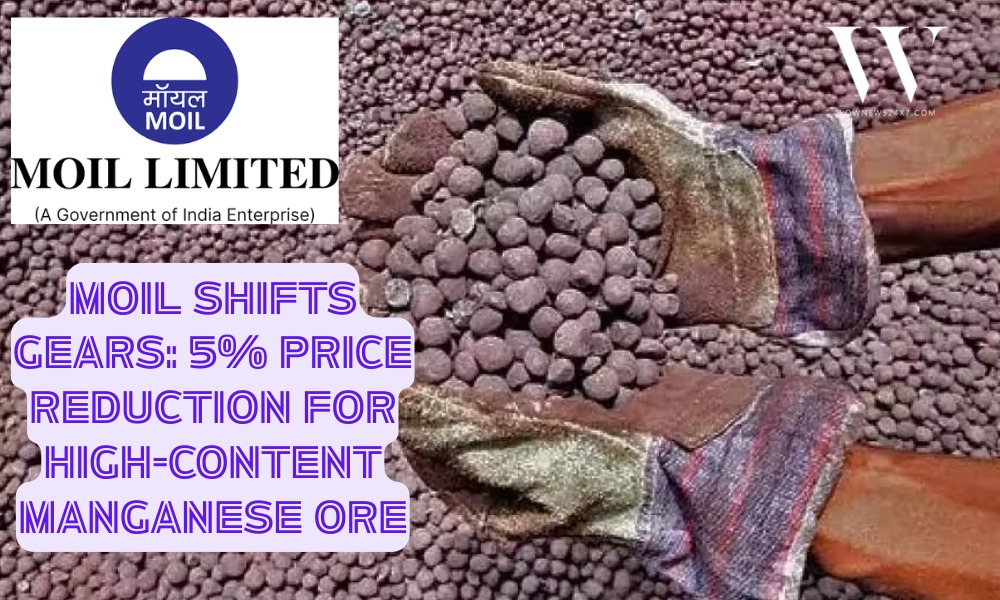
MOIL Limited has reduced the price of ferro-grade manganese ore (Mn-44% and above) by 5%, continuing a trend of regular price adjustments. The move, disclosed to Indian stock exchanges, reflects ongoing shifts in commodity demand that impact steel and alloy manufacturing costs across the domestic market.
NAGPUR – MOIL Limited, India’s largest producer of manganese ore, has implemented a price reduction of 5% for its ferro-grade manganese ores containing 44% manganese and above. The revised pricing structure, which became effective recently, marks a continued period of volatility for the state-run "Miniratna" firm as it navigates fluctuating global demand and domestic market dynamics.
This adjustment follows a series of strategic price revisions by the company throughout the first half of 2026. According to regulatory filings, the company routinely revises its rates based on periodic market assessments, which are closely monitored by stakeholders in the metallurgical and manufacturing sectors.
Understanding the Price Revision
The decision to adjust the price of ferro-grade ore—a critical raw material for steel manufacturing—comes as the industry contends with shifting global inventory levels and evolving procurement patterns. Manganese ore is essential for the production of ferroalloys, which provide strength and durability to various types of steel.
While this specific reduction applies to high-content ferro-grade ores, MOIL has maintained a tiered approach to its pricing strategy. In previous months, the company has oscillated between price hikes and cuts, reflecting the broader volatility of commodity prices. Analysts suggest that such revisions allow the company to stay competitive against international imports while managing its internal production costs.
Regulatory and Market Context
MOIL’s price fixation process is part of its standard business operations, which are reported to the National Stock Exchange (NSE) and the Bombay Stock Exchange (BSE) under Securities and Exchange Board of India (SEBI) regulations.
The market environment has been further influenced by recent government interventions. As of June 2026, the Ministry of Finance issued a notification exempting manganese ores and concentrates with a manganese content of 20% or more from customs duty. This policy shift is intended to lower import costs and support the broader domestic industrial base, creating a more competitive landscape for both domestic producers like MOIL and secondary market players.
Impact on the Steel and Alloy Industry
For manufacturers, the 5% reduction in high-grade manganese ore prices serves as a potential relief on the cost of raw materials. Given that manganese is a significant input for steel production, price variations directly impact the profit margins of alloy producers and downstream steel manufacturers.
However, industry experts caution that while raw material costs may dip, the long-term price of steel remains contingent on other factors, including energy costs, logistics, and global demand for flat-rolled products. Consumers and businesses are advised to watch for how these cost savings are passed through the supply chain.
Key Facts at a Glance
Price Adjustment: Ferro-grade manganese ore (Mn-44% and above) has been reduced by 5%.
Producer: MOIL Limited is a Miniratna state-owned enterprise and India’s largest manganese ore miner.
Regulatory Context: Adjustments are disclosed to the NSE and BSE under SEBI (Listing Obligations and Disclosure Requirements) Regulations.
Industry Influence: The price of manganese ore directly impacts the production costs for the Indian steel and ferroalloy sectors.
Frequently Asked Questions (FAQ)
1. Why does MOIL revise its prices frequently?
MOIL conducts periodic price reviews to align with global commodity trends, domestic demand, and internal production costs, ensuring that its products remain competitive in the market.
2. How does this price change affect steel manufacturers?
As a key raw material for steel production, a reduction in manganese ore prices can potentially reduce the cost of manufacturing for steel and alloy plants, depending on their existing procurement contracts.
3. Is this price change permanent?
No. These revisions are typically announced monthly or quarterly based on market conditions, and they are subject to future adjustments by the company’s management.
4. Where can I find official details on these price updates?
Investors and stakeholders can access the official price disclosures and regulatory filings through the National Stock Exchange (NSE) or the Bombay Stock Exchange (BSE) websites under the filings for MOIL Limited.
Source: MOIL Limited Regulatory Filings, Ministry of Finance Notifications, National Stock Exchange of India.