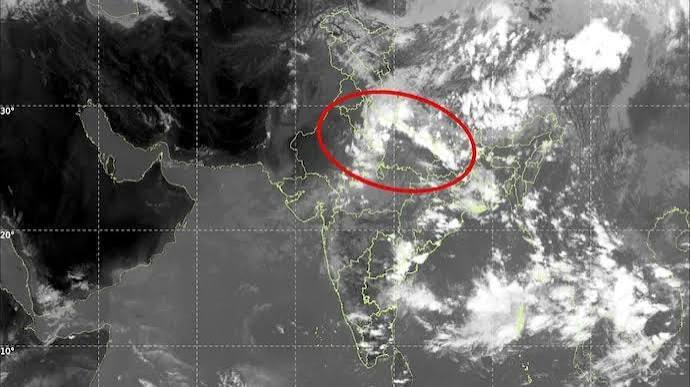
Advanced satellite telemetry from ISRO and the IMD is tracking the final push of the monsoon across North India. The orbital monitoring provides precise data on convective rain bands, helping farmers secure maturing kharif crops and enabling authorities to issue timely weather advisories as the seasonal cycle nears its withdrawal.
NEW DELHI — Meteorological satellites operated by the Indian Space Research Organisation (ISRO) in coordination with the India Meteorological Department (IMD) are actively tracking the monsoon's final push across North India. The latest orbital data captures cloud band configurations and moisture incursions signaling the last phase of the annual seasonal weather cycle before its scheduled withdrawal from the northern plains.
The monitoring initiative provides real-time tracking of residual convective clouds moving across Punjab, Haryana, western Uttar Pradesh, and Delhi. According to IMD satellite telemetry, localized convergence zones are generating intermittent heavy showers, offering temporary relief from lingering humidity while marking the transitional prelude to autumn weather patterns.
Orbital Tracking and Precipitation Dynamics
Advanced high-resolution radiometer imaging deployed on meteorological satellites allows forecasters to map wind vectors and atmospheric moisture bands with high precision. This orbital data enables regional disaster management cells to issue timely localized alerts regarding sudden downpours, gusty winds, and localized water accumulation in urban drainage zones.
Agricultural scientists note that these terminal seasonal showers are critical for maturing late-sown kharif crops, including paddy and pulses, across the Indo-Gangetic plains. However, excessive moisture accumulation in low-lying agricultural belts requires close monitoring to prevent crop lodging and logistical delays during harvesting operations.
According to IMD bulletins, satellite telemetry logs, and ministerial updates:
Orbital Data Source: ISRO meteorological payloads coupled with IMD geostationary satellite tracking.
Affected Zones: Northern plains spanning Punjab, Haryana, western Uttar Pradesh, and the National Capital Region.
Precipitation Pattern: Intermittent localized downpours driven by convective cloud bands.
Seasonal Context: Final phase of active monsoon circulation ahead of the withdrawal phase.
Official Sources Section
Quote Section
"According to IMD meteorological forecasts and satellite telemetry reports, advanced orbital tracking provides high-precision monitoring of the monsoon's final phase, ensuring timely advisories for agricultural and disaster management sectors."
Why It Matters
For farmers across North India, the final phase of monsoon rainfall directly influences agricultural yields and soil moisture levels ahead of the rabi sowing season. For urban planners and commuters, satellite-tracked weather monitoring mitigates transit disruptions caused by unexpected late-season flash floods.
Key Facts at a Glance
Tracking Agency: IMD and ISRO collaborative satellite monitoring.
Geographic Focus: North Indian plains and hill regions.
Operational Objective: Real-time tracking of cloud movement and precipitation density.
Agricultural Implication: Supplies crucial moisture for maturing kharif crops.
FAQ Section
How are satellites tracking the monsoon's progress over North India?
Meteorological satellites utilize high-resolution imaging and radiometer sensors to monitor cloud bands, moisture convergence, and wind patterns in real time.
Which regions are currently experiencing the final push of seasonal rains?
The active weather bands are influencing Punjab, Haryana, western Uttar Pradesh, and surrounding areas.
What is the agricultural significance of these terminal showers?
The precipitation provides essential soil moisture for late-sown kharif crops just before the monsoon's seasonal withdrawal.
Where can citizens access real-time satellite weather tracking updates?
Official weather maps, satellite imagery loops, and regional forecasts are published via the IMD Portal.
Source: India Meteorological Department, Indian Space Research Organisation, The Times of India Environment Desk, The Hindu Science Section