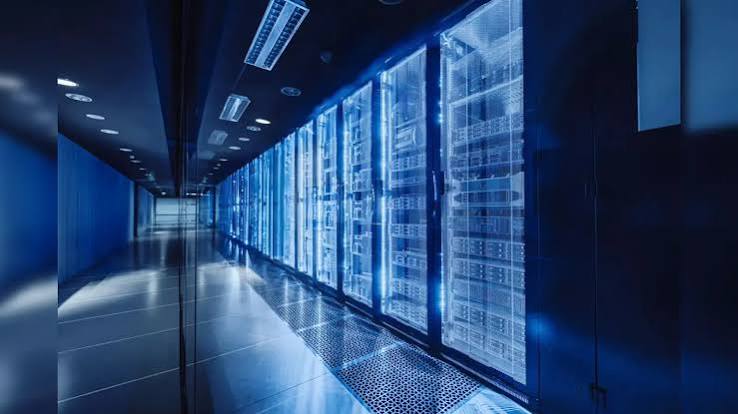
India's data centre capacity is projected to surge from 1.6 GW to 6 GW by 2029, driven by artificial intelligence workloads and hyperscale cloud investments. The $110 billion infrastructure expansion will transform major urban corridors into gigawatt-scale digital hubs, reinforcing India's position as a premier global technology market.
NEW DELHI — India’s digital infrastructure sector is undergoing an unprecedented expansion, with total data centre capacity projected to scale from 1.6 GW to 6 GW by 2029. According to a mid-year market report released by real estate services firm JLL India, the multi-fold growth is expected to draw approximately $110 billion in capital investments, positioning the country as one of the fastest-growing digital infrastructure hubs in Asia.
The market momentum accelerated significantly through the first half of 2026, recording 101 MW of absorption—exceeding the previous three-year average by over 20 percent. With strong delivery volumes primarily concentrated in traditional Tier-I markets like Mumbai and Chennai, vacancy levels have tightened to a record low of 2.8 percent, underscoring intense demand from enterprise users and cloud service providers.
Infrastructure Scaling and Regional Distribution
The upcoming 4.4 GW supply pipeline through 2029 is slated for strategic geographic distribution to balance power availability, land acquisition, and network connectivity. Mumbai is projected to capture 35 percent of the upcoming capacity share, largely driven by colocation facilities, while Hyderabad follows with 24 percent through a blend of self-build hyperscale campuses and colocation hubs. Emerging markets such as Visakhapatnam and Chennai are slated to account for 14 percent and 9 percent of the new pipeline, respectively.
To support high-density artificial intelligence computing—which frequently requires rack densities exceeding 30 kW compared to traditional 5 to 10 kW configurations—the required capital expenditure is divided into distinct segments. Real estate construction will absorb an estimated $4 billion, mechanical, electrical, and plumbing (MEP) infrastructure will require $18 billion, and high-performance IT hardware, including servers and specialized racks, will account for the remaining $88 billion. Furthermore, global hyperscalers are committing to build nearly 30 percent of new capacity through self-build initiatives, adding approximately 1.4 GW of proprietary infrastructure by 2029.
According to industry reports, corporate disclosures, and policy filings:
Capacity Target: Projected expansion from 1.6 GW in mid-2026 to 6 GW by 2029.
Total Investment Outlay: Estimated at $110 billion across real estate, electrical systems, and IT hardware.
Absorption Rate: H1 2026 recorded 101 MW of net absorption, surpassing historical three-year averages by over 20 percent.
Hyperscale Commitment: Global cloud operators are slated to self-build 1.4 GW of specialized AI-ready capacity by 2029.
Official Sources Section
Quote Section
"According to JLL India Managing Director for Data Centre Leasing Rachit Mohan, the convergence of landmark tax incentives with massive hyperscale investments for AI-driven infrastructure requirements positions India as a strategic global hub for digital innovation."
Why It Matters
For enterprise businesses, telecommunications firms, and technology consumers, the rapid build-out of domestic data infrastructure ensures lower latency, localized data compliance, and robust support for burgeoning artificial intelligence applications. For the broader economy, the multi-billion-dollar capital influx stimulates domestic construction, manufacturing, and renewable energy integration.
Key Facts at a Glance
Baseline Capacity: 1.6 GW operational as of June 2026.
Target Horizon: 6 GW total capacity expected by 2029.
Primary Demand Drivers: Artificial intelligence workloads, hyperscale cloud expansion, and localized data compliance mandates.
Key Geographic Hubs: Mumbai, Hyderabad, Visakhapatnam, and Chennai.
FAQ Section
What is driving the rapid expansion of India's data centre market?
The surge is primarily fueled by escalating enterprise demand for artificial intelligence workloads, hyperscale cloud deployments, and rapid growth in digital payments, e-commerce, and streaming services.
How much capital investment is required to reach the 6 GW target?
Industry estimates indicate that reaching 6 GW by 2029 will require approximately $110 billion in capital investments across real estate, MEP systems, and IT hardware.
Which cities are leading the data centre development pipeline?
Mumbai and Hyderabad capture the majority of upcoming capacity share, supported by emerging hubs in Visakhapatnam and Chennai.
Where can stakeholders access detailed real estate and infrastructure reports?
Comprehensive market analyses and sectoral tracking reports are published regularly via platforms such as the JLL India Insights Portal.
Source: JLL India Data Centre Report, Hindustan Times Real Estate Desk, Ministry of Electronics and Information Technology, Business Standard Corporate Bureau