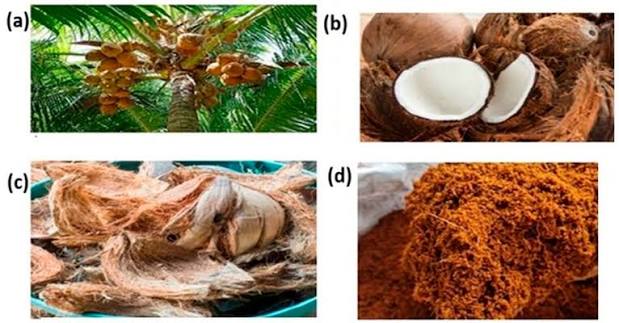
India’s MSME Ministry is driving rural economic growth by converting coconut husks into high-value coir enterprises. Through the Coir Board, modernization schemes provide machinery and capital to rural artisans—primarily women—producing geotextiles and coco-peat blocks for global markets, turning agricultural waste into sustainable livelihood opportunities across coastal states.
NEW DELHI — The Ministry of Micro, Small and Medium Enterprises (MSME) has expanded its national rural industrialization drive, turning agricultural waste into high-value exports under its modernized coir development programmes. The initiative, spearheaded by the Coir Board, utilizes discarded coconut husks to establish micro-enterprises, train traditional workers, and expand sustainable agro-manufacturing across rural belts. The development marks an important economic transition for thousands of rural families seeking diversified employment outside conventional farming.
Coconut Husk Utilization Drives Rural Industrialization
The processing of raw coconut husks into versatile coir fiber forms the operational backbone of this agro-industrial expansion. India accounts for more than two-thirds of global coir production, an industry that has traditionally remained unorganized and reliant on manual defibering techniques.
Through the Coir Board’s structured schemes, rural artisans receive modern processing machinery, mechanized spinning units, and access to capital under central entrepreneurship frameworks like the Prime Minister’s Employment Generation Programme (PMEGP). The policy aims to eliminate informal, exploitative middle layers while transitioning cottage-scale operations into registered micro-enterprises.
The primary beneficiaries of the initiative are women artisans in southern and eastern coastal states, including Kerala, Tamil Nadu, Andhra Pradesh, Karnataka, and Odisha. Official data indicate that women constitute approximately 80 percent of the total workforce active in the extraction and spinning segments of the coir sector.
Expanding Commercial Applications and Global Markets
The modernization of coir processing has diversified output far beyond traditional door mats and household ropes. Coir geotextiles, pith-based horticultural blocks, acoustic insulation panels, and rubberized coir mattresses now constitute major export categories.
Geotextiles manufactured from coir fibers have seen increased uptake among national infrastructure planners for soil stabilization, riverbank erosion control, and highway landscaping projects. Because the natural material is 100 percent biodegradable, it functions as an eco-friendly alternative to synthetic polymer-based stabilization nets.
Similarly, coir pith—previously treated as industrial waste that caused groundwater and storage issues near processing yards—is now refined into organic growing medium. Domestic nurseries, as well as agricultural importers across North America, Europe, and the Middle East, source compressed coco-peat briquettes for soil conditioning and greenhouse hydroponics.
Impact on Rural Livelihoods and Small Businesses
The structured interventions by the central government have provided economic buffers against volatile agricultural commodity cycles. Smallholders who once discarded coconut husks after harvesting copra can now monetize the fibrous outer shells at collection hubs established near village clusters.
For local entrepreneurs, the capital subsidies under the Scheme of Fund for Regeneration of Traditional Industries (SFURTI) have made state-of-the-art machinery accessible. Common Facility Centres (CFCs) allow cluster members to conduct carding, dyeing, weaving, and packaging without incurring prohibitive individual debt.
The resulting wage stability offers a measurable uplift to daily-wage workers. Mechanized spinning units allow operators to increase daily yarn output three- to four-fold compared with manual ratts, directly elevating net household earnings while mitigating physical strain.
Official Sources
Policy announcements, operational guidelines, and export data were documented in official notifications released by the Ministry of Micro, Small and Medium Enterprises and administrative reports published by the Coir Board. Cluster sanction approvals and traditional industry metrics were sourced from releases issued via the Press Information Bureau (PIB).
Quotes
"The transformation of discarded biomass into value-added commercial products represents the core philosophy of sustainable rural development, providing direct employment to village communities while strengthening our export footprint," according to officials from the MSME ministry.
Industry representatives added that access to testing facilities and mechanized machinery has enabled micro-producers to meet international compliance standards for export shipments.
Why It Matters
This initiative demonstrates how decentralized, biomass-based agro-industries can curb rural-to-urban distress migration, establish circular-economy models, and bolster export revenues. By shifting from unprocessed raw materials to specialized engineering applications such as geotextiles and hydroponic media, India's rural manufacturers are securing resilient positions in global sustainable trade.
Key Facts at a Glance
Workforce Profile: Women comprise an estimated 80 percent of the workforce engaged in traditional coir extraction and spinning.
Biomass Conversion: The programme converts discarded coconut husks into commercial products, including geotextiles, coco-peat blocks, and composite boards.
Government Support: Modernization is funded through central schemes, including PMEGP and the SFURTI cluster framework.
Global Footprint: India produces more than two-thirds of the world's coir supply, exporting to over 100 countries.
Frequently Asked Questions
What is the role of the MSME Ministry in the coir sector?
The ministry implements development programs via the statutory Coir Board, providing capital subsidies, modern machinery, worker training, and market access to rural artisans and micro-enterprises.
How does processing coconut husks benefit local farmers?
Farmers who cultivate coconuts can sell discarded husks directly to processing clusters, unlocking an additional income stream from agricultural waste.
What are coir geotextiles used for?
Coir geotextiles are permeable fabrics made from woven coconut fiber, used in civil engineering for slope reinforcement, highway embankment stabilization, and erosion prevention.
Source: Ministry of Micro, Small and Medium Enterprises, Coir Board, and the Press Information Bureau (PIB).