The Ministry of Housing and Urban Affairs and the Delhi Development Authority unveiled the Master Plan for Delhi-2047 (MPD-2047) introducing a heritage-led revitalization strategy for the historic Walled City, proposing the adaptive reuse of architectural assets into boutique hotels, museums, and cultural spaces and phased relocation of bulky wholesale godowns
Heritage-Led Revitalization of the Walled City
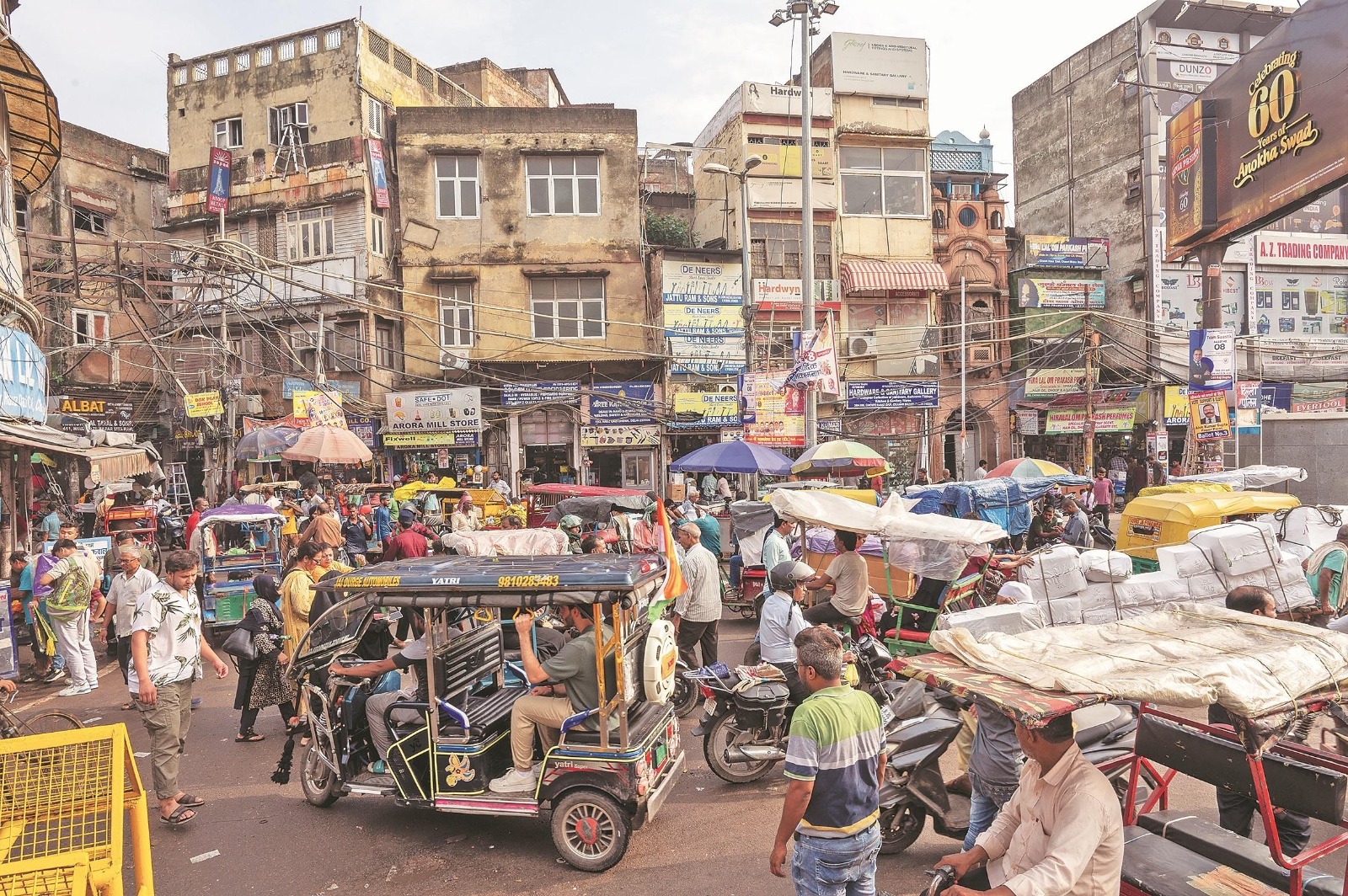
Under the newly released MPD-2047, Old Delhi (Shahjahanabad) is set to undergo a major urban transformation designed to balance historical preservation with modern commercial utility. According to official planning documents, the government aims to mitigate severe traffic congestion and environmental degradation in historical districts such as Chandni Chowk and Sadar Bazaar.
The framework encourages property owners to preserve historic structures by offering targeted Floor Area Ratio (FAR) incentives and Transferable Development Rights (TDR). Heritage buildings can undergo adaptive reuse, enabling parts or all of these properties to be converted into boutique hotels, guest houses, bed-and-breakfast accommodations, craft centers, libraries, and socio-cultural performance spaces.
Phased Relocation of Godowns and Logistics Overhaul
To decongest narrow commercial arteries, the master plan mandates the systematic removal of hazardous trades and polluting industries from residential and dense commercial clusters within the Walled City.
Godown Relocation: Wholesale and bulky warehousing activities will be progressively discouraged and redirected to compatible, designated logistics hubs outside the city center.
Pedestrian Infrastructure: The Walled City will be actively promoted as an "Active Travel Area," prioritizing pedestrianization, cycling networks, non-motorized transport corridors, and structured public plazas.
Zero Tolerance on Encroachments: Local civic bodies will enforce strict regulations against illegal parking and unauthorized structural extensions to ensure barrier-free movement for residents and visitors.
Impact on Citizens, Businesses, and Tourism
The strategic shift outlined in MPD-2047 carries profound implications for local merchants, property owners, tourists, and heritage conservationists. By transitioning Old Delhi from a chaotic freight hub into a vibrant 24x7 cultural and tourism destination, the policy seeks to enhance visitor safety, elevate hospitality standards, and protect architectural landmarks.
At the same time, business owners transitioning out of traditional warehousing zones will benefit from modern, planned logistics parks designed to handle heavy freight efficiently without choking residential neighborhoods.
"According to officials and urban planning documents, the master plan introduces a balanced approach combining heritage preservation, TDR incentives, and the phased shifting of warehousing to revitalize the Walled City into a pedestrian-friendly cultural hub."
Why It Matters
Revitalizing historic urban centers through adaptive reuse and infrastructure rationalization addresses decades-long civic challenges like severe traffic gridlock, fire hazards, and structural decay. For historic capitals like Delhi, establishing a legal and financial mechanism—such as heritage TDR—allows private owners to maintain architectural integrity while participating in the modern hospitality and tourism economy.
Key Facts at a Glance
Planning Horizon: Delhi Master Plan 2047 (MPD-2047).
Target Area: Old Delhi (Walled City / Shahjahanabad).
Key Interventions: Adaptive reuse of heritage properties, boutique hotel conversions, and TDR incentives.
Logistics Shift: Phased relocation of wholesale godowns and bulky storage out of congested commercial zones.
Frequently Asked Questions
What does MPD-2047 propose for heritage buildings in Old Delhi?
The master plan proposes adaptive reuse, allowing historic structures to be converted into boutique hotels, guest houses, museums, and cultural centers, supported by TDR incentives for preservation.
Will wholesale godowns remain in the Walled City?
No. The master plan dictates that wholesale activities and bulky warehousing must be discouraged and shifted to compatible peripheral locations to reduce freight congestion.
How will mobility be managed in Old Delhi under the new plan?
The Walled City will be promoted as an active travel and pedestrian-friendly zone featuring cycling tracks, heritage walks, public plazas, and strict penalties against unauthorized encroachments.
Source: Delhi Development Authority (DDA), Ministry of Housing and Urban Affairs, Press Information Bureau (PIB)