The Mumbai-Ahmedabad High-Speed Rail project achieved its third mountain tunnel breakthrough in Maharashtra on June 1, 2026. The 417-metre MT-07 tunnel, located in Palghar, marks rapid progress in one of the corridor's most complex sections, keeping the ambitious 508-km bullet train project on track for its 2029 completion.
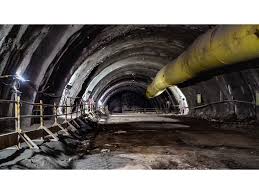
PALGHAR — The Mumbai-Ahmedabad High-Speed Rail (MAHSR) project, India’s flagship bullet train initiative, achieved a major engineering milestone this week with the successful breakthrough of its third mountain tunnel in Maharashtra. The National High Speed Rail Corporation Limited (NHSRCL) confirmed that the excavation for Tunnel MT-07, located at Ambesari village in the Dahanu taluka of Palghar district, was completed on June 1, 2026.
This development follows a series of rapid construction successes along the 508-km corridor. According to project officials, three mountain tunnel breakthroughs have now been recorded in Maharashtra within the last five months, signaling an acceleration in construction across one of the project's most geographically challenging stretches.
Engineering the Corridor
The newly completed MT-07 tunnel measures 417 metres in length and 14.4 metres in width, designed specifically to house both the up and down tracks of the high-speed rail line. The excavation process utilized a controlled drilling and blasting method, executed simultaneously from both ends to ensure precision and structural integrity.
To manage the complex terrain, engineers deployed advanced geotechnical instruments, including Surface Settlement Points (SSP), 3D targets, strain gauges, and seismographs. These tools provided real-time monitoring of vibrations and tunnel behavior, protecting nearby structures and ensuring worker safety throughout the excavation.
Key Project Milestones
The breakthrough at MT-07 completes all three mountain tunnels located between the Vapi (Gujarat) and Boisar (Maharashtra) stations. The project requires a total of eight mountain tunnels, seven of which are situated in Palghar and one in Valsad, Gujarat. Recent progress includes:
MT-05 (1.5 km): Breakthrough achieved on January 2, 2026.
MT-06 (454 metres): Breakthrough achieved on February 3, 2026.
MT-07 (417 metres): Breakthrough achieved on June 1, 2026.
Beyond the mountain tunnels, the project is making strides in its 21-kilometre underground section near Mumbai. Recently, a 350-tonne cutterhead for a second Tunnel Boring Machine (TBM) was lowered at Ghansoli, marking the assembly of machines destined to excavate the deeper underground portions of the route.
Official Sources
According to the National High Speed Rail Corporation Limited (NHSRCL), the successful excavation of these tunnels is vital for maintaining the project’s timeline. Railway Minister Ashwini Vaishnaw highlighted the achievement on social media, noting the rapid pace of construction in the Dahanu region. The project remains a central component of India's infrastructure modernization, funded partially through soft loans from the Japanese government and utilizing the Shinkansen system.
Why It Matters
The completion of these tunnels reduces engineering uncertainty and paves the way for critical downstream activities such as track laying and systems installation. As India's first bullet train corridor, the MAHSR project is designed to operate at speeds of up to 320 kmph, potentially reducing travel time between Mumbai and Ahmedabad to under two hours. The project is expected to be fully operational by December 2029, with the first section from Surat to Bilimora slated for completion in August 2027.
Key Facts at a Glance
Total Mountain Tunnels: 8 (7 in Maharashtra, 1 in Gujarat).
Recent Progress: 3 breakthroughs in Maharashtra within 5 months.
Design Speed: 320 kmph.
Corridor Length: 508 km connecting Mumbai, Maharashtra, and Ahmedabad, Gujarat.
Estimated Completion: December 2029.
Frequently Asked Questions
What is the significance of the "breakthrough" milestone?
A breakthrough occurs when the excavation from two ends of a tunnel meets, signifying the completion of the structural tunnel shell. It allows construction teams to transition to internal finishing and track installation.
Why are mountain tunnels considered challenging?
Mountain tunnels involve navigating rugged, unpredictable geological formations. Controlled drilling and blasting, combined with continuous real-time monitoring, are required to ensure the tunnel remains stable and safe for high-speed transit.
When will the entire Mumbai-Ahmedabad corridor be finished?
While the first section (Surat to Bilimora) is scheduled for August 2027, the entire 508-km high-speed rail line is targeted for completion by December 2029.
Source: National High Speed Rail Corporation Limited (NHSRCL), The Hindu, Deccan Herald, Indian Express