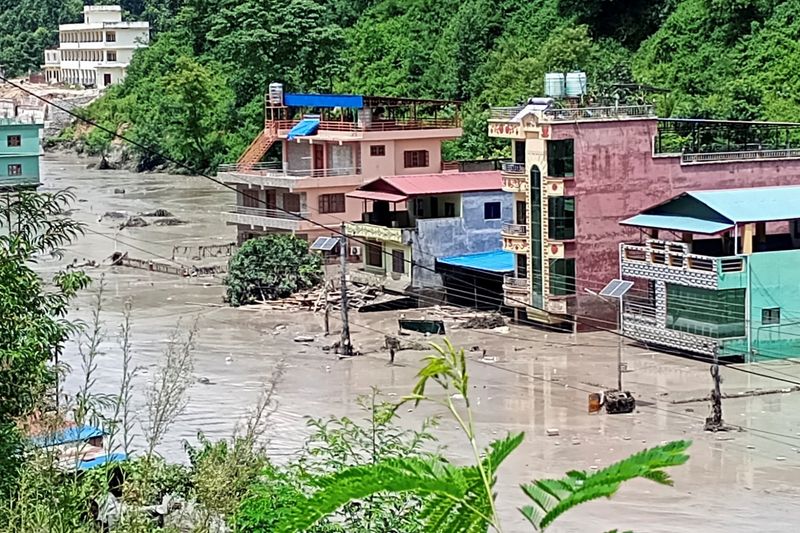
At least eight people have died as torrential monsoon rains triggered flash floods and landslides across Nepal, police confirmed. Emergency response units have mobilized to conduct search-and-rescue operations, clear blocked transport highways, and assist displaced riverine communities as hydrological agencies maintain high-alert advisories across vulnerable river basins.
KATHMANDU — At least eight people have died and several others remain missing after incessant monsoon downpours triggered widespread flash floods and landslides across several districts in Nepal, national police authorities confirmed. Emergency responders, including disaster management personnel and armed police units, have mobilized across affected river basins to evacuate stranded residents, clear blocked transport arteries, and deliver emergency humanitarian aid as water levels continue to surge across the Himalayan nation.
Escalating Casualties and Search-and-Rescue Deployments
According to statements released by Nepal Police headquarters in Kathmandu, the fatalities were recorded across multiple river valleys following intense, continuous precipitation that overwhelmed local drainage channels and riverbanks. Rescue teams deployed inflatable motorized boats, earthmovers, and specialized extraction equipment to navigate inundated settlements and retrieve individuals trapped by sudden inundations.
Search-and-rescue teams are actively scouring affected regions for missing persons, though operations have faced severe operational hurdles due to persistent rainfall, treacherous terrain, and ongoing mudslides along key transit routes. Local administrative bodies have set up temporary relief centers in community buildings, schools, and government structures to provide emergency shelter, dry food rations, and medical care to displaced families.
Infrastructure Disruption, Transit Gridlock, and Economic Impact
The recent wave of Nepal floods has caused extensive structural damage to critical civil infrastructure, including rural bridges, power transmission lines, and regional highway networks. Key transport routes connecting the capital city of Kathmandu to southern and eastern districts have suffered temporary closures due to heavy debris, fallen trees, and mud accumulation along steep mountain passes.
The disruption has significantly impacted interstate trade and traveler transit:
Commercial Supply Chains: Freight movement carrying essential agricultural produce, fuel, and consumer goods has slowed significantly along vital arterial highways.
Domestic Travel and Tourism: Land transport corridors have witnessed substantial delays, while regional civil aviation authorities are closely monitoring weather windows to ensure flight safety amid reduced visibility.
Agricultural Livelihoods: Extensive tracts of lowland paddy fields and seasonal crops across the southern plains have been submerged, posing risks to seasonal harvest yields.
Hydrological Context and Regional Vulnerabilities
Nepal’s annual South Asian monsoon season, which typically spans from June through September, accounts for roughly 80 percent of the country’s total annual precipitation. The steep mountainous topography, combined with rapid river runoff into lowland plains, leaves communities vulnerable to sudden hydrological surges and geohazards.
Hydrological monitoring stations maintained by the Department of Hydrology and Meteorology reported that several major rivers, including tributaries of the Koshi, Gandaki, and Bagmati river basins, have approached or exceeded critical danger thresholds. Meteorological authorities have urged communities residing along riverbeds and flood-prone floodplains to remain on high alert and comply immediately with local evacuation advisories.
Official Sources
According to official briefings from the Nepal Police and situation reports from the Ministry of Home Affairs - NDRRMA, disaster response protocols remain active nationwide. Weather monitoring bulletins issued by the Department of Hydrology and Meteorology continue to provide real-time water level and rainfall forecasts to assist local administrations in proactive disaster risk reduction.
Quote Section
"According to officials from the Nepal Police, emergency personnel and specialized disaster units have been deployed across vulnerable districts to carry out evacuations and maintain emergency communications."
"Authorities stated that residents living in vulnerable riverine zones and landslide-prone mountain slopes must strictly adhere to early warning advisories as rescue operations continue."
Why It Matters
The Nepal floods underscore the acute vulnerability of Himalayan mountain ecosystems and downstream communities to extreme weather events. Timely dissemination of early warning bulletins, robust disaster response mechanisms, and infrastructure resilience are critical to protecting human life, safeguarding rural livelihoods, and preserving economic continuity across the region.
Key Facts at a Glance
Confirmed Casualties: At least 8 fatalities reported across impacted districts by Nepal Police.
Core Drivers: Heavy, sustained monsoon rainfall triggering flash floods and landslides.
Operational Response: Joint operations involving Nepal Police, civil defense teams, and local administrations.
Critical Disruptions: Blocked regional highways, damaged rural infrastructure, and submerged agricultural lands.
Frequently Asked Questions (FAQ)
What caused the recent flood casualties in Nepal?
Incessant monsoon rains led to sudden flash floods and slope failures, submerging settlements and blocking roadways across affected districts.
Which agencies are coordinating the rescue response?
The Nepal Police, Armed Police Force, and the National Disaster Risk Reduction and Management Authority (NDRRMA) under the Ministry of Home Affairs are leading relief and rescue operations.
Are travel and road transport affected?
Yes. Landslides and overflowing streams have caused localized blockages on several key highways, prompting transport authorities to advise caution for travelers.
Sources