Nepal Signals Diplomatic Reset, Calls India Its Top Partner
Kalpana Kanungo - Mumbai Bureau Jun 06, 2026 1,600 Views
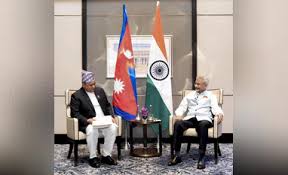
Nepal's Foreign Minister Shishir Khanal met with Indian counterpart S. Jaishankar in New Delhi, declaring that Kathmandu’s new government carries "no old baggage" and prioritizes India as its most important partner. The bilateral discussions focused on transitioning historical ties into modern partnerships spanning digital connectivity, energy trade, and technology.
NEW DELHI — In a clear diplomatic signal to move past recent border disputes, Nepal’s newly appointed Foreign Minister, Shishir Khanal, characterized India as Kathmandu’s "most important partner" during high-level bilateral talks on Saturday. Minister Khanal, who arrived in New Delhi on Friday for a three-day official visit, stated that the newly elected administration under Prime Minister Balendra Shah enters office with a fresh mandate, free from "old baggage," and firmly resolved to elevate cross-border ties.
The visit marks the highest-level official engagement between the two countries since Prime Minister Balendra Shah's government took office in March 2026. The discussions come at a critical time, as both nations aim to resolve regional friction while expanding economic, energy, and digital connectivity across their uniquely open border.
Shifting Focus To Modern Development Goals
During their opening remarks at Hyderabad House, Minister Khanal and Indian External Affairs Minister S. Jaishankar discussed expanding the historical relationship into contemporary technology domains. The meeting builds on decades of infrastructure development, which began with India's assistance on Kathmandu's airport in the 1950s.
Minister Khanal emphasized that Kathmandu seeks to transform their shared civilizational heritage into a modern economic partnership. He expressed appreciation for India's role as a dependable neighbor during supply chain disruptions, noting that New Delhi has ensured uninterrupted fuel and fertilizer deliveries despite volatile global geopolitical shifts in West Asia.
The Indian delegation responded positively to this diplomatic opening. Minister Jaishankar highlighted that the current political transition offers a distinct opportunity to "decisively shift the trajectory" of India-Nepal bilateral relations, ensuring the partnership realizes its full collaborative potential.
Cooperative Border Management and Strategic Continuity
The bilateral talks also directly addressed the sensitive issue of border management and regional security cooperation. Ministry of External Affairs (MEA) officials noted that regular high-level communication remains the primary path to managing border protocols effectively.
While recent territorial remarks by political figures had raised domestic concerns in Kathmandu, the official delegations focused on strengthening existing institutional mechanisms to handle boundary matters constructively.
To expand on this diplomatic progress, the meeting laid the groundwork for an upcoming official state visit by Prime Minister Balendra Shah to New Delhi later this year. This framework aligns with a parallel visit by Rabi Lamichhane, President of Nepal's Rastriya Swatantra Party, who held introductory talks with Prime Minister Narendra Modi earlier in the week.
"Nepal's new government carries a clear and decisive mandate for good governance, economic transformation, and result-driven diplomacy. We carry no old baggage, only a firm resolve to build a genuinely transformative relationship." — Foreign Minister Shishir Khanal
Affirming India’s regional development policy during the open session, External Affairs Minister S. Jaishankar stated:
"Our bilateral ties have steadily developed across trade, investment, energy, development cooperation, and culture. Today, we have an opportunity to also take it forward into newer domains like startups, artificial intelligence, and renewable energy."
Why It Matters
This diplomatic reset between New Delhi and Kathmandu has practical benefits for cross-border trade, regional businesses, and South Asian logistics. A stable security partnership ensures the continuation of open-border transit, which is essential for millions of citizens who cross for employment, education, and family ties. For industrial investors and energy companies, a shared commitment to development stabilizes long-term infrastructure investments, particularly in Nepal's expanding hydropower generation sector, which exports electricity back into India's national grid.
Key Facts at a Glance
High-Level Engagement: Marks the first official visit by a senior Nepalese cabinet minister since the March 2026 government transition.
Economic Security: India continues to guarantee uninterrupted deliveries of vital petroleum products and agricultural fertilizers.
New Technological Domains: Bilateral expansion plans now include cross-border digital payment systems, startup networks, and joint AI initiatives.
Neighborhood Policy: Relies on India's "Neighbourhood First" policy to drive regional prosperity.
FAQ Section
What did the Nepalese Foreign Minister mean by "no old baggage"?
Minister Shishir Khanal indicated that the newly formed administration under Prime Minister Balendra Shah intends to look forward rather than remaining stalled by past political disagreements. The focus is on clean-slate, result-driven diplomacy centered on trade, investment, and infrastructure.
How are the two countries planning to resolve ongoing border matters?
According to official statements from the Ministry of External Affairs, India and Nepal use established, dedicated bilateral mechanisms to discuss and manage boundary management issues directly, keeping communication clear and technical.
What new areas of cooperation were introduced during these talks?
While traditional talks focus on hydroenergy and cargo trade, this session explicitly introduced cooperation in newer fields, including artificial intelligence (AI), cross-border digital financial tools, IT development, and shared startup ecosystems.