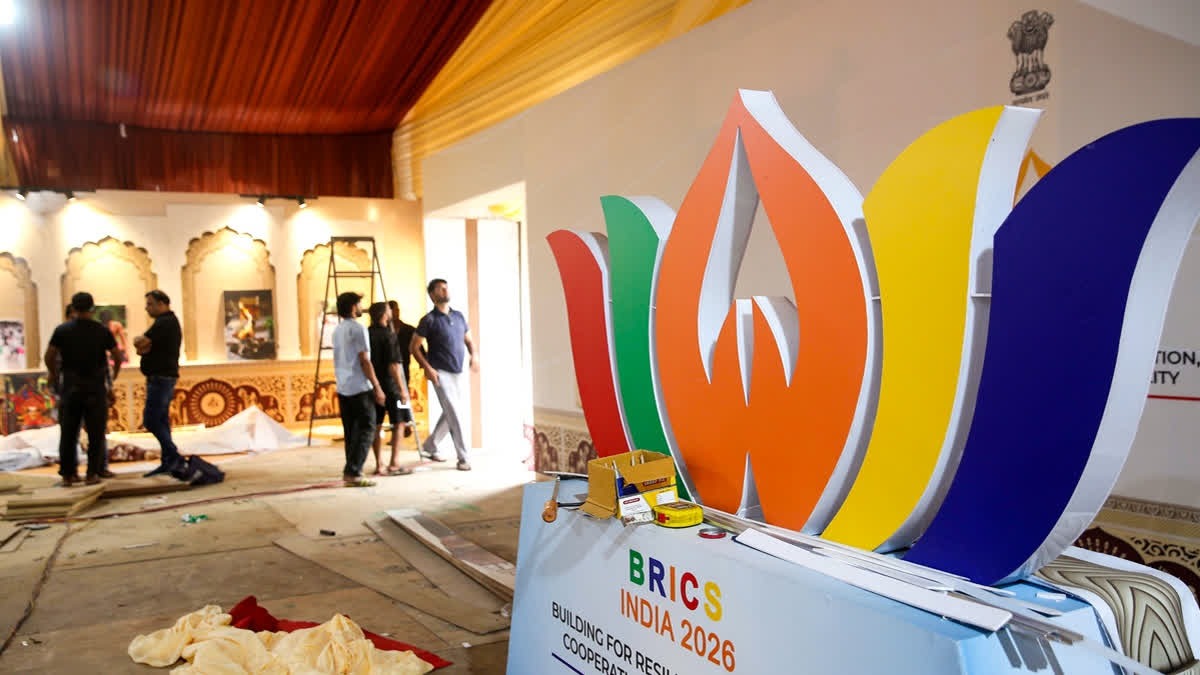
India hosted the 12th BRICS Environment Ministers' Meeting at New Delhi's Bharat Mandapam on August 18, 2026. Led by Union Minister Bhupender Yadav under the theme "Building for Resilience, Innovation, Cooperation and Sustainability," delegates focused on advancing sustainable lifestyles, circular economy policies, and collaborative climate adaptation frameworks.
India hosted the 12th BRICS Environment Ministers' Meeting at the Bharat Mandapam complex in New Delhi on August 18, 2026. Presided over by India's Union Minister for Environment, Forest and Climate Change, Bhupender Yadav, the high-level summit brought together policymakers, senior delegates, and environmental experts from member nations. Held under the overarching theme of India's BRICS Chairship 2026—"Building for Resilience, Innovation, Cooperation and Sustainability"—the conference serves as a pivotal platform to forge multi-lateral consensus on critical ecological challenges facing major emerging economies.
Core Agenda and Four Strategic Priorities
The ministerial deliberations follow a comprehensive Senior Officers' Meeting of the Environment Working Group (EWG) and the Contact Group on Climate Change and Sustainable Development. Under India's leadership, discussions centered on four dedicated priority pillars designed to steer operational strategies across member states:
Promoting Sustainable Lifestyles: Emphasizing mindful resource consumption and community-led practices rooted in traditional knowledge frameworks.
Afforestation and Disaster Resilience: Enhancing land restoration, cross-border data sharing, and early-detection mechanisms for forest fire management.
Circular Economy Frameworks: Advancing robust Extended Producer Responsibility (EPR) regulations to optimize resource efficiency and waste management.
Climate Adaptation: Aligning international carbon markets with localized adaptation goals to cushion vulnerable populations against extreme weather.
Context and Background of BRICS Environmental Cooperation
The BRICS Environment Working Group was originally established in Moscow during the 2015 ministerial session to institutionalize shared environmental priorities among emerging economies. Over the past decade, the mechanism has expanded to include specialized contact groups addressing climate vulnerabilities and sustainable development. Ahead of the New Delhi summit, the Ministry of Environment, Forest and Climate Change spearheaded a series of virtual technical sessions and regional dialogues between March and July 2026, laying the groundwork for consensus on land degradation, desertification, and drought mitigation.
Official Sources Section
Official updates, schedule layouts, and priority frameworks are documented according to official releases from the Press Information Bureau (PIB) and announcements by the Ministry of Environment, Forest and Climate Change.
"Organizers stated that the summit provides a vital platform for ministers, senior officers, and policy experts from member countries to engage in substantive discussions, foster consensus, and strengthen multilateral environmental cooperation."
Why It Matters
The practical implications of the New Delhi ministerial meeting extend directly to international trade, regulatory compliance, and cross-border green financing. As emerging economies balance industrial expansion with decarbonization goals, the alignment of carbon markets and circular economy protocols helps businesses navigate changing regulatory standards. Furthermore, coordinated frameworks on disaster resilience and afforestation protect regional supply chains and agricultural productivity against intensifying climate volatility.
Key Facts at a Glance
Event Location: Bharat Mandapam convention center, New Delhi.
Leadership: Presided over by India's Union Minister for Environment, Forest and Climate Change, Bhupender Yadav.
Core Theme: "Building for Resilience, Innovation, Cooperation and Sustainability".
Key Deliverable: Adoption of a unified joint outcome document addressing sustainable lifestyles, circular economies, and climate adaptation.
Frequently Asked Questions (FAQ)
What is the main objective of the 12th BRICS Environment Ministers' Meeting?
The meeting aims to foster consensus on shared environmental challenges, advance joint frameworks for climate adaptation, and adopt a unified outcome document focusing on sustainability and circular economies.
What theme is guiding India's chairship of the environmental tracks?
India is organizing its 2026 chairship initiatives under the overarching theme: "Building for Resilience, Innovation, Cooperation and Sustainability".
Which four priority areas are being emphasized during the summit?
The discussions focus on sustainable lifestyles, afforestation and forest fire management, circular economy models, and community-led climate adaptation.
Who represents India at the ministerial conference?
Union Minister for Environment, Forest and Climate Change, Bhupender Yadav, is presiding over the ministerial sessions in New Delhi.
Source: Press Information Bureau (PIB), Ministry of Environment, Forest and Climate Change