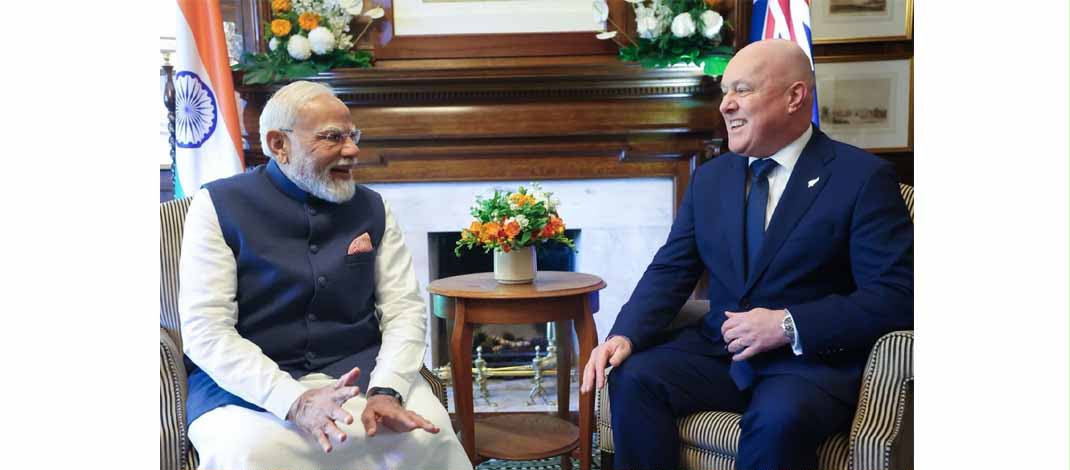
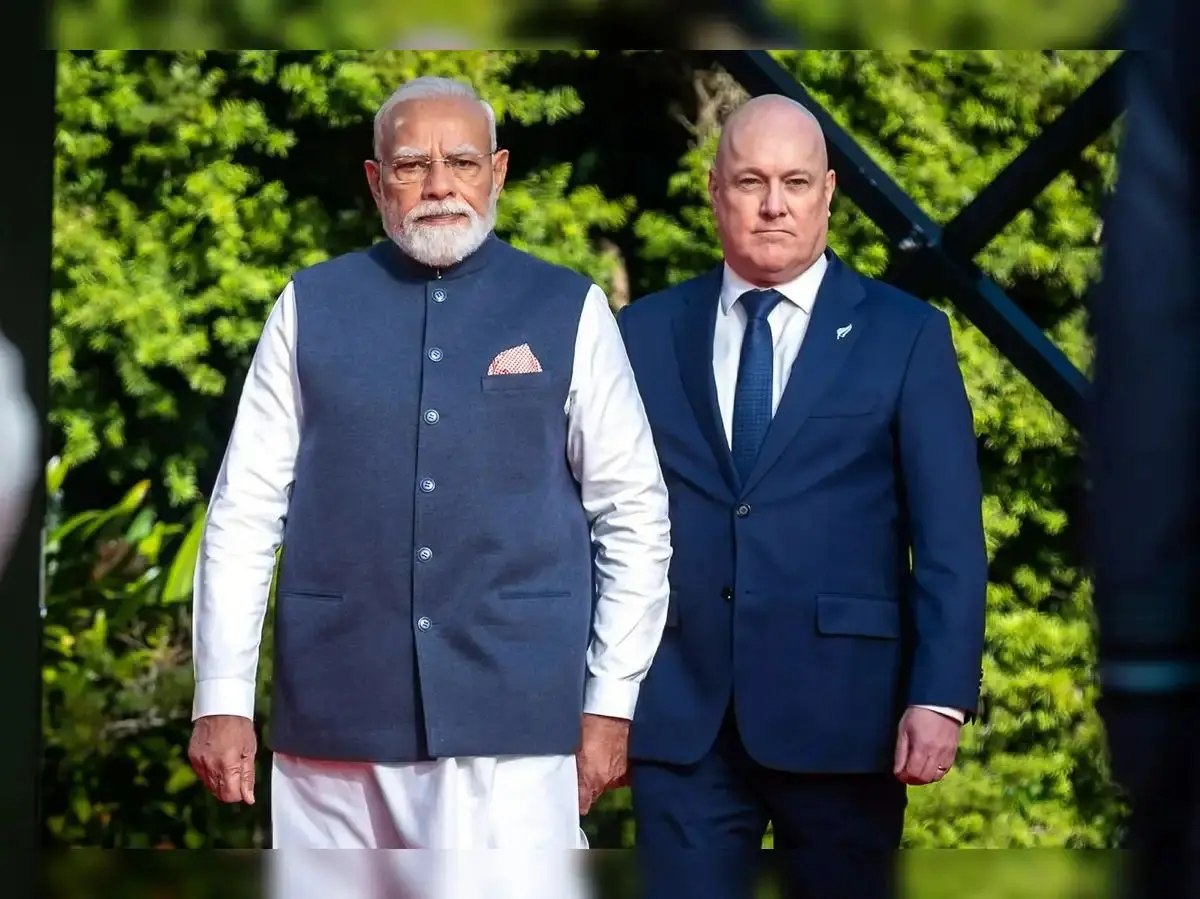
India and New Zealand have elevated their bilateral relationship to a "Strategic Partnership," unveiling an ambitious Roadmap to 2030. The agreement, sealed during PM Modi’s visit to Auckland, focuses on deepening maritime defence cooperation, doubling bilateral trade, and fostering knowledge exchange in dairy and agricultural productivity.
Prime Minister Narendra Modi’s historic visit to Auckland marks a major geopolitical shift as India and New Zealand commit to a robust framework for defence, maritime, and economic cooperation.
AUCKLAND — Marking a historic milestone in bilateral relations, Prime Minister Narendra Modi and his New Zealand counterpart, Christopher Luxon, officially elevated the ties between their two nations to a "Strategic Partnership" during a high-level summit in Auckland on July 11, 2026. The move signals a deepened commitment to collaboration in an increasingly complex Indo-Pacific region, coming 40 years after the last official visit by an Indian Prime Minister to the country.
The summit yielded 18 concrete outcomes, including a comprehensive "Roadmap to 2030," which serves as the strategic framework for joint action over the next four years. Central to this new partnership is a focus on maritime security, defence logistics, and an ambitious goal to double bilateral trade to NZ$7 billion (approximately ₹35,000 crore) by 2030.
Strengthening Security and Maritime Ties
The partnership is anchored in a shared vision for a "free, open, peaceful, and prosperous Indo-Pacific." Among the most significant developments is the conclusion of a Mutual Logistics Support Arrangement, which will allow the naval forces of both nations to utilize each other’s bases and facilities for refueling, repairs, and replenishment.
In addition to logistics, the two nations have institutionalized an annual Maritime Security Dialogue and signed a Maritime Cooperation Arrangement. These measures are designed to bolster information exchange and enhance domain awareness across the region, reflecting India's growing role as a provider of maritime security in the southern Pacific.
Economic Synergy and Agricultural Cooperation
Building on the momentum of the India-New Zealand Free Trade Agreement (FTA) concluded in late 2025, the new strategic framework prioritizes primary industries. Prime Minister Luxon highlighted the potential for New Zealand’s globally recognized expertise in agricultural productivity, food safety, and sustainable farming to complement India’s domestic goals.
The partnership includes specific action plans to lift productivity in horticulture, particularly in kiwifruit, apples, and honey, with support for the establishment of Centres of Excellence in India. Furthermore, a Memorandum of Cooperation on Animal Husbandry and Dairying was finalized, marking a significant step in institutionalizing knowledge exchange between New Zealand’s dairy sector and India's growing agricultural infrastructure.
Why It Matters
For businesses and investors, the Strategic Partnership and the underlying FTA provide a stable, long-term regulatory framework that simplifies cross-border trade and reduces barriers to entry. For the Indian diaspora in New Zealand—an integral community of over 300,000 people—the upgrade in ties acknowledges their role as a "living bridge," further strengthening people-to-people links. Regionally, the collaboration represents a strategic alignment between two like-minded democracies, providing a counterweight to rising tensions and ensuring the continued flow of commerce in the Indo-Pacific.
Key Facts at a Glance
New Status: Bilateral ties upgraded to a formal "Strategic Partnership."
Trade Target: Commitment to double bilateral trade to NZ$7 billion (approx. ₹35,000 crore) by 2030.
Defence Pact: Reciprocal Logistics Support Arrangement signed between the Indian Navy and New Zealand Defence Force.
Roadmap: Endorsement of the "India-New Zealand Strategic Partnership: Roadmap to 2030."
FAQ
What is the significance of the "Roadmap to 2030"?
It is a shared policy framework that outlines specific objectives across defence, trade, technology, and maritime security to guide the bilateral relationship over the next four years.
How does this affect agriculture and dairy cooperation?
The agreement includes a Memorandum of Cooperation on Animal Husbandry and Dairying, focusing on transferring New Zealand’s expertise in sustainable farming, food safety, and productivity to India.
Does this partnership include military cooperation?
Yes, the agreement includes a Mutual Logistics Support Arrangement for maritime operations and the establishment of an annual Maritime Security Dialogue.
Source: Ministry of External Affairs, Press Information Bureau, The Hindu