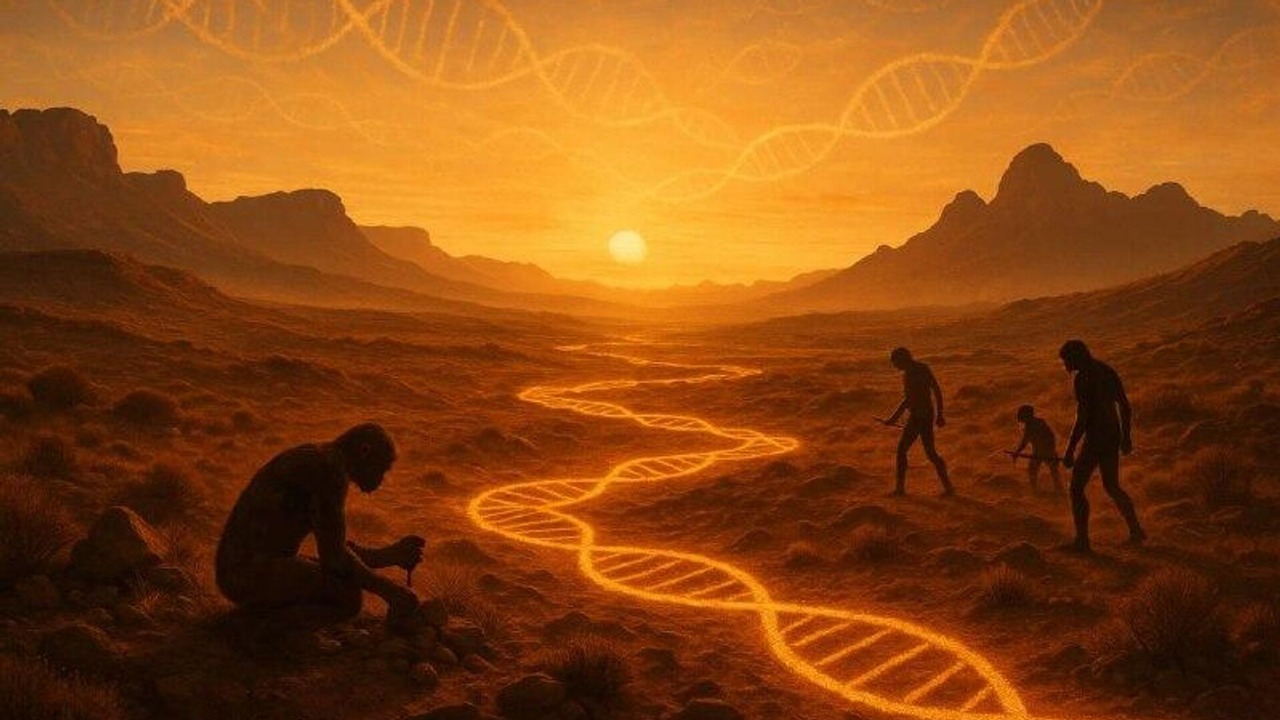









A new study has uncovered that ancient humans in southern Africa lived in isolation for nearly 100,000 years. Genetic sequencing of ancient remains shows these populations developed unique traits outside the range of modern humans, offering fresh insights into human evolution, adaptation, and early migration patterns.
Groundbreaking research published in Nature has revealed that ancient humans in southern Africa remained isolated for almost 100,000 years, developing distinctive genetic traits not found in modern populations. Scientists sequenced genomes from 28 individuals dated between 225 and 10,275 years old, with remains recovered from regions south of the Limpopo River. This isolation highlights the extraordinary diversity of early Homo sapiens and reshapes our understanding of human evolutionary history.
Key highlights from the announcement include
-
Genomes from 28 ancient individuals were sequenced, ranging from 225 to 10,275 years old.
-
The remains were recovered from sites south of the Limpopo River, including the Matjes River 1 woman dated to 7,900 years ago.
-
Findings show these populations lived in near-total isolation for nearly 100,000 years.
-
Genetic traits identified fall outside the range of modern human diversity.
-
The study demonstrates that human evolution was complex, involving multiple isolated groups adapting to their environments.
-
Researchers found evidence of unique adaptations that shaped Homo sapiens as a species.
-
The research reframes early migration patterns, showing southern Africa as a critical hub of human diversity.
The study underscores how environmental and geographic factors influenced human evolution, with isolated populations developing genetic signatures distinct from other groups. This isolation likely contributed to resilience and adaptation in challenging climates, while also preserving genetic diversity that shaped the species over millennia.
By highlighting the role of southern Africa in human history, the findings challenge simplified narratives of human evolution. Instead, they reveal a mosaic of isolated populations whose interactions and eventual migrations created the genetic tapestry of modern humanity.
This discovery not only enriches our understanding of ancient human diversity but also emphasizes the importance of studying ancient DNA to uncover hidden chapters of our past. It provides a reminder that human evolution was not linear but a complex web of isolated groups, adaptations, and eventual convergence.
Sources: Moneycontrol, Times of India, Phys.org, Uppsala University