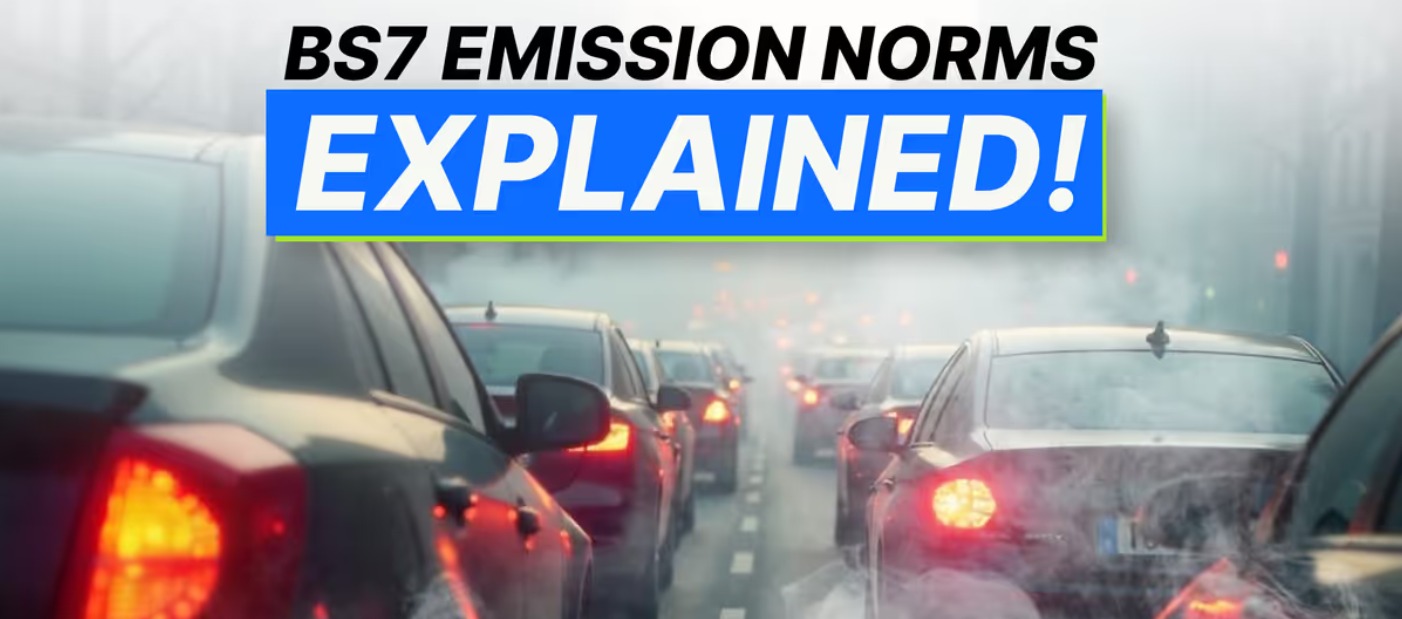

India is preparing to implement Bharat Stage 7 (BS7) emission norms by mid-to-late 2025, targeting heavy commercial vehicles and diesel-powered transport. The new standards introduce real-time emission monitoring and stricter limits aligned with Europe’s Euro 7 norms. Automakers face higher compliance costs, but the move aims to curb urban air pollution and modernize India’s auto sector.
The Indian government is set to roll out BS7 emission norms starting July–September 2025, marking a significant tightening of vehicular pollution standards. Following the BS6 regime introduced in 2020, BS7 represents a more advanced framework designed to align India with global benchmarks.
A standout feature of BS7 is the On-Board Monitor (OBM) system, which will measure emissions in real-world driving conditions, ensuring compliance beyond laboratory tests. The regulations will primarily impact heavy commercial vehicles (HCVs) such as trucks and buses, which contribute disproportionately to urban pollution.
Industry experts warn that stricter limits could raise vehicle costs, especially for diesel models, while accelerating the shift toward electric and hybrid alternatives. Policymakers emphasize that BS7 is critical to India’s fight against winter smog and rising respiratory illnesses.
🔍 Key Highlights / Major Takeaways
-
Implementation Timeline: Expected rollout between July and September 2025.
-
Scope: Focus on heavy commercial vehicles and diesel-powered transport.
-
New Feature: On-Board Monitor (OBM) for real-time emission tracking.
-
Global Alignment: Standards modeled on Europe’s Euro 7 norms.
-
Impact: Higher costs for diesel vehicles; push toward EVs and hybrids.
-
Policy Goal: Reduce urban air pollution and improve public health.
Sources: The Financial Express, EVFY, Hindustan Times, Business Standard