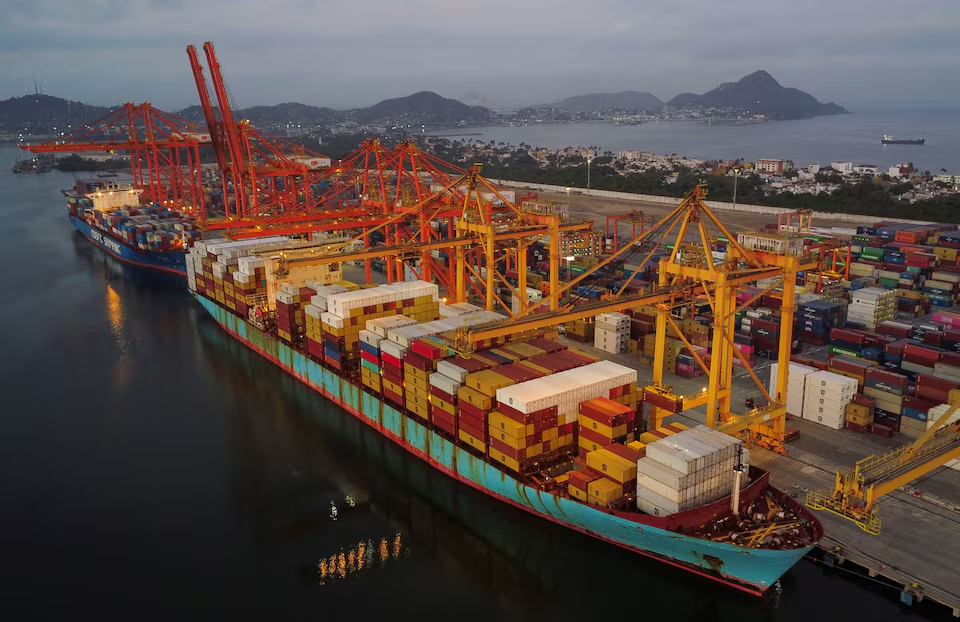

Mexico will begin hiking import tariffs—mostly up to 35%—on goods from countries without free trade agreements, with China facing the largest impact. Starting Thursday, the measures cover autos, parts, textiles, plastics, and steel. The move aims to protect domestic industry and curb transshipment, bringing Mexico’s policy closer to the U.S. approach.
Main story: Scope, rationale, and ripple effects
Mexico’s new tariff regime, approved earlier in December, takes effect Thursday and targets a wide basket of imports from non-FTA partners. Policymakers say the hikes guard against market distortions and discourage transshipment via Mexico into North America under USMCA rules. Businesses importing components from China and other Asian economies will face immediate cost pressures.
Economists expect near-term inflationary effects for categories reliant on imported inputs, though local manufacturers may gain share. Supply chains tied to autos, electronics, and consumer goods are reviewing pricing, sourcing, and logistics to mitigate disruption. Trade lawyers note that companies could explore alternative sourcing from FTA partners or accelerate localization to preserve margins.
Notable updates / major takeaways
-
Tariff scope: Most rates raised to around 35% for non-FTA countries.
-
Sector coverage: Autos, auto parts, textiles, clothing, plastics, steel among affected lines.
-
Policy intent: Protect domestic industry and deter transshipment into North America.
-
Business impact: Higher input costs and potential price adjustments in downstream sectors.
-
Strategic alignment: Signals closer coordination with the U.S. on China-focused trade measures.
Sources: Reuters, U.S. News (Reuters syndication), Mexican government notices