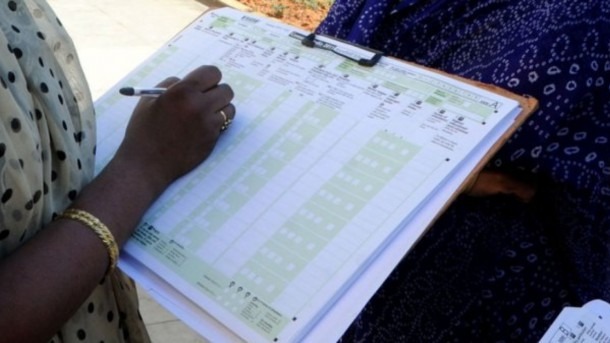





The Government of India has announced that the upcoming Census will be carried out in two phases. The first phase, House Listing and Housing Census, will take place between April and September 2026, while the second phase, Population Enumeration, will be conducted in February 2027 with reference date March 1, 2027.
The Government has officially confirmed that the next Census exercise will be conducted in two distinct phases, marking a critical step in India’s demographic planning. Minister of State for Home Affairs Nityanand Rai informed Parliament that the Census 2027 will begin with House Listing and Housing Census, followed by Population Enumeration. This announcement comes after delays caused by the pandemic, making the upcoming exercise crucial for policy-making, welfare schemes, and resource allocation.
Key highlights from the announcement include
-
Phase I will involve House Listing and Housing Census, scheduled between April and September 2026.
-
This phase will be conducted over a 30-day period, depending on the convenience of state and union territory governments.
-
Phase II will be the Population Enumeration, scheduled for February 2027, with the reference date set at 00:00 hours on March 1, 2027.
-
Enumerators will include teachers, clerks, and other state government or local authority staff, while supervisors will generally be officers of higher rank.
-
The census questionnaire has been finalized after consultations with ministries, departments, organizations, and data users to ensure comprehensive coverage.
-
The exercise will provide critical data for planning welfare schemes, infrastructure development, and governance reforms.
-
The government emphasized that the Census is not just a statistical exercise but a foundation for evidence-based policymaking.
The announcement of Census 2027 marks a significant milestone in India’s governance framework. With the first phase focusing on housing and household data, and the second on population enumeration, the exercise will provide vital insights into India’s demographic and socio-economic landscape. Policymakers, researchers, and administrators are expected to rely heavily on this data to shape India’s development trajectory over the next decade.
Sources: Hindustan Times, New Indian Express, The Hindu