What began as a light-hearted remark after a yoga class in 2012 evolved into one of India’s most successful health-food brands. Founded by sisters Suhasini and Anindita Sampath, Yoga Bar scaled from homemade energy bars to a nationwide clean-label brand, culminating in ITC’s 2023 acquisition valuing it at over ₹1,000 crore.
A Name Spoken After Yoga. A Brand Built for a Nation.
A quiet morning in the United States.
A protein bar in hand.
A playful line: “If we made this for India, we’d call it Yoga Bar.”
In that moment, a category leader was born.
From a Sister’s Joke to a Serious Opportunity
-
In 2012, sisters Suhasini Sampath and Anindita Sampath, born and raised in a middle-class family in Bengaluru, were living in the United States for higher education and work. After a yoga class one morning, Anindita picked up a protein bar and joked about creating an Indian version called “Yoga Bar.”
-
For Suhasini, an IIM Ahmedabad graduate with a background in investment banking and private equity, the idea sparked something deeper. She saw a structural shift forming — rising health awareness, urban fitness culture, and increasing demand for convenient nutrition.
-
The name was trademarked. The exploration began.
-
Between 2012 and 2014, the sisters studied India’s climate, ingredient supply chains, shelf-life science, and consumer preferences. They observed that many processed snacks relied heavily on artificial additives. Their ambition was clear: build a clean-label, preservative-free brand made in India for Indian consumers.
By 2015, Yoga Bar officially launched with multigrain energy bars positioned around transparency and nutrition.
The Early Years — Educating a Market
-
The first phase demanded patience and conviction. The sisters placed samples in gyms, yoga studios, cafés, and community fitness events. They invited friends and early adopters to test formulations repeatedly. Recipes evolved through constant iteration.
-
India’s mainstream snacking culture was still transitioning. Yet by 2017–18, fitness influencers, urban gym memberships, and marathon culture were accelerating. Yoga Bar’s positioning began resonating more strongly.
-
Manufacturing capabilities improved. Supply chains stabilized. Word-of-mouth expanded. The brand moved from niche to noticeable.
Owning the Clean-Label Narrative Early
Yoga Bar’s defining advantage was timing and positioning.
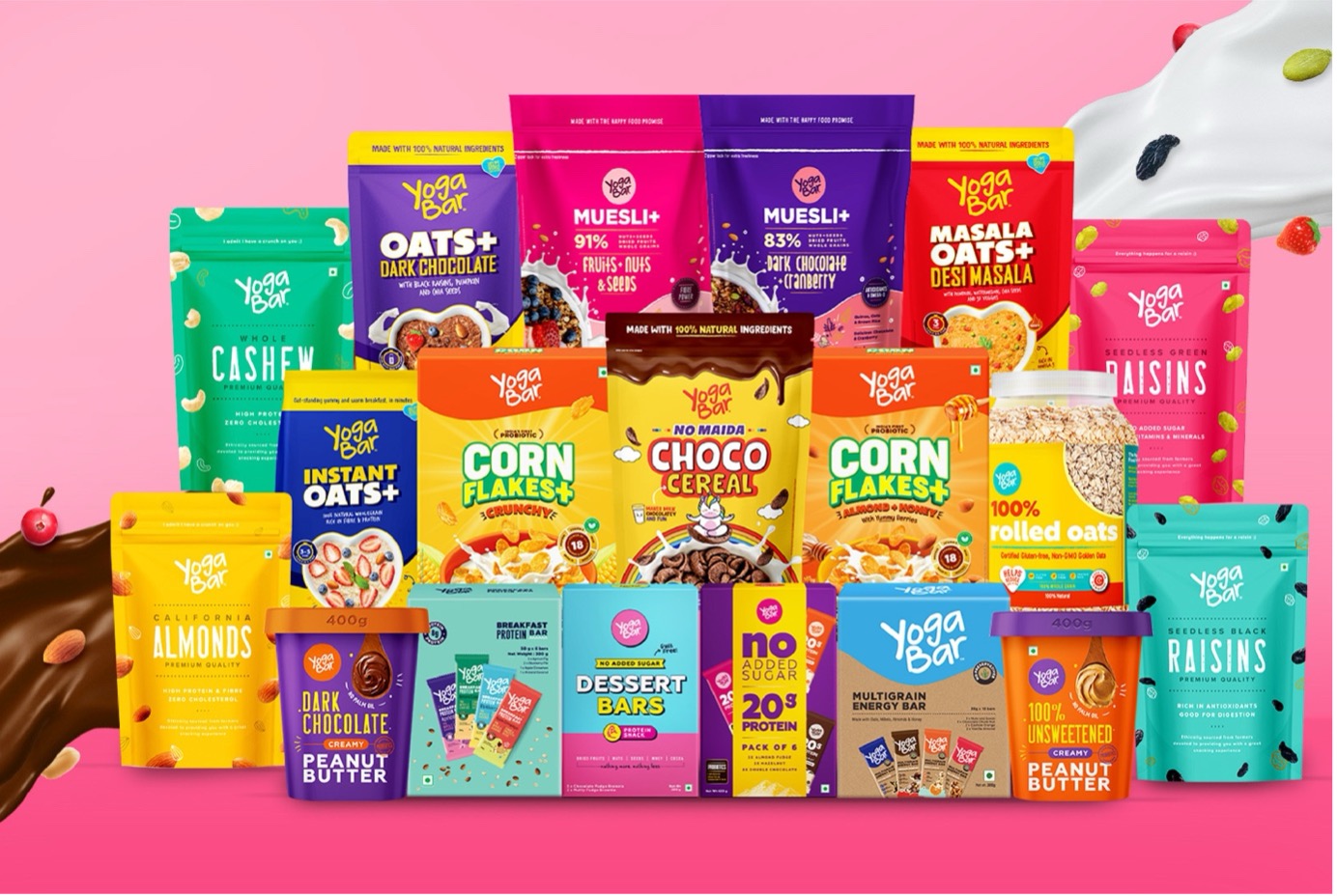
Instead of competing in traditional confectionery or mass snacks, the company carved a new lane: premium, clean-label health foods. The portfolio expanded beyond energy bars into:
• Muesli
• Peanut butter
• Protein bars
• Breakfast cereals
• Kids’ nutrition products
-
The brand adopted a hybrid distribution model — scaling through Amazon and Flipkart while simultaneously deepening modern retail presence across India.
-
This omnichannel approach allowed Yoga Bar to capture urban digital consumers while building long-term FMCG credibility.
-
The breakthrough moment arrived in 2021 when ITC Limited acquired a minority stake in Yoga Bar. In June 2023, ITC completed a 100% acquisition, valuing the company at approximately ₹1,000–1,200 crore, according to public disclosures and financial media reports.
-
The deal marked one of India’s largest D2C health-food exits.
Scale, Numbers & National Impact
By the time of acquisition:
• Presence in 35,000+ retail outlets across India (as reported prior to acquisition)
• Strong e-commerce leadership in health bars category
• Multi-category expansion in the growing nutrition segment
• Valuation exceeding ₹1,000 crore during ITC acquisition
India’s health and wellness foods market has been expanding at double-digit growth rates, fueled by rising disposable incomes and fitness awareness. Yoga Bar positioned itself at the forefront of this structural consumption shift.
What began as a playful remark after a yoga class matured into a national nutrition brand.
Build the Category Before It Becomes Crowded
Yoga Bar’s journey offers a sharp entrepreneurial insight:
Spot the shift early. Build with integrity. Scale with discipline.
-
Suhasini and Anindita identified a behavioral change before it became mainstream. They invested time in product-market fit, manufacturing quality, and brand trust long before aggressive scaling.
-
The result was not just a profitable company — but a category-defining brand strong enough to attract one of India’s largest conglomerates.
-
A single sentence spoken after yoga evolved into a ₹1,000+ crore story.
And that is how movements begin.
Sources: ITC Limited Press Release (June 2023), Economic Times, Business Standard, Forbes India