







India’s electric vehicle (EV) adoption remains uneven across regions and segments, with strong uptake in two- and three-wheelers but slower penetration in passenger cars and heavy vehicles. Experts say this uneven growth will shape the next phase of green mobility, requiring targeted policies, infrastructure expansion, and supply chain resilience.
India’s EV journey is progressing rapidly but unevenly, reflecting both opportunities and challenges for the next phase of green mobility. While two- and three-wheelers have achieved significant adoption due to favorable costs and government incentives, passenger cars and heavy commercial vehicles continue to lag behind.
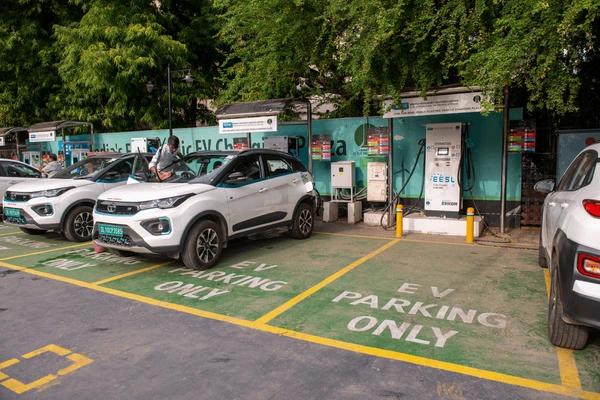
Reports highlight that battery costs have declined by nearly 90% since 2010, making EVs more viable in high-utilization segments. However, infrastructure gaps, particularly charging networks in smaller cities—remain a barrier to widespread adoption.
The government’s flagship initiatives such as FAME II, PLI schemes, and PM e-Bus Sewa have accelerated investment and localization, positioning India as a hub for clean mobility exports. Yet, uneven adoption across regions means that policy interventions must be tailored to local realities. For example, South India is emerging as a scalable base for EV growth, while northern and rural markets require stronger infrastructure support.
Analysts estimate that EVs could unlock a $200 billion opportunity for India by 2030, with potential to abate 20–30% of transport emissions. To achieve this, the next phase must focus on critical minerals supply chains, charging infrastructure, and consumer awareness.
Key Highlights
-
Adoption Trends: Strong in two- and three-wheelers; slower in passenger cars and heavy vehicles.
-
Cost Advantage: Battery prices down ~90% since 2010.
-
Government Push: FAME II, PLI, PM e-Bus Sewa driving investment.
-
Regional Variation: South India leading; rural areas lagging.
-
Market Potential: $200B EV opportunity by 2030.
-
Climate Impact: EVs could cut 20–30% of transport emissions.
Sources: ETAuto – Green Mobility Emissions Report; NITI Aayog – EV Opportunity Report; BDO India – EV Adoption Outlook; Business Standard – EV Policy and Infrastructure Analysis