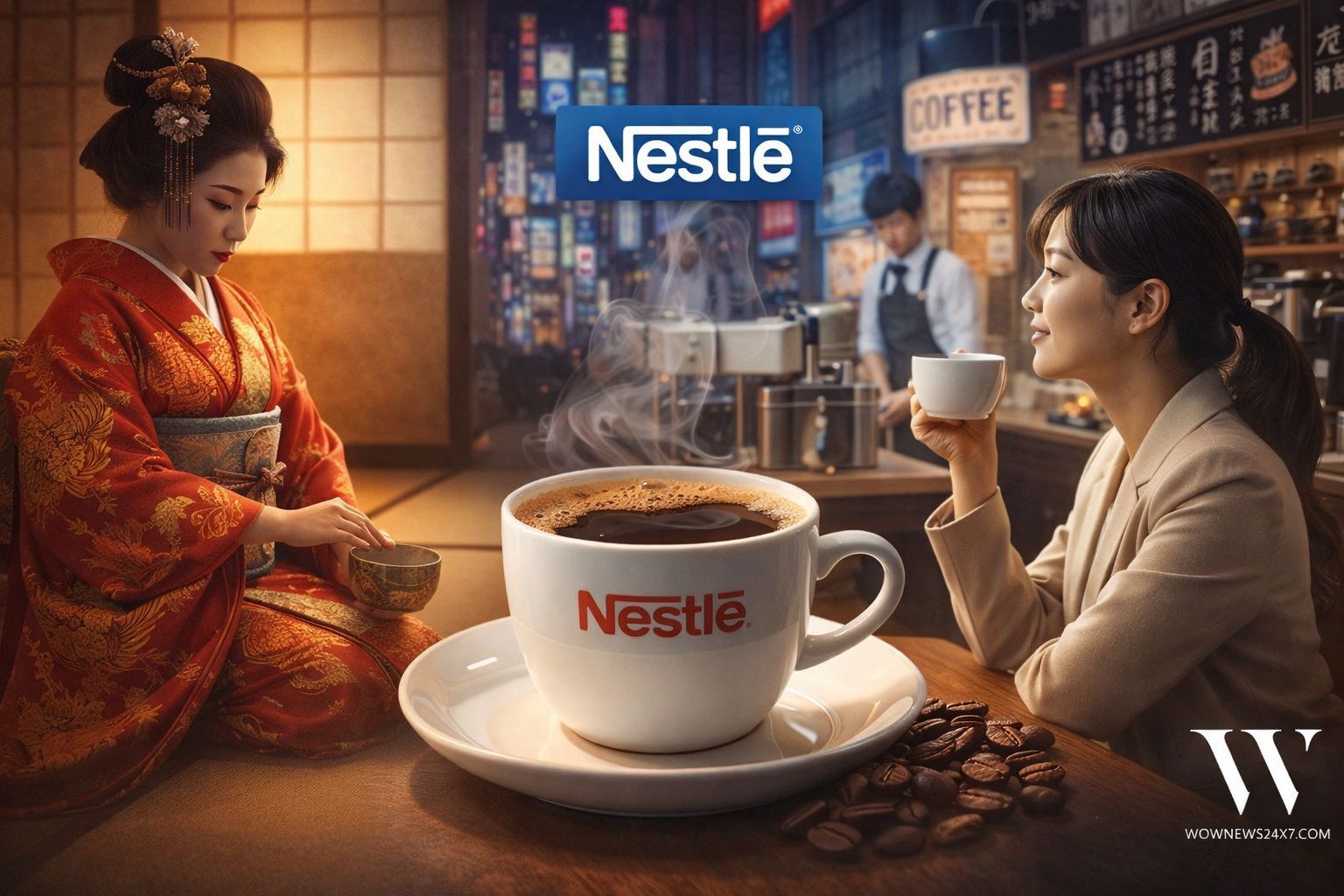
Once defined by centuries-old tea traditions, Japan evolved into one of the world’s largest coffee markets through decades of strategic marketing and cultural adaptation. Nestlé’s early experimentation—from coffee-flavoured products to persistent branding—helped nurture new consumer habits, turning coffee into a daily ritual across modern Japanese society.
Japan’s beverage culture has long been synonymous with tea deeply rooted in ritual, health benefits, and centuries of tradition. Yet today, the country stands among the world’s most influential coffee markets. This transformation did not happen overnight. It was the result of decades of experimentation, persistence, and strategic localisation led in part by Nestlé.
A Tea-Dominated Market Meets a New Idea
Until the mid-20th century, green tea remained Japan’s dominant daily drink. Coffee existed, but mostly within niche urban cafés known as kissaten. For global brands, convincing a tea-centric culture to embrace coffee seemed like an uphill task.
In the 1960s, Nestlé identified Japan as a long-term growth market for Nescafé. Early sales, however, struggled. Consumers were unfamiliar with instant coffee, and entrenched tea traditions made adoption slow. Rather than abandon the market, Nestlé pivoted its strategy toward cultural integration instead of direct competition.
Building Taste Through Familiarity
Marketing case studies and company histories suggest that Nestlé experimented with indirect ways of introducing coffee flavour profiles, particularly through confectionery and entry-level products aimed at younger consumers. The idea was simple: build familiarity first, then demand later.
Alongside product innovation, the company invested heavily in education, demonstrations, and sampling campaigns. Promotional events, advertising, and in-store experiences during the 1970s positioned coffee as modern, convenient, and globally connected, attributes that resonated with Japan’s rapidly urbanising post-war society.
Persistence Through the 1970s and Beyond
The broader Japanese coffee boom was not driven by one company alone. Domestic brands and café culture also played a significant role, particularly with the rise of canned coffee innovations and vending machine distribution. Still, Nestlé’s long-term branding and localisation helped normalise coffee consumption within everyday routines.
By emphasising convenience and consistent taste, instant coffee became a gateway product. Offices, homes, and vending machines began incorporating coffee as part of daily life, especially in fast-growing urban centres like Tokyo and Osaka.
Coffee Becomes Part of Modern Japan
Today, Japan imports hundreds of thousands of tons of coffee annually and ranks among the world’s largest coffee-consuming nations, according to international trade data. Coffee is now embedded in multiple aspects of Japanese culture:
-
Morning routines in offices and households
-
Ubiquitous vending machines offering hot and cold coffee
-
Specialty cafés blending global trends with local aesthetics
The shift highlights how consumer habits evolve when global brands adapt to local values instead of trying to replace them outright.
The Marketing Lessons Behind the Transformation
Japan’s transition from a tea-first society to a hybrid tea-and-coffee culture is often cited in business schools as an example of long-term market building. Several key strategies stand out:
-
Cultural adaptation: Rather than challenge tea traditions directly, coffee was positioned as a complementary modern lifestyle choice.
-
Gradual exposure: Entry-level products and flavour familiarity lowered adoption barriers.
-
Consistency and trust: Strong branding reinforced reliability in a new category.
-
Ecosystem growth: Partnerships, vending technology, and café culture amplified demand beyond a single company’s efforts.
Why This Story Matters
Japan’s coffee evolution demonstrates that market transformation rarely happens through aggressive disruption alone. It requires patience, cultural insight, and decades of incremental change.
Nestlé didn’t just sell coffee, it helped shape a new consumer habit.
And in doing so, it turned one of the world’s most tradition-rich societies into a global coffee powerhouse.
Sources: International Coffee Organization (ICO), Nestlé Global, Harvard Business School Marketing Cases – Nestlé Japan market strategy, Japan Coffee Association, Britannica