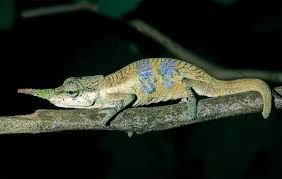


For nearly 150 years, scientists misclassified certain chameleon species, believing them to be one. New genetic research has revealed that Madagascar’s famed “Pinocchio chameleon” and related species were wrongly grouped due to similar external traits. The discovery of two new species reshapes reptile taxonomy and highlights the importance of modern genetic tools.
Chameleons, long admired for their dazzling color shifts and distinctive features, have now revealed another surprise: they fooled scientists for decades. Recent studies led by the Bavarian State Natural Science Collections and published in Salamandra – German Journal of Herpetology confirm that what was thought to be a single species—the so-called Pinocchio chameleon—is actually a complex group of distinct species.
For nearly 150 years, researchers relied on external morphology—visible traits like elongated nasal appendages—to classify these reptiles. However, new genetic and morphological analyses uncovered that Madagascar’s chameleons, particularly within the Calumma gallus complex, include at least two newly identified species, each with unique evolutionary traits.
This revelation underscores how traditional taxonomy can be misleading when species share similar outward characteristics. By analyzing museum DNA samples alongside field research, scientists clarified the true identity of species like Calumma nasutum, known for nearly 190 years but only now properly distinguished.
Major Takeaways
Taxonomic Confusion: Chameleons with long nasal appendages were misclassified as one species for over a century.
Genetic Breakthrough: Modern DNA analysis revealed at least two new species within the Calumma gallus complex.
Madagascar’s Role: Over 40% of the world’s chameleon species are found on the island, making it a biodiversity hotspot.
Museum DNA: Historical specimens played a crucial role in resolving long-standing classification errors.
Scientific Impact: The findings reshape reptile taxonomy and highlight the need for genetic tools in biodiversity studies.
Notable Updates
One newly identified species has been formally named Calumma pinocchio, reflecting its long-nosed appearance.
Male chameleons use nasal appendages for social signaling and mating displays, not just camouflage.
The discovery may influence conservation priorities, as distinct species require tailored protection strategies.
Researchers emphasize that similar misclassifications may exist across other reptile groups, awaiting genetic clarification.
Conclusion: The revelation that chameleons misled researchers for decades is a striking reminder of nature’s complexity. By combining modern genetic methods with historical specimens, scientists have corrected long-standing errors, enriching our understanding of Madagascar’s biodiversity. This breakthrough not only redefines reptile taxonomy but also strengthens conservation efforts for these remarkable creatures.
Sources: SciTechDaily , Techno-Science , Phys.org