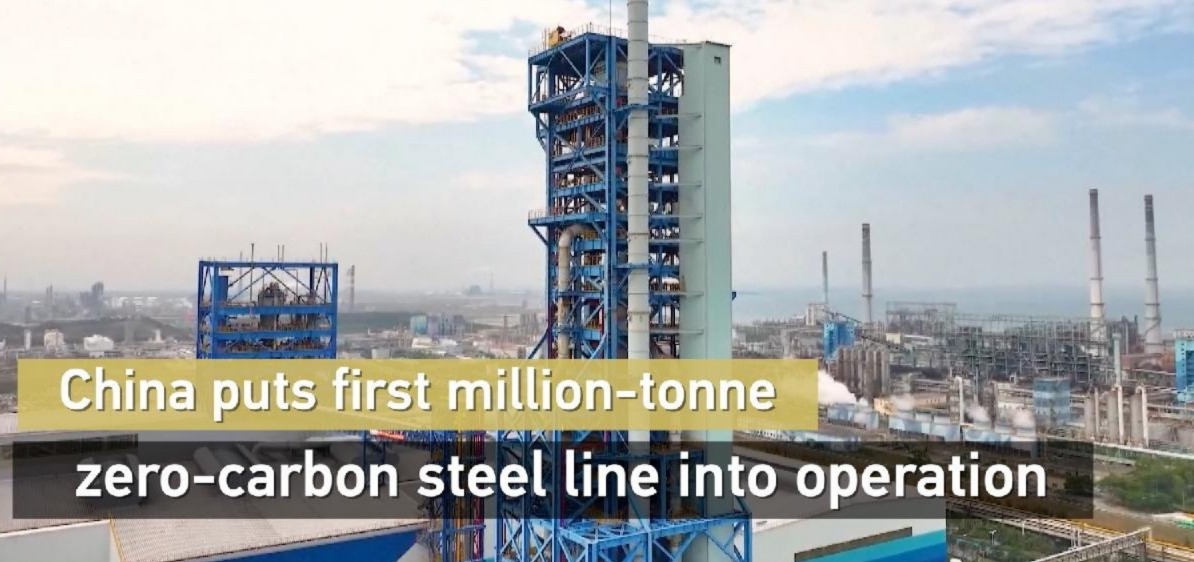



China has inaugurated its first million-tonne near-zero-carbon steel production line in Zhanjiang, Guangdong Province. Using hydrogen-based metallurgical electrosmelting instead of traditional coke, the breakthrough marks a major step in reducing emissions from one of the world’s most carbon-intensive industries, aligning with China’s broader green and low-carbon transformation goals.
On December 23, 2025, Baowu Steel, China’s largest steelmaker, announced the commissioning of its million-tonne near-zero-carbon steel line. The facility employs hydrogen as the primary reducing agent, replacing coal-heavy methods and cutting emissions at the source. This innovation is expected to prevent over 3.4 million tonnes of carbon emissions annually, offering a new pathway for sustainable steelmaking. The project reflects China’s commitment to achieving carbon neutrality by 2060 and demonstrates how industrial giants are embracing green technologies to balance growth with environmental responsibility.
Key Highlights
-
Production line located in Zhanjiang City, Guangdong Province
-
Operated by Baowu Steel, China’s largest steel producer
-
Hydrogen-based metallurgical electrosmelting replaces traditional coke processes
-
Annual carbon emission reduction estimated at 3.46 million tonnes
-
Marks a significant milestone in China’s green industrial transformation
-
Supports national targets for carbon neutrality by 2060
Impact
This development positions China at the forefront of sustainable steel innovation. By scaling hydrogen-based processes, the country aims to reduce reliance on fossil fuels while setting a precedent for global steelmakers. The project underscores how sustainability is becoming central to industrial competitiveness and long-term economic resilience.
Sources: SteelOrbis, China Steel Market, Interesting Engineering