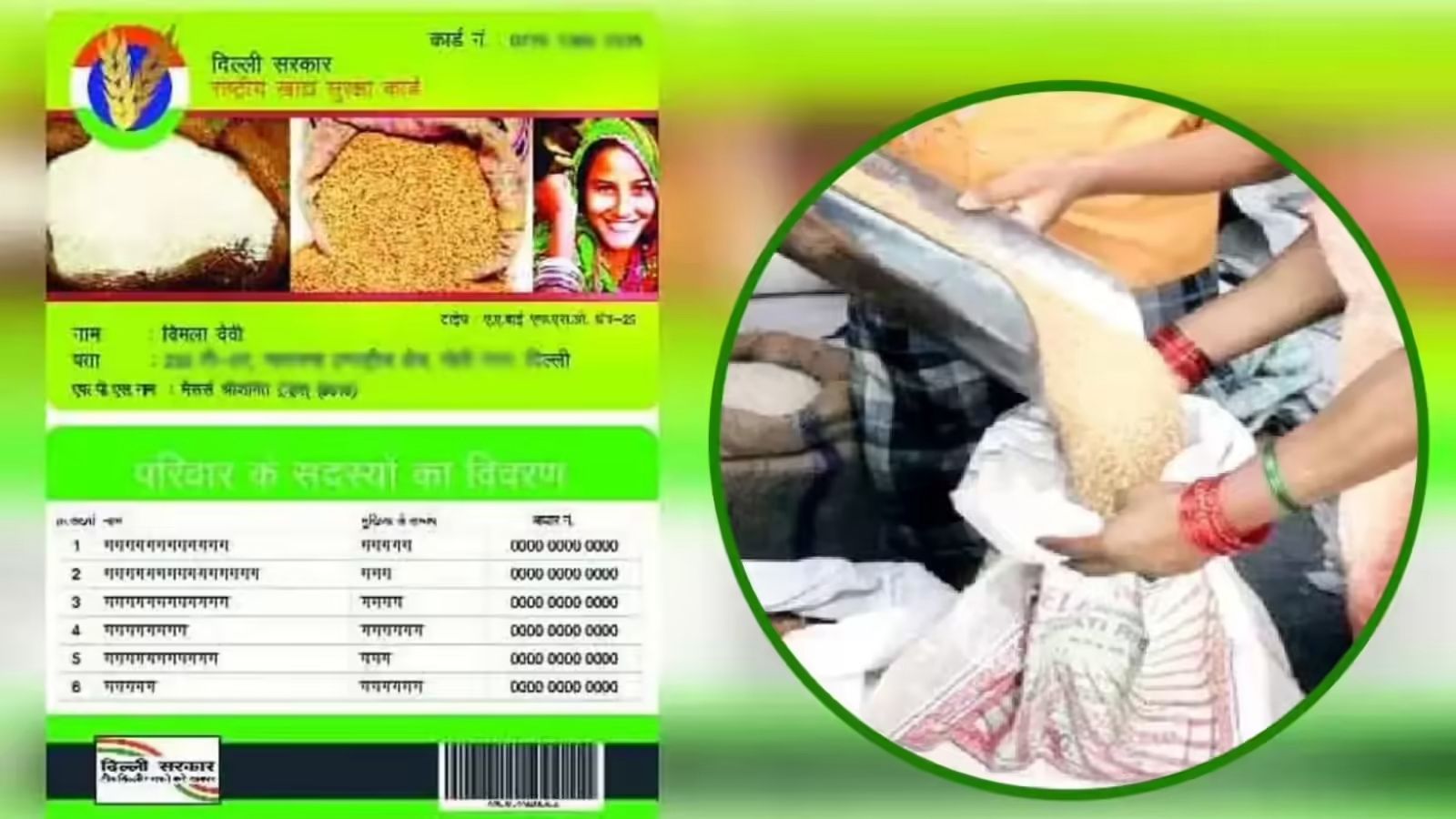





The Delhi government has cancelled 4.20 lakh ration cards between 2015 and 2025, citing reasons such as ineligibility, death of beneficiaries, and transfers. The move aims to strengthen the Public Distribution System (PDS) by eliminating fake or duplicate cards through Aadhaar-based verification, e-KYC, and field checks, ensuring benefits reach genuine households.
In a significant step to streamline welfare delivery, the Delhi government announced the cancellation of 4.20 lakh ration cards over the past decade. Officials clarified that the action was taken after identifying ineligible beneficiaries—including those owning vehicles, holding government jobs, or no longer residing in the city.
The cancellations were part of a broader effort to modernize the PDS and prevent misuse of subsidized food grains. The government has introduced Aadhaar verification, e-KYC, and field inspections to plug irregularities. New ration cards are now issued only when vacancies arise, ensuring that the quota remains balanced.
Notable Updates and Major Takeaways
Scale of action: 4.20 lakh ration cards cancelled between 2015–2025.
Reasons: Ineligibility (vehicle ownership, govt jobs), death of beneficiaries, or transfer outside Delhi.
Verification tools: Aadhaar-based checks, e-KYC, and field verification.
Policy impact: Strengthens transparency and efficiency in the Public Distribution System.
Future approach: New cards issued only against cancelled ones to maintain quota.
Conclusion
The cancellation drive reflects Delhi’s push for a cleaner, more accountable welfare system. By tightening eligibility and leveraging technology, the government aims to ensure that subsidized food grains reach only genuine beneficiaries, reinforcing trust in the PDS framework.
Sources: ThePrint, TaxTMI, Devdiscourse