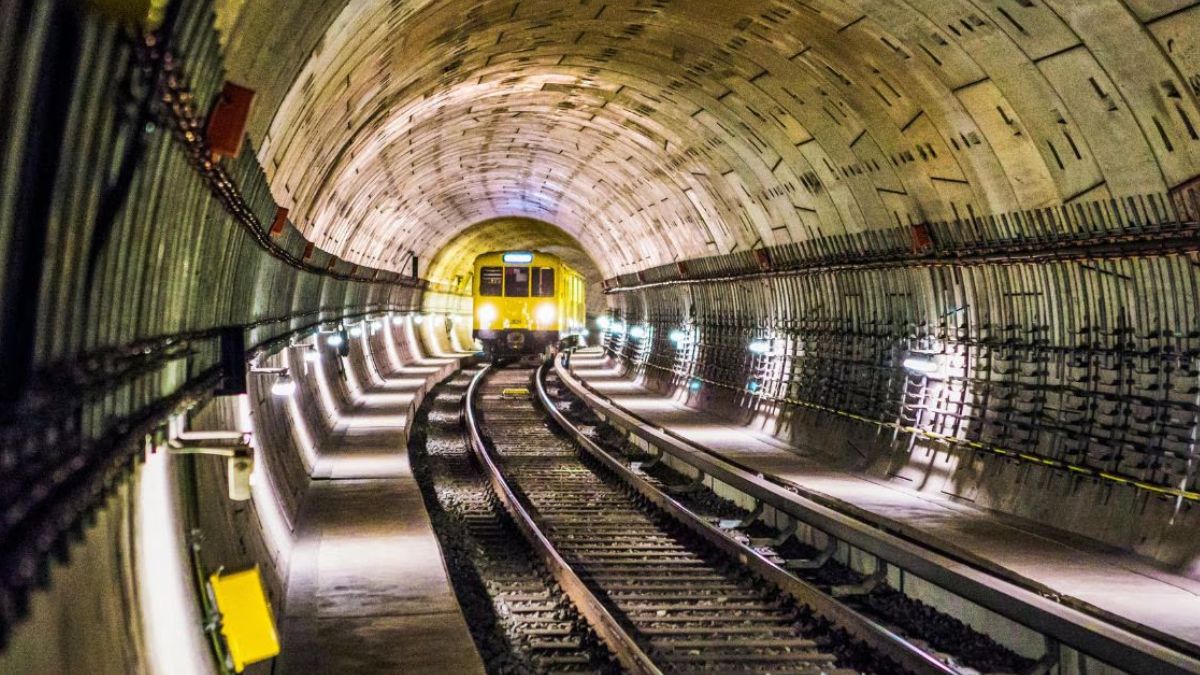








Indore Metro’s Chhota Ganpati station is set to be constructed at a record-breaking depth of 125 feet (38 meters), making it India’s deepest underground metro station. This surpasses Delhi’s Hauz Khas and Kolkata’s Howrah stations, with engineers revising designs to anchor the structure in stable rock formations.
Indore is preparing to make metro history with its upcoming Chhota Ganpati underground station, which will plunge deeper than any existing metro station in India. The Indore Metro Rail Corporation has finalized plans to build the station at a depth of 125 feet, significantly deeper than Delhi’s Hauz Khas station, which sits at around 95 feet. This engineering feat is driven by soil investigation reports that recommended anchoring the station into hard rock for long-term stability.
Key Highlights
-
The Chhota Ganpati station will be constructed at 38 meters below ground, making it India’s deepest metro station.
-
It surpasses Delhi’s Hauz Khas (95 feet) and Kolkata’s Howrah stations, setting a new benchmark in underground metro design.
-
The decision was based on soil investigation reports, which indicated the need for deeper excavation to ensure structural safety.
-
Typical underground metro stations in India are built at depths of 60–70 feet, making Indore’s design an exceptional case.
-
The project will use advanced tunneling techniques, including the New Austrian Tunneling Method, to minimize disruption to surrounding areas.
-
The deeper design also reduces the need for land acquisition at the surface, preserving existing urban structures and minimizing displacement.
This development positions Indore Metro as a landmark project in India’s urban transport infrastructure, combining engineering innovation with practical urban planning. Once completed, the Chhota Ganpati station will not only serve as a vital transit hub but also stand as a symbol of Indore’s growing prominence in modern infrastructure.
Sources: Times Now, Swaraj Vani, NaiDunia