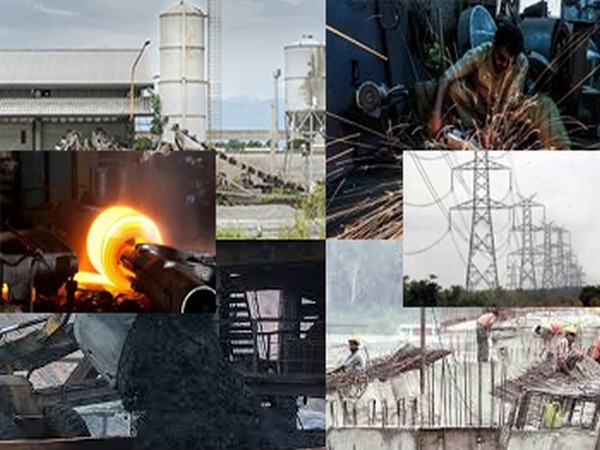




India’s engineering and capital goods sector has emerged as a critical driver of economic growth, supported by rising infrastructure investments, government capex, and export momentum. With production linked incentives, MSME participation, and global demand for machinery and equipment, the industry is set to accelerate India’s manufacturing transformation and long-term GDP expansion.
The engineering and capital goods industry is increasingly recognized as the backbone of India’s economic growth. As the government intensifies its focus on capital expenditure (capex), the sector is witnessing strong demand across infrastructure, manufacturing, and exports. According to recent reports, India’s FY2026–27 outlook highlights engineering as a key enabler of industrial modernization and productivity gains.
The Union Budget 2026 has placed capex “in the driver’s seat,” ensuring that investments in roads, railways, power, and industrial corridors directly boost demand for capital goods. Simultaneously, production-linked incentive (PLI) schemes are encouraging domestic manufacturing, while MSMEs and startups are finding new opportunities in machinery, tools, and industrial equipment.
Key Highlights
-
Government Push: Elevated capex in Union Budget 2026 to strengthen infrastructure and industrial growth.
-
Export Momentum: Rising global demand for Indian engineering goods, especially machinery and electrical equipment.
-
PLI Schemes: Incentives driving domestic manufacturing and innovation in capital goods.
-
MSME Role: Smaller enterprises contributing significantly to supply chains and industrial diversification.
-
Economic Impact: Sector positioned as a multiplier for GDP growth and employment creation.
With strong fundamentals and policy support, engineering and capital goods are set to remain a cornerstone of India’s growth story in the coming decade.
Sources: TejiMandi (Engineering & Capital Goods Industry at a Glance), Economic Times (Union Budget 2026 Capex Focus), D&B India 2026 Perspective Report